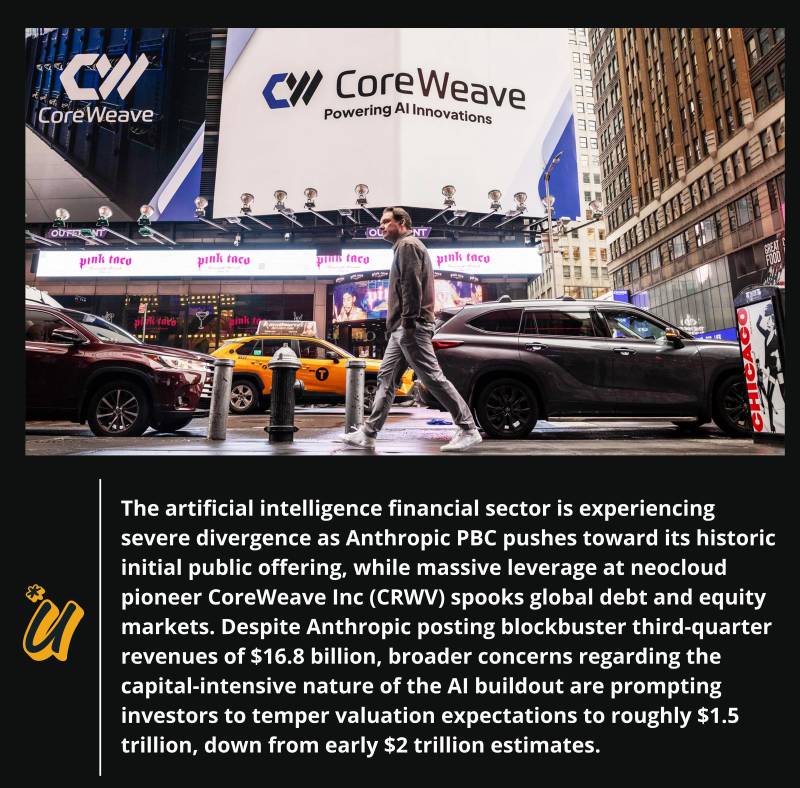
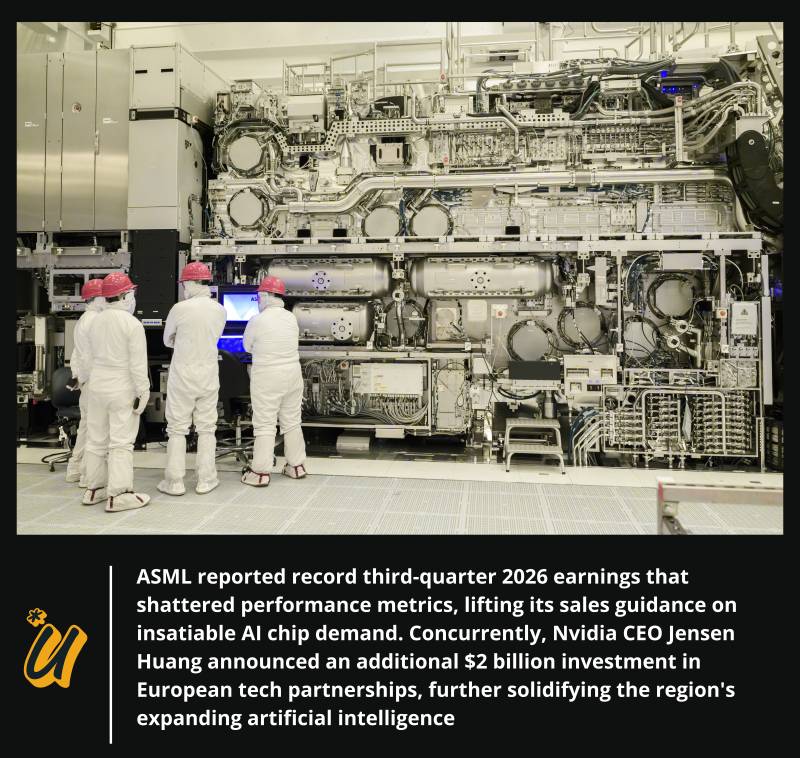
The global technology sector found itself at a critical juncture today, navigating a complex landscape defined by shifting public valuations, corporate governance innovations, courtroom drama, and growing grassroots political resistance over artificial intelligence infrastructure. As investors recalibrate their expectations for artificial intelligence capital deployment, markets experienced a mix of enthusiasm for established giants and deep skepticism toward speculative infrastructure plays, revealing a sector transitioning from rapid hype to disciplined scrutiny.
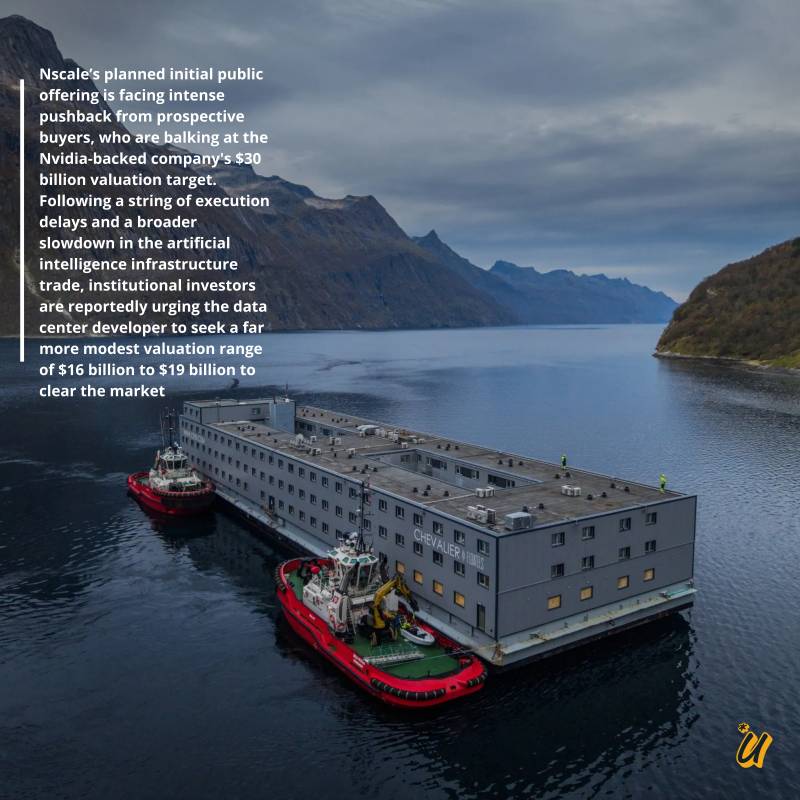
At the center of market scrutiny is NScale, the high-profile AI infrastructure and cloud deployment firm, which is encountering intense pushback from institutional investors regarding its ambitious initial public offering target. Initially seeking a market capitalization of $30 billion, the company is being urged by syndicate underwriters and potential buyers to adjust its valuation expectations down to a range of $16 billion to $19 billion. The severe downward pressure reflects mounting wariness following poor post-IPO performance across the broader neocloud and data center sector. Compounding NScale’s challenges are recent operational hurdles, most notably Microsoft’s decision to pull back from a major data center development project in the United Kingdom following power availability constraints. Analysts note that the combination of cancelled infrastructure partnerships and cooling investor sentiment has raised fresh questions about whether hyper-scaler demand can keep pace with current capital expenditure projections.
Amid discussions surrounding the distribution of AI-generated wealth, Anthropic announced an unconventional corporate governance initiative by pledging to allocate 5% of its total equity into a dedicated Public Benefit Fund. The fund is structured to finance independent research into the societal and economic ramifications of artificial intelligence, with a primary focus on studying labor market disruptions and workforce transitions. The initiative quickly sparked widespread debate across Silicon Valley, drawing a direct counter-proposal from Elon Musk. Criticizing institutional funds as prone to bureaucratic inefficiencies, Musk proposed an alternative structure, arguing that tech companies should distribute equity directly to the public. To demonstrate his proposal, Musk pledged to allocate one share of SpaceX directly to every child in the United States, rekindling broader debates over tech equity ownership and public benefit models.
The industry was further shaken by legal developments involving high-stakes corporate espionage in the AI research sector. A former OpenAI software engineer appeared in federal court following an arrest linked to the discovery of a clandestine recording device placed inside a private executive conference room at the company's San Francisco headquarters. Prosecutors allege that the covert listening device was strategically deployed to intercept sensitive discussions regarding proprietary model architectures, safety protocols, and strategic commercial roadmaps. The legal proceedings underscore the intensifying security protocols and geopolitical friction surrounding core intellectual property in the race for advanced artificial intelligence.
Despite corporate headwinds and legal distractions, public equity markets demonstrated resilience across key sub-sectors. Amazon shares enjoyed a notable bump, driven by a bullish research note from Morgan Stanley that highlighted strong operational efficiency and robust cloud revenue trajectories. Simultaneously, semiconductor stocks recorded a sharp rebound after a tumultuous previous week, buoyed by renewed institutional buying across leading silicon manufacturers. In the private funding landscape, AI chip architecture startup Tenstorrent closed a massive $1.5 billion funding round, pushing its private valuation to $6.2 billion. The round underscores that while mega-cap infrastructure ventures face public market friction, investors remain eager to fund promising hardware architectures capable of challenging incumbent chipmakers.
Beyond the trading floors, public friction regarding the physical footprint of artificial intelligence reached a critical threshold. Local communities across North America and Europe are staging aggressive opposition campaigns against proposed data center developments. Residents and local action groups cite soaring local electricity costs, strain on municipal water systems for cooling, and broader environmental degradation as grounds for opposition. More than 300 municipalities have enacted temporary construction moratoriums or zoning halts to block new facilities. The groundswell of local resistance has rapidly spilled into the political arena, establishing AI data center regulation and grid capacity protection as primary contentious issues in several upcoming midterm election campaigns.
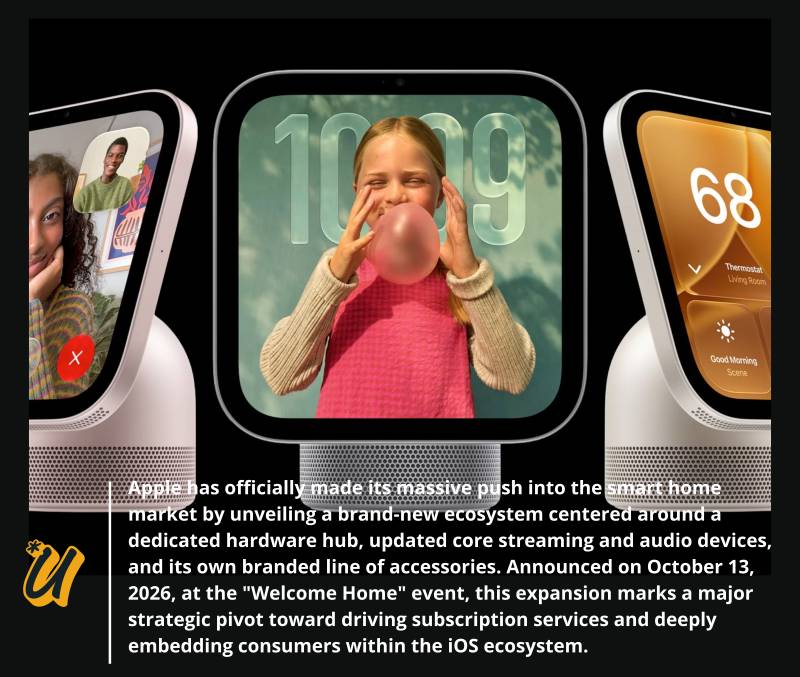
In consumer hardware, Apple is expanding its smart home ecosystem following the debut of its new HomeView smart home display. Industry reports indicate that Apple engineers are already deep into the development of a higher-end, premium tier of the device. Codenamed internally as a dynamic robotics hub, the advanced model will feature a larger display mounted atop an articulated robotic arm. Utilizing advanced spatial audio and computer vision, the motorized arm automatically swivels the screen to directly face the user as they move across a room. The upcoming device signals Apple's broader strategic pivot toward integrating physical robotics and contextual intelligence directly into everyday consumer products.