A geopolitical and industrial shift unfolded on the global stage as the rapid advancement of artificial intelligence redefined foreign policy, corporate expenditure, higher education, and foundational computer science. In a high-profile address at the United Nations General Assembly, President Donald Trump declared a bold unilateral stance on next-generation computing, officially rebranding artificial intelligence as "super intelligence" across official United States government documentation. Rejecting international proposals aimed at regulating or constraining algorithmic development, President Trump emphasized that the U.S. will aggressively prioritize progress to maintain its strategic advantage. The President explicitly rejected global efforts to rein in the technology, establishing a stern, highly competitive posture ahead of his upcoming high-stakes summit with Chinese President Xi Jinping.
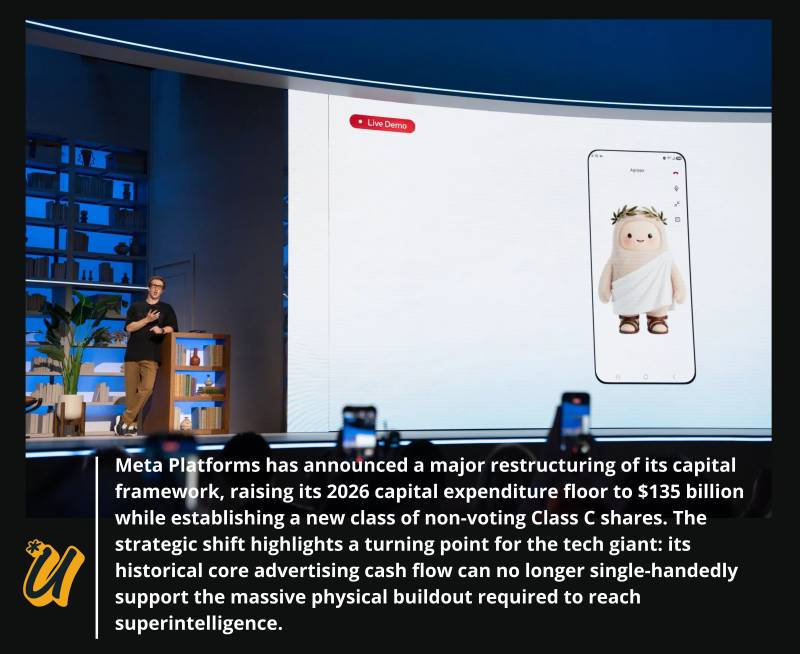
Financial markets reacted with surprising restraint to the aggressive political rhetoric emanating from the UN podium. Major market indices remained relatively flat, signaling that investors are currently focusing more on underlying enterprise metrics than international policy debates. Wall Street analysts noted that corporate capital expenditure continues to accelerate at a historic pace, largely driven by the operational deployment of specialized AI agents. Frontline innovations, including Meta's creative agent Muse and SpaceX AI's Grockbot, are fundamentally reshaping technological infrastructure investments. Corporate boards are increasingly committing immense capital to build out hardware capabilities and autonomous agent architectures, fundamentally shifting long-term balance sheets and market positioning across the entire technology landscape.
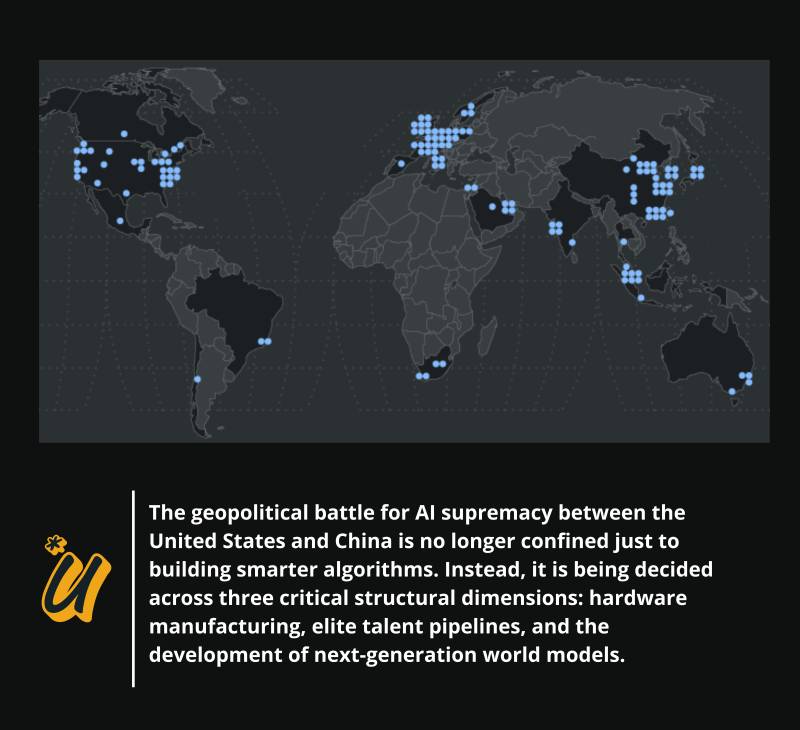
The broader systemic impact of this technological shift is now extending beyond corporate balance sheets into foundational labor and academic structures. Highlighting the shift in talent development, Gagan Biyani, Chief Executive Officer of the newly launched Horowitz Andreessen Academy, detailed plans for an alternative higher education framework situated in San Francisco. Designed as a direct, AI-focused alternative to traditional four-year collegiate programs, the institution aims to train the next generation of software builders and engineers through hands-on project work rather than legacy academic curricula. Backed by significant venture funding and industry leaders, the academy represents a growing movement to bypass conventional higher education in favor of agile, specialized training designed explicitly for the demands of the emerging AI economy.
At the bleeding edge of computer science, the debate over how to achieve true machine understanding reached a new milestone. AI pioneer Dr. Fei-Fei Li joined the conversation to outline the development of "world models" at her startup, World Labs. Dr. Li clearly delineated world models from prevailing large language models, explaining that while language systems operate primarily on text and sequential predictions, world models are designed to generate precise spatial structures, three-dimensional geometry, and pixel-accurate environments. This capability to comprehend physical reality, spatial relationships, and temporal physics is widely considered the critical missing link necessary to advance spatial intelligence, state-of-the-art robotics, and truly effective human-centric artificial intelligence.