Cracks are beginning to show across the financial bedrock of the artificial intelligence boom, even as corporate heavyweights and specialized startups continue to execute eye-watering deals. A stark divergence has emerged between public market sentiment and private capital commitments, marked by historical public market flops, soaring compute negotiations, geopolitical supply chain blacklists, and shifting fortunes among legacy media giants.
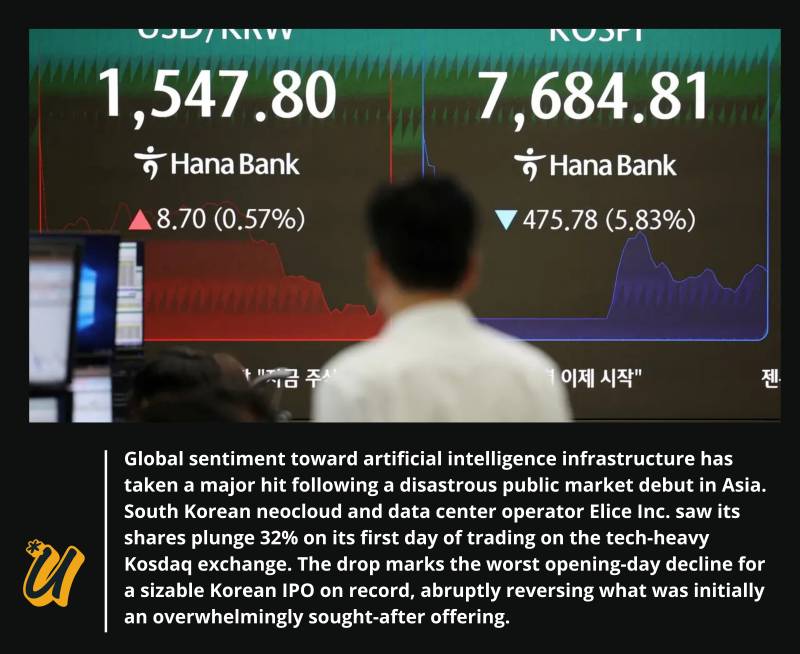
The fragile state of public market appetite for heavy hardware expansion was thrust into the spotlight on Tuesday following the disastrous market debut of South Korean data center operator Elice. Trading on Seoul’s Kosdaq, the self-described full-stack AI infrastructure provider saw its shares plummet by 32% on its first day. The slide marks the worst opening-day performance for a sizable initial public offering on record in South Korea, stunning retail investors who had oversubscribed the offering’s retail portion 400 times over.
The retreat in Seoul reflects a widening global unease regarding the long-term economics of "Neocloud" infrastructure companies—firms built specifically to rent out high-performance specialized compute clusters. Equity analysts note that public markets are increasingly questioning the capital-intensive business model required to support advanced computing grids, raising doubts about whether projected returns can justify the immense upfront infrastructure costs.
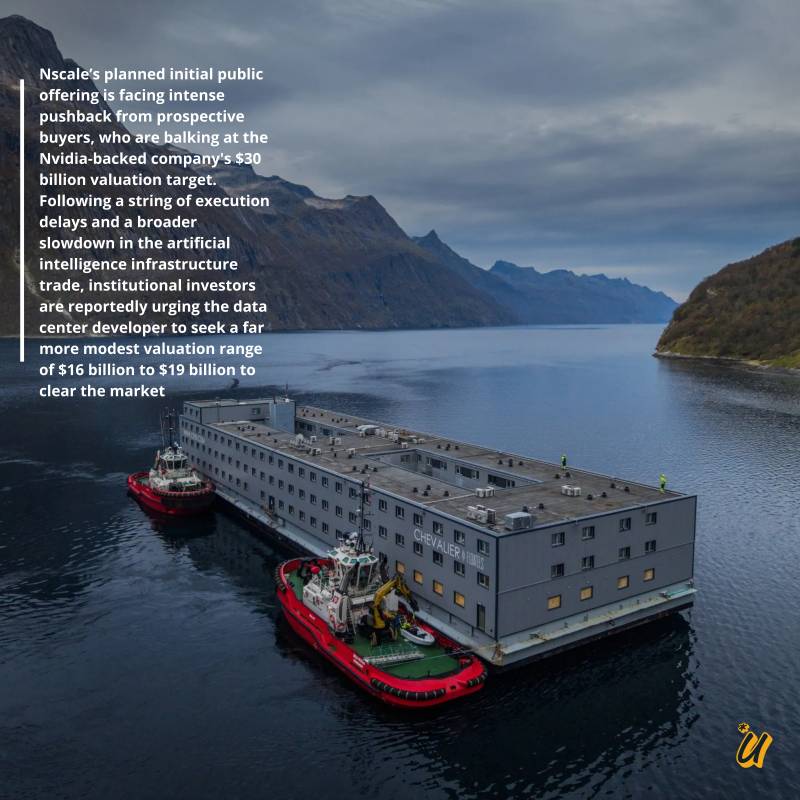
Yet, despite growing skepticism among public equities, hyperscale private market operators continue to double down on compute capacity at an unprecedented scale. San Francisco-based AI research lab Anthropic is currently in advanced negotiations with specialized cloud provider Nscale for a massive computing agreement that could reach up to $45 billion. The proposed contract highlights how frontier lab developers remain untamed by public market anxiety, driving aggressive infrastructure procurement to ensure their next-generation foundation models do not run out of capacity.
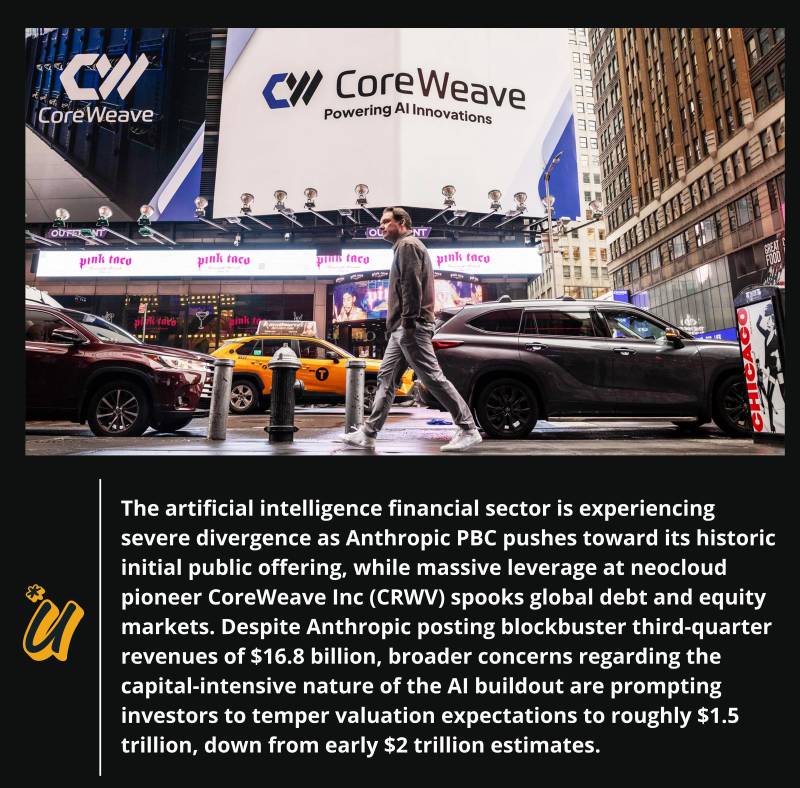
These astronomical valuations and infrastructure spends stand to create unprecedented windfalls for early technology figures. Former Google Chief Executive Officer Eric Schmidt holds a venture stake in Anthropic stemming from its earliest funding rounds. Financial analysts project that Schmidt’s early holding could balloon to a value of as much as $20 billion if Anthropic successfully achieves its targeted $2 trillion market valuation when it eventually pursues its own public listing.
While frontier model labs face questions over compute spending, specialized technology providers tailored to critical government and enterprise sectors are commanding premium valuations. Artificial intelligence orchestration company ASI—formerly known as Airspace Intelligence—announced it has secured $325 million in a fresh Series C funding round. The round elevates the Boston-headquartered startup to a $3 billion valuation.
ASI’s platform focuses on autonomous operational management and decision-making for mission-critical physical industries, including national defense, grid power operations, and civil transportation. The company’s platform has already secured major government implementations, including high-profile modernization initiatives for the Federal Aviation Administration and operational deployments across military commands. The funding underscores a ongoing rotation among institutional investors toward enterprise AI tools with immediate, tangible utility in regulated infrastructure.
At the same time, the national security apparatus surrounding global technology development is tightening significantly, as Western regulators step up efforts to curb technological leakages and foreign intelligence exposure. The U.S. State Department officially placed prominent Chinese venture capital firm MiraclePlus on its blacklist. Founded by former Microsoft executive Lu Qi, MiraclePlus was targeted due to affiliated investments tied to high-profile trade secret theft cases involving proprietary Google trade secrets.
Scrutiny over Chinese artificial intelligence development extends beyond cross-border venture capital into foundational research entities. Recent investigations revealed that founders of the prominent Chinese AI company Z.AI participated in research projects alongside a technology institute identified by Western intelligence agencies. UK security officials allege the research body maintains direct operational ties to Beijing’s state intelligence network, triggering elevated national security concerns over foundational software architectures developed in the region.
Far away from hardware hardware supply chains and sovereign security risks, corporate entertainment giants are facing their own financial reckonings amid changing market dynamics. Streaming pioneer Netflix enters its third-quarter earnings release under severe market pressure, having shed approximately $135 billion in market capitalization over the course of the year.
The sharp decline in market value follows mounting operational friction, persistent headwinds in subscriber engagement growth, and strategic pivots across its top executive team. Investors are watching closely to see whether management can stabilize its core subscription business model and reverse market attrition in an increasingly saturated digital media ecosystem.
Together, these converging developments highlight a transformative moment for the tech sector. As public markets signal fatigue over massive infrastructure outlays and regulators tighten bounds around national security, private capital continues to fund specialized mission-critical software, reshaping the balance between AI capability, national security, and financial reality.