The global artificial intelligence industry is confronting a pivotal financial paradox as OpenAI targets an unprecedented $70 billion annualized revenue run rate by the end of the year. Fueled by rapid enterprise adoption and a doubling of application programming interface token usage across global commercial sectors, top-line growth has accelerated at a velocity unmatched in software history. Yet this revenue surge has brought into sharp focus a fundamental dilemma defining the next phase of tech development: the unprecedented, capital-intensive infrastructure costs required to sustain compute capacity at scale.
At the center of this tension is a structural shift in software economics. Business-to-business sales momentum and the widespread deployment of automated agent integrations have generated extraordinary commercial traction, drawing thousands of enterprise clients into long-term cloud API ecosystems. Software tools that once operated as experimental trials have rapidly transformed into mission-critical infrastructure for corporate workflows, driving compute demand to historic peaks.
However, unlike classic software-as-a-service models where marginal delivery costs approach near-zero levels as subscriber networks grow, generative artificial intelligence exhibits high cost of goods sold dynamics. Every generated token requires physical graphics processing units, dedicated data center facilities, specialized liquid cooling architecture, and massive electricity consumption. As enterprise adoption scales and query volume doubles, revenue gains directly drive corresponding compute costs. Top-line expansion cannot be decoupled from hardware overhead, creating an operational reality where revenue acceleration immediately triggers massive capital expenditures.
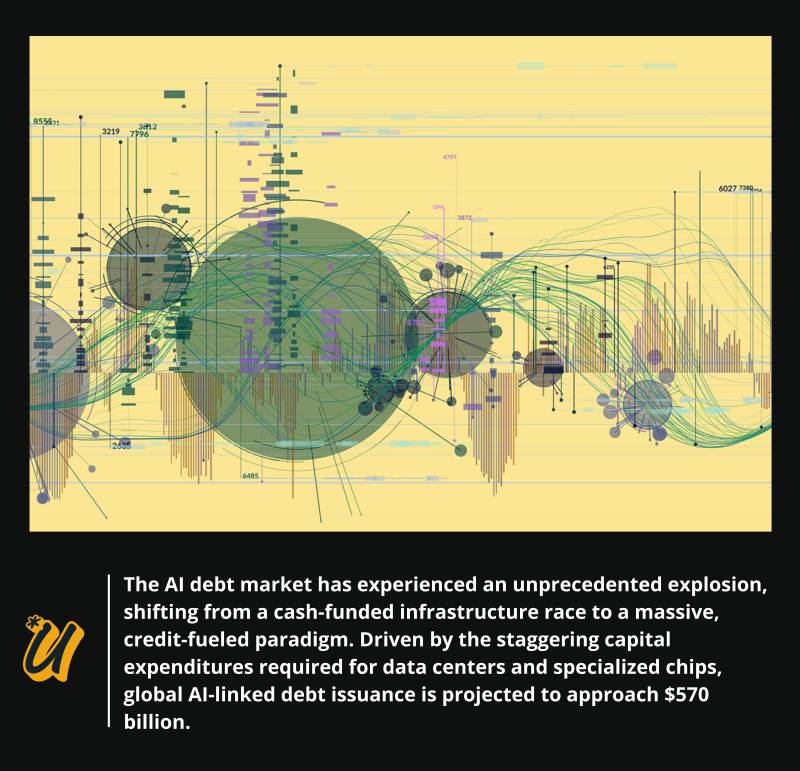
Internal financial forecasts highlight the extraordinary magnitude of this balance sheet reality. Projections indicate a cumulative cash burn of approximately $278 billion to $280 billion through 2030. This staggering burn rate underscores the ongoing necessity to build, power, and supply massive compute clusters capable of sustaining millions of concurrent enterprise queries alongside next-generation model development. The primary rate limiter on artificial intelligence expansion has migrated away from software design and toward physical infrastructure bottlenecks. Compute capacity requirements have scaled rapidly from approximately 0.6 gigawatts in 2024 to nearly 2.0 gigawatts in 2025, with massive multi-gigawatt data center buildouts currently underway across North America and global markets.
Securing multi-gigawatt power capacity, specialized liquid cooling systems, and next-generation silicon—specifically advanced Nvidia rack architectures—has become a primary operational constraint. Regional electrical grids face unprecedented strain as data center operators compete directly with traditional heavy utility consumers for transmission access and power allocations. To manage these physical bottlenecks and ensure server availability, technology firms have entered into multi-billion-dollar cloud hyperscale alliances. Long-term supply contracts and infrastructure commitments with industry leaders such as Oracle and Microsoft have created massive order backlogs across cloud ecosystems.
These structural alliances mean that a substantial portion of top-line revenue gains flows directly back out as capital expenditures, hardware leases, and cloud hosting fees. The resulting cash flows create an unprecedented operational environment where record-breaking commercial revenues are continuously counterbalanced by heavy capital outflow to supply chain partners. Across the entire market, securing energy pipelines and high-density datacenter real estate has superseded pure algorithmic iteration as the primary determinant of commercial scaling. The stark divergence between top-line revenue acceleration and multi-hundred-billion-dollar cash burn projections has driven significant strategic realignments regarding corporate liquidity and public listing schedules. Plans for an initial public offering (IPO) have been pushed back to at least 2027.
Delaying public market entry allows corporate leadership to focus on establishing robust capital structuring frameworks, governance models, and comprehensive artificial intelligence safety standards away from the short-term scrutiny of public quarterly earnings calls. Meanwhile, industry competitors such as Anthropic are pursuing earlier public listings, setting up contrasting capital management strategies across the market landscape. By delaying an IPO, private developers can absorb multi-billion-dollar short-term infrastructure losses while continuing to negotiate massive private financing rounds.
To bridge the gap between strong topline run rates and immense cash burn, capital strategy relies on securing massive private capital rounds. Following a major funding round that raised $122 billion at an $852 billion valuation, subsequent negotiations have pushed target valuations toward $1.4 trillion. These funding rounds target institutional investors and sovereign wealth funds capable of financing long-term compute pipelines. Ultimately, navigating the intersection of a $70 billion revenue run rate and massive infrastructure costs will determine which institutions successfully define the future of artificial intelligence at global scale.