SAN FRANCISCO — Global financial markets continue to ride an unprecedented wave of technology investment, driven by the expanding infrastructure required to support artificial intelligence. The momentum was underscored this week as key manufacturing partners, semiconductor patent developments, mega-mergers, and regulatory pushbacks intersected across the technology landscape. Across Silicon Valley and international markets, the unrelenting pace of enterprise capital expenditure is reshaping corporate strategy, geopolitical dynamics, and executive wealth.
At the center of the hardware surge, Hon Hai Precision Industry Co., better known globally as Foxconn, delivered quarterly results that surpassed Wall Street projections. The primary supplier and assembly partner for Nvidia reported a 47 percent surge in revenue, citing massive demand for high-end AI servers. The figures provide further confirmation that hyper-scale cloud providers and enterprise buyers show little sign of reining in infrastructure spending. Market analysts point out that while consumer electronics and smartphone margins remain relatively modest, server systems housing advanced Nvidia chips carry far higher margins, significantly boosting Foxconn’s bottom line and reassuring investors focused on semiconductor supply chains.
Simultaneously, a pivotal geopolitical development emerged in the semiconductor design sector. Qualcomm has entered into a patent licensing agreement supporting Huawei's proprietary logic folding chip manufacturing technique. The innovative process allows Huawei to optimize data transmission speeds and pack higher densities of transistors onto silicon substrates using domestic supply chains in China, bypassing stringent U.S. export controls on advanced semiconductor equipment. Qualcomm’s decision to license technology linked to logic folding reflects the global appeal and technical relevance of the technique, validating Huawei’s domestic semiconductor engineering efforts despite lingering trade restrictions.
The financial windfall generated by this hardware infrastructure boom has accelerated concentration at the apex of global wealth. Data from the relaunched Bloomberg Billionaires Index reveals that technology figures on the list now hold a combined net worth of $4.6 trillion. Though tech executives account for only about one-fifth of the index's total 500 members, their holdings represent roughly 36 percent of the overall wealth tracked by the platform. A substantial portion of these gains has been concentrated among top figures, most notably Elon Musk, whose personal fortune grew by $310 billion this year, driven in part by capital market milestones across his private and public enterprises.
While capital continues to pour into hardware and model development, local governments are beginning to assert regulatory oversight over safety and deployment risks. In New York City, lawmakers convened a high-profile public hearing targeting artificial intelligence safety and corporate accountability. Council members heard testimony from internal whistleblowers, including former Anthropic safety researcher Jacob Coxon, who warned of existential risks and loss of human control over highly autonomous systems. Industry giants—including Google, Meta, OpenAI, and Anthropic—sent policy and safety representatives to defend their internal alignment testing and stress-testing benchmarks, while lawmakers debated potential legislation governing whistleblower incentives, civil liability, and mandatory third-party system audits.
Beyond regulatory scrutiny, venture capital firms and institutional investors are increasingly focused on the friction between advanced foundational models and actual enterprise utility. Operating partners at leading investment firms highlight that a large majority of corporate artificial intelligence initiatives remain stuck in early proof-of-concept stages. To address this bottleneck, major investment groups like Insight Partners are launching dedicated practices focused on forward deployed engineers. By embedding software engineers directly into client workflows, technology firms aim to translate raw model output into concrete return on investment, tailored software architectures, and automated internal operations.
This strategic push toward specialized, domain-specific execution is reshaping venture capital portfolios more broadly. Investors at firms such as New Enterprise Associates emphasize that while foundational models will continue advancing, long-term value will accrue to enterprise software platforms that enable companies to own their intelligence stack. By maintaining proprietary fine-tuned models on private datasets rather than relying exclusively on public application programming interfaces, enterprise buyers can optimize both performance and operating costs while safeguarding trade secrets and competitive moats.
Industrial sector heavyweights are similarly executing massive corporate transactions to secure software capabilities necessary for digital transformation. In one of the largest corporate deals of the quarter, French industrial giant Schneider Electric announced a $22.6 billion acquisition of Boston-based industrial software firm PTC. The move allows Schneider to integrate PTC’s product lifecycle management and industrial IoT software across its heavy machinery, power management, and automation lines, reflecting how traditional manufacturing conglomerates are aggressively bidding for software assets to avoid technological displacement.
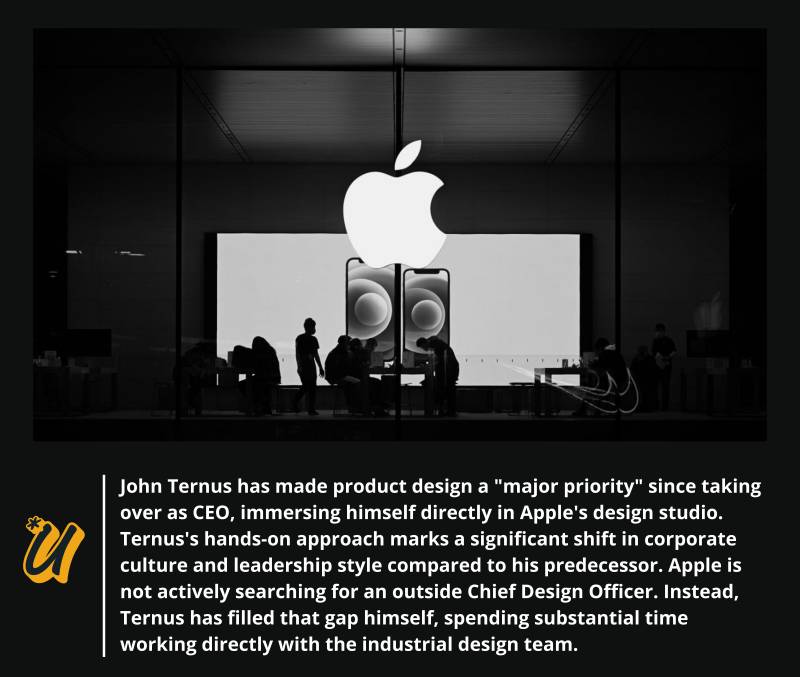
Finally, internal leadership transitions at consumer tech giants continue to alter product development pipelines. At Apple, CEO John Ternus is taking a direct, hands-on role in guiding industrial and user-interface design teams. Following the departure of historical design leaders, Ternus has established a much more involved presence in Apple's design labs compared to previous executive regimes. The strategic shift places product design and hardware integration back at the center of Apple’s long-term hardware roadmap as the company prepares its next multi-year suite of consumer devices and ambient smart-home technologies.