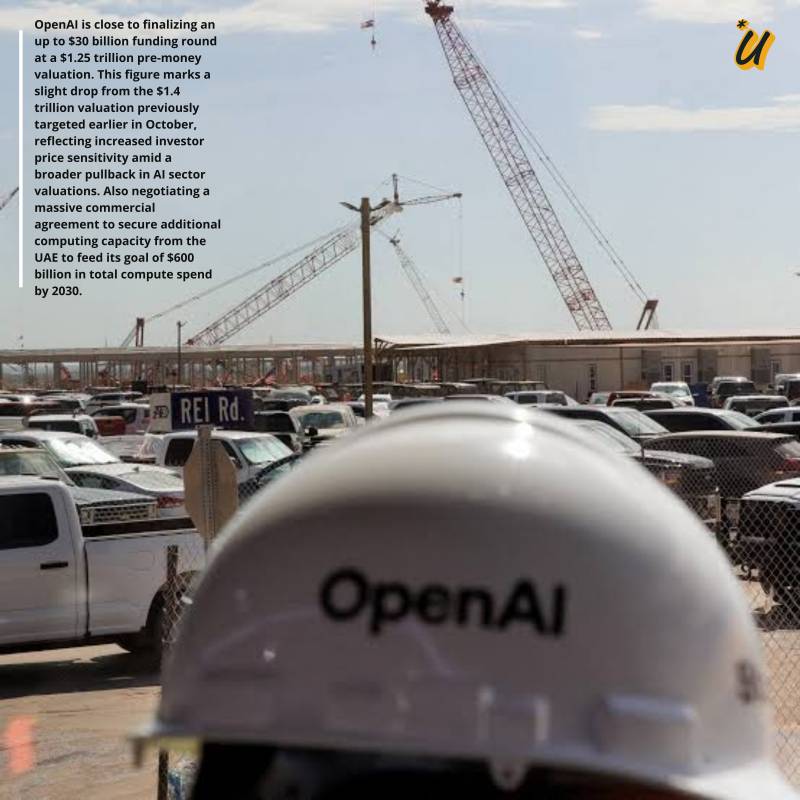
In a dramatic series of moves signaling a high-stakes recalibration across private technology markets and aerospace, major industry players and emerging startups alike are pushing financial boundaries while stoking broader economic debates. Front and center in this rapid evolution is artificial intelligence giant OpenAI, which is actively targeting a monumental $1.25 trillion valuation in its latest fundraising effort. The eye-watering target represents a slight adjustment from previous market reports, yet it underscores the unprecedented investor confidence and capital appetite surrounding generative AI leaders as they seek to scale proprietary models, secure critical compute capabilities, and maintain their market dominance amidst stiff competition.
Simultaneously, fellow AI powerhouse Anthropic is laying the groundwork for a prospective initial public offering, a move that could mark one of the most anticipated public debuts in the technology sector in recent memory. An IPO would not only validate Anthropic's distinct approach to safe and scalable foundation models, but it also promises to deliver massive liquid returns for its early institutional backers, including venture capital heavyweights Iconiq and Sequoia Capital. These early investors have poured significant resources into the enterprise, betting on Anthropic's ability to capture high-value enterprise market share while navigating complex safety and regulatory landscapes.
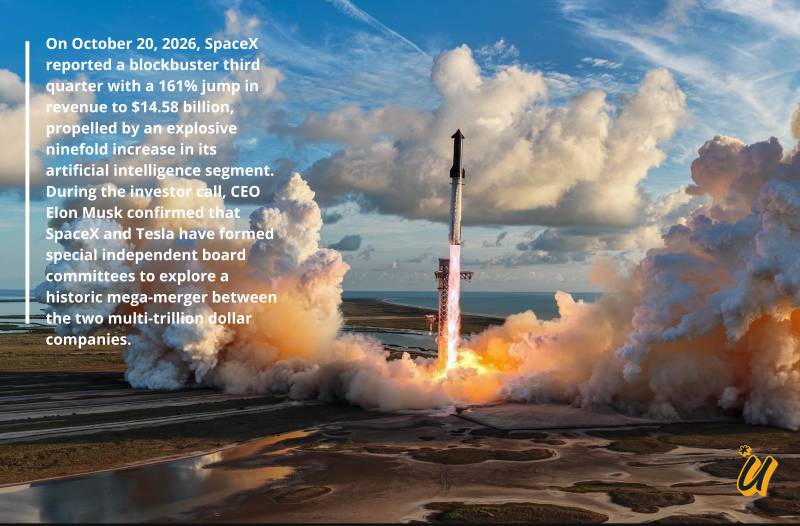
As software and AI developers command astronomical valuations, hardware and infrastructure innovators are asserting their own ambitions in space and telecommunications. In a bold strategic shift, SpaceX is taking concrete steps toward becoming a primary U.S. wireless carrier. The aerospace pioneer is actively seeking access to 80,000 cell sites nationwide, aiming to seamlessly bridge satellite-to-cellular capabilities and directly challenge traditional telecom operators. By expanding beyond its core launch and broadband services, SpaceX intends to deliver ubiquitous coverage directly to standard mobile devices, fundamentally altering the competitive dynamics of the telecommunications industry.
Further highlighting the robust investor appetite for frontier technology, space startup Xona has successfully secured $250 million in Series D funding. Xona plans to deploy these funds to build out a new high-precision satellite navigation network designed to augment and enhance current GPS limitations. As autonomous vehicles, defense technology, and precise commercial applications demand sub-meter positioning accuracy, Xona’s targeted constellation represents a major infrastructure upgrade for next-generation navigation systems.
However, beneath these massive funding announcements and ambitious expansions lies growing anxiety among financial analysts and business leaders regarding the long-term sustainability of the current AI boom. Industry observers are increasingly raising critical questions about whether the enormous capital expenditures poured into data centers, hardware, and infrastructure can yield proportional returns. Rising corporate debt loads, coupled with severe market concentration risks—where a small handful of mega-cap firms drive the vast majority of market gains—have sparked debate over whether current spending levels represent a durable economic shift or a speculative bubble vulnerable to corrections.
At the same time, traditional media and emerging financial platforms are navigating their own structural shifts. Hollywood continues its intense, ongoing battle for audience attention against fragmented digital media and user-generated content platforms, forcing legacy entertainment giants to rethink content distribution and monetization strategies. Meanwhile, alternative financial mechanisms are gaining significant traction, highlighted by prediction market platform Kalshi. Kalshi Chief Executive Officer Tarek Mansour points to the expanding role of real-time prediction markets during major political events, such as the upcoming midterm elections, where financial forecasting mechanisms are increasingly viewed as real-time, probability-driven alternatives to traditional political polling. Together, these developments reflect a transformative moment where AI capitalization, space infrastructure, and novel financial platforms are reshaping the broader business landscape.