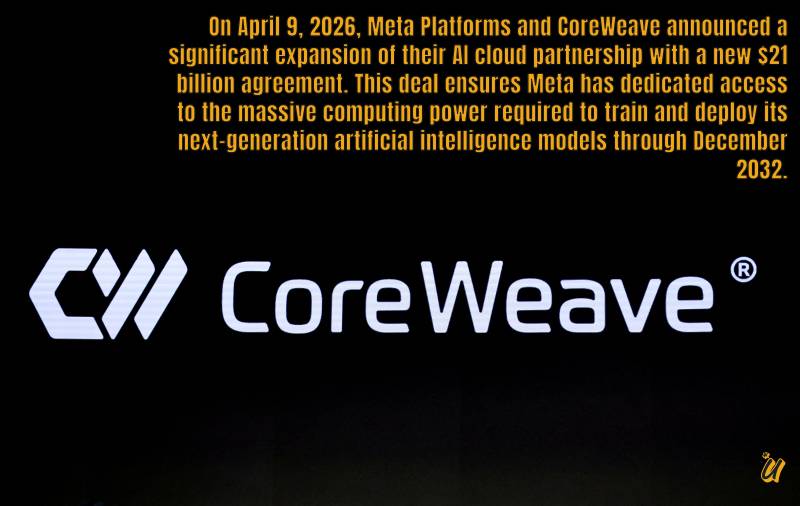
Thursday April 9, 2026 - The landscape of the global technology sector is undergoing a massive structural realignment as the world’s largest players move from experimental AI development to the construction of permanent, industrial-scale infrastructure. In a move that underscores the sheer capital intensity of this era, Meta has solidified its position as a primary architect of the AI future by entering into a staggering $21 billion agreement with CoreWeave. This contract, designed to secure specialized computing power through 2032, brings the total volume of agreements between the two companies to $35 billion. The deal highlights a growing trend among Silicon Valley giants: the outsourcing of physical compute resources to specialized providers to maintain the breakneck speed required for next-generation model training.
While Meta secures its hardware foundations, it is also pivoting its internal research strategy to reclaim dominance in the software race. In a departure from its previous emphasis on open-source contributions, the company has debuted its first closed AI model developed by its elite New Spark super intelligence group. This new model represents a sophisticated synthesis of global innovation, reportedly incorporating training data from Alibaba’s Qwen model. This strategic integration signals that Meta is willing to look toward international benchmarks to bolster its competitive edge as it seeks to return to the absolute forefront of the AI race, positioning the New Spark group as its primary engine for high-stakes proprietary development.
The broader market for AI equity remains white-hot, though recent movements at Anthropic suggest a high degree of internal confidence that is occasionally at odds with external investor demand. Anthropic recently completed a secondary share sale that was notably undersubscribed—not due to a lack of interest, but because employees are increasingly reluctant to part with their equity. With a reported revenue run rate of $30 billion, staff members are opting to hold their positions, betting on the company’s sustained growth rather than cashing out in the short term. This internal bullishness serves as a counterweight to the volatility often seen in the public tech markets, suggesting that the industry’s top talent sees significantly more upside ahead.
However, these domestic successes are being weighed against an increasingly complex geopolitical backdrop. The tech industry remains highly sensitive to escalating tensions involving Iran, which threaten to disrupt both the global hardware supply chain and the energy markets required to power massive data centers. While infrastructure spending remains robust for the time being, analysts are closely monitoring how potential spikes in oil prices and logistics bottlenecks might impact the delivery of critical components. The intersection of high-stakes diplomacy and hardware availability has become a permanent fixture in the strategic planning of every major Silicon Valley firm.
This era of expansion is also creating a ripple effect across the wider corporate ecosystem, from healthcare to hardware manufacturing. Chapter, a platform dedicated to Medicare navigation, successfully closed a $100 million Series E funding round, proving that AI-driven solutions in regulated industries still command significant venture interest. Simultaneously, legacy hardware providers are finding new life in the AI boom. Google has announced a multi-year agreement to integrate Intel Xeon processors into its infrastructure, providing a significant boost to Intel as it seeks to remain the backbone of the cloud during a period of intense competition from specialized chipmakers.
Despite the momentum, the path to global AI dominance is hitting physical and regulatory walls in certain regions. OpenAI has reportedly paused its ambitious Stargate data center project in the United Kingdom, citing a combination of prohibitive energy costs and a difficult regulatory environment. This suspension highlights a growing rift in the global tech race: while capital is abundant, the physical requirements for AI—specifically massive amounts of reliable electricity and streamlined planning permissions—are becoming the ultimate bottlenecks. As firms like Meta and Google double down on their infrastructure, the ability of national governments to provide the necessary power and policy support will likely determine where the next decade of technological breakthroughs occurs.