In a period of heightened geopolitical tension across the Middle East, the global technology landscape is undergoing a series of seismic shifts that are redefining the boundaries of computing, capital, and cosmic exploration. This week’s developments underscore a relentless drive toward artificial intelligence integration and a significant restructuring of the industrial and financial pillars that support modern innovation. At the forefront of this movement is a surprising and high-stakes alliance between some of the most influential names in the semiconductor and aerospace industries, signaling a new era of infrastructure-heavy development that aims to secure the future of high-performance computing.
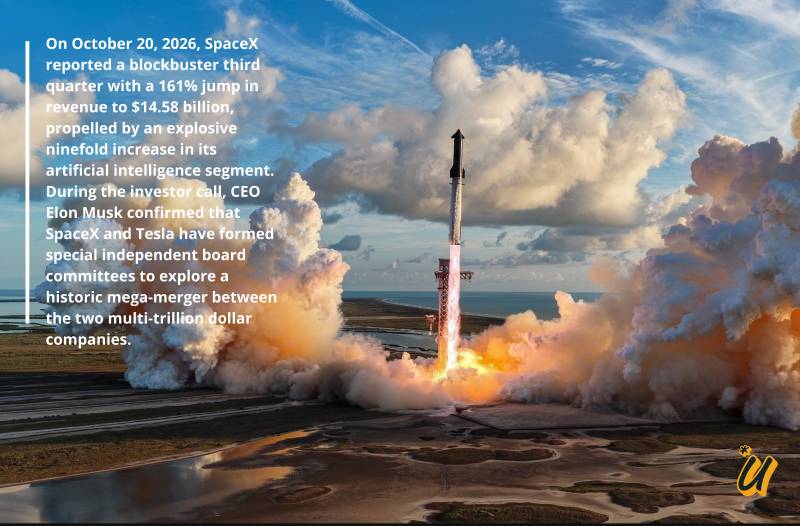
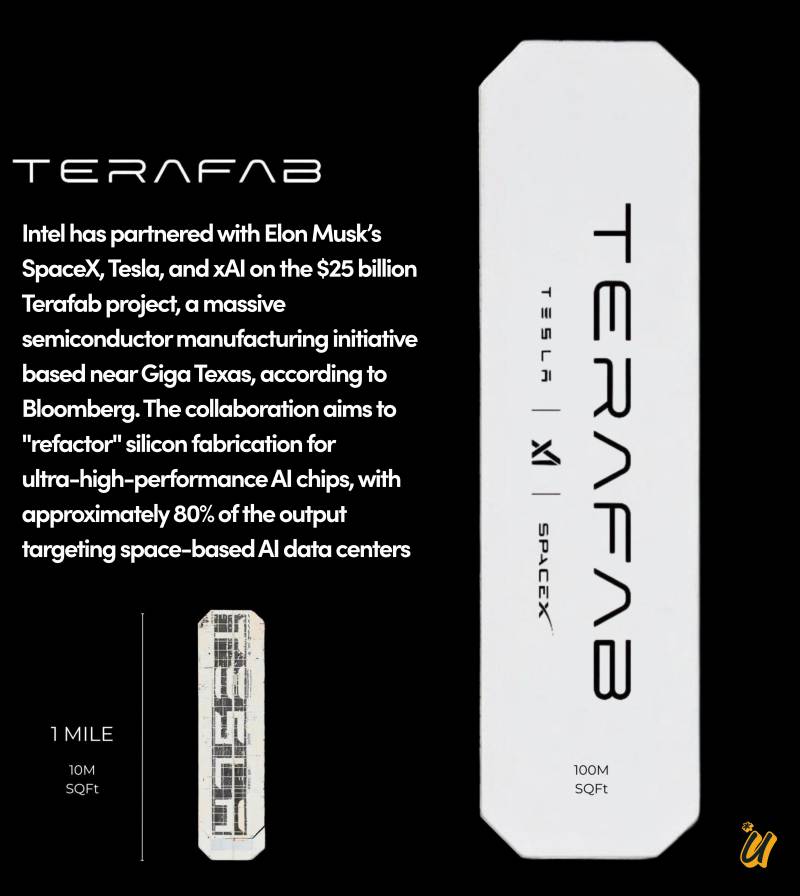
The most striking development comes from Intel, which has officially announced its participation in the Terafab project. This initiative, spearheaded by Elon Musk’s constellation of companies—including Tesla, SpaceX, and xAI—is designed to create unprecedented chip-making and compute capacity. By joining this venture, Intel is attempting to pivot toward a more aggressive manufacturing and design strategy, though market analysts suggest the road ahead is fraught with complexity. While the partnership offers Intel a strategic lifeline and a massive potential client base, the sheer scale of the economics involved is daunting. Execution remains the primary concern, as the project requires the seamless integration of Intel’s manufacturing prowess with Musk’s rapid-fire deployment of large-scale AI clusters and satellite infrastructure. Industry experts remain cautiously optimistic, noting that while the technical synergy is evident, the capital expenditure required to bring Terafab to fruition is nothing short of historic.
Parallel to the hardware race, the software and cloud infrastructure sectors are seeing a massive consolidation of resources. Broadcom and Google have recently expanded their long-standing agreement to bolster the operations of Anthropic, the AI safety and research company that has become a primary rival to OpenAI. This expansion is centered on Anthropic’s significantly increased reliance on Google’s Tensor Processing Units (TPUs), specialized hardware designed to accelerate machine learning workloads. By securing a deeper commitment from Broadcom for underlying networking and silicon support, Anthropic is positioning itself to handle the exponentially growing demands of large-scale model training. This move highlights the deepening "stack" of AI development, where the success of a software model is increasingly tethered to the efficiency of the silicon and the scale of the cloud provider supporting it.
The financial world is also bracing for a major realignment as Pershing Square’s Bill Ackman pushes forward with a transformative proposal for Universal Music Group. Ackman is advocating for a $65 billion deal that would see the music giant merge with a blank-check company, coupled with a strategic move to shift its primary stock listing to the New York Stock Exchange. This maneuver is viewed as an attempt to unlock greater liquidity and valuation for the world’s largest music company, which has seen its business model rejuvenated by the era of streaming and, more recently, the integration of AI-generated content. Shifting the listing to the U.S. markets reflects a broader trend of European-based companies seeking the deeper capital pools and higher tech valuations found on Wall Street, further centralizing global financial power in the American markets.
Reinforcing the narrative of an AI-driven boom, Samsung has reported a staggering 755% leap in quarterly profit, a figure that has sent ripples through the global economy. This massive surge is almost entirely attributed to the insatiable demand for high-bandwidth memory chips, which are essential components for the AI servers used by companies like NVIDIA and Microsoft. Samsung’s ability to scale production to meet the needs of the generative AI explosion has transformed its bottom line, proving that the "AI gold rush" is currently benefiting the "pick and shovel" providers of hardware more than any other sector. As the industry moves toward even more complex AI architectures, Samsung’s dominance in the memory space provides a vital barometer for the health of the broader tech ecosystem.
While the headlines are dominated by silicon and software, a quieter but equally profound revolution is taking place in the physical world through "reindustrialization." Leor Susan of Eclipse recently announced the closing of a $1.3 billion fund dedicated to backing startups that bring automation, robotics, and advanced energy solutions to traditional industries. This movement represents a departure from the "software-only" investment thesis that dominated the last decade. Venture capitalists are increasingly looking toward the physical world—factories, power grids, and supply chains—as the next frontier for tech disruption. The goal is to modernize the backbone of the global economy, making it more resilient to the very geopolitical uncertainties that currently loom over international trade and energy markets.
This trend of tech integration is also bleeding into non-traditional sectors like biotechnology and healthcare. Wesley Chan of FPV has noted that the most significant disruptions are no longer happening just in Silicon Valley office buildings, but in laboratories and clinical trials. AI is being utilized to bypass years of traditional research in drug discovery, allowing for the rapid identification of molecular compounds and a more streamlined approach to patient testing. By applying the same data-processing techniques used in large language models to biological data, startups are beginning to solve some of the most expensive and time-consuming problems in medicine, potentially ushering in an era of personalized healthcare at a fraction of the current cost.
Finally, as humanity looks toward these terrestrial advancements, the Artemis 2 mission has provided a reminder of the progress being made beyond our atmosphere. The crew is currently returning to Earth after a historic journey that saw them break human deep-space travel records and successfully orbit the moon. This mission serves as a critical proof of concept for the technologies that will eventually carry humans back to the lunar surface and, eventually, to Mars. The success of Artemis 2 is not just a scientific victory; it is a testament to the integrated tech environment described in this report—where advancements in AI, specialized chips, and private-sector partnerships like those seen in the Terafab project are converging to push the boundaries of what is possible for the human species. From the microscopic architecture of a Samsung memory chip to the vast trajectory of a lunar orbit, the world is witnessing a period of unprecedented technological acceleration.