Tech Sector Faces Historic Shakeup as Nvidia Charts Post-Huang Era and Anthropic Prepares Record IPO
The global technology landscape is undergoing a profound structural realignment this week, marked by a historic leadership transition at the world’s most influential semiconductor company, a record-shattering public market debut in artificial intelligence, and shifting dynamics across enterprise infrastructure and interactive entertainment. Following its latest quarterly earnings release, Nvidia finds itself at the center of Wall Street’s attention—not merely for its financial performance, which continues to defy conventional gravity, but for the permanent departure of longtime chief executive Jensen Huang and a strategic recalibration of how the chipmaker allocates capital and navigates geopolitical boundaries. At the same time, rival AI powerhouse Anthropic is preparing to test public investor appetite with an initial public offering poised to eclipse $1.4 trillion in valuation, while Take-Two Interactive rides a wave of critical acclaim ahead of the release of Grand Theft Auto VI, and infrastructure experts move to calm public anxiety following a string of high-profile system outages.
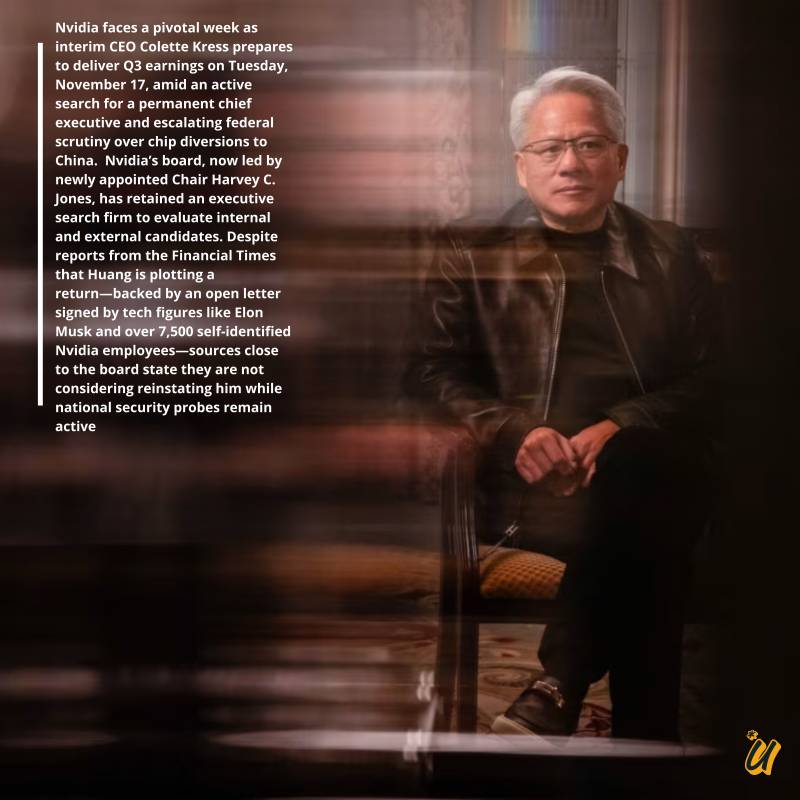
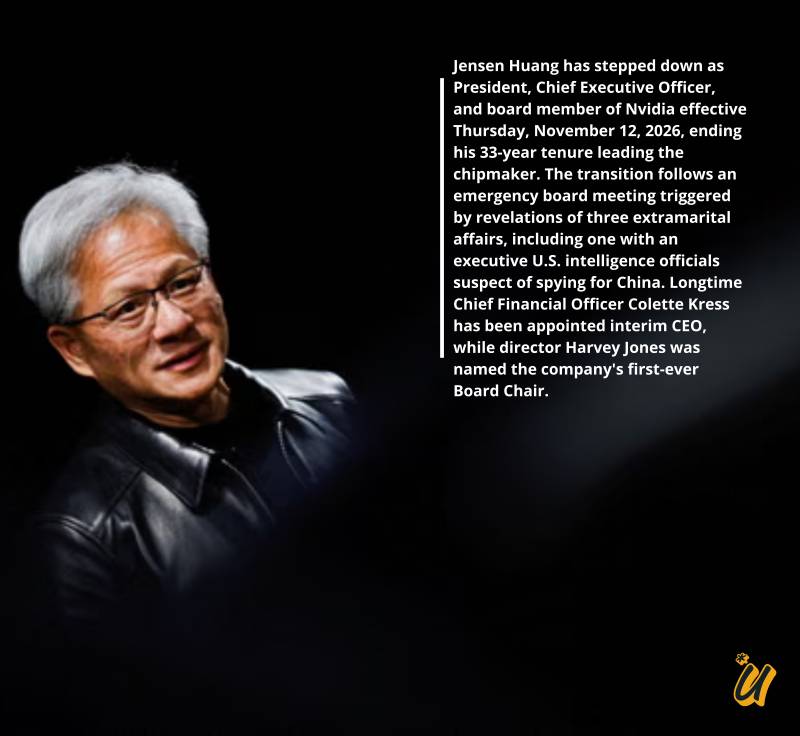
In a watershed moment for Silicon Valley, Nvidia’s board of directors has formally confirmed that co-founder and longtime CEO Jensen Huang will not be returning to lead the company. Chief Financial Officer Colette Kress has stepped in as interim chief executive while the board conducts its search for a permanent successor. The announcement brings closure to weeks of intense market speculation regarding the future stewardship of the chipmaker that has served as the primary engine of the generative artificial intelligence boom. Despite the abrupt end to the Huang era—a transition that has prompted credit rating agencies and institutional investors to scrutinize the company’s governance and succession planning—Nvidia’s underlying commercial momentum shows no signs of slowing. Alongside its latest earnings report, management raised its fiscal 2028 revenue growth forecast to an extraordinary 75 percent, signaling to Wall Street that enterprise and hyperscale demand for accelerated computing remains far ahead of supply. Interim CEO Colette Kress emphasized during the earnings call that improved supply chain capacity and relentless customer orders continue to bolster the company's long-term visibility, even as the organization navigates an unprecedented leadership handover.
Yet the search for Nvidia’s next permanent chief executive carries heightened strategic weight, particularly as geopolitical friction between Washington and Beijing reshapes the global semiconductor trade. In a major operational shift, Nvidia has halted shipments of its licensed Hopper architecture chips to China, despite having previously secured United States government approval to export the modified processors. The decision underscores the increasingly precarious regulatory and national security environment facing American technology firms operating across international borders. Members of Nvidia’s board have made clear that navigating geopolitical tensions and evolving national security mandates will be a primary criterion in selecting the company’s next leader. For years, balancing compliance with U.S. export controls while preserving access to the lucrative Chinese market required delicate corporate diplomacy; moving forward, the board is signaling that national security alignment and geopolitical resilience will take precedence over short-term regional volume.

Beyond leadership and geopolitics, Nvidia is also rewriting its financial playbook for the broader artificial intelligence ecosystem. Under Kress’s interim stewardship, the company is adopting what executives describe as a more disciplined and selective approach to capital allocation. During the height of the initial AI infrastructure buildout, Nvidia aggressively deployed capital across a wide array of emerging cloud providers—often referred to as "neo-clouds"—to accelerate adoption of its graphics processing units. Now, management is pulling back from broad ecosystem financing to prioritize direct support for its core manufacturing and supply chain partners, including Taiwan Semiconductor Manufacturing Company (TSMC) and key memory suppliers. By concentrating its financial firepower on securing wafer fabrication capacity and high-bandwidth memory supply rather than underwriting speculative cloud startups, Nvidia aims to fortify its production bottlenecks and protect its industry-leading margins as competition intensifies.
While Nvidia recalibrates its internal strategy, Wall Street is bracing for one of the largest public listings in financial history. Artificial intelligence developer Anthropic, creator of the widely adopted Claude family of models, is preparing to price its initial public offering. Market demand for the offering has been robust enough that underwriters expect the shares to price above their initial marketed range, a move that would push Anthropic’s fully diluted valuation above the $1.4 trillion threshold. The offering serves as a critical bellwether for whether public equity markets are willing to underwrite the massive capital expenditures and compute commitments required to train frontier AI systems. Notably, the transaction is drawing heavy participation from prominent existing venture capital backers, including Sequoia Capital, Lightspeed Venture Partners, and Accel. Rather than using the public debut purely as an exit event, these institutional investors are doubling down on their stakes, illustrating a broader strategy of capital concentration among top-tier venture firms seeking to consolidate ownership in the handful of foundational AI platforms capable of operating at global scale.
Outside the core artificial intelligence and semiconductor sectors, the consumer technology and entertainment industries are experiencing a major surge of optimism. Publisher Take-Two Interactive is drawing widespread enthusiasm from analysts and investors ahead of the release of Grand Theft Auto VI, developed by its Rockstar Games subsidiary. Early critical reviews have overwhelmingly hailed the title as a "masterpiece," praising its technical ambition, environmental detail, and narrative scope. Following more than a decade of anticipation since the release of its predecessor, the game’s reception has reinforced confidence on Wall Street that Grand Theft Auto VI will deliver historic commercial returns, offsetting softer performance in other segments of Take-Two’s portfolio and anchoring the company’s fiscal outlook.
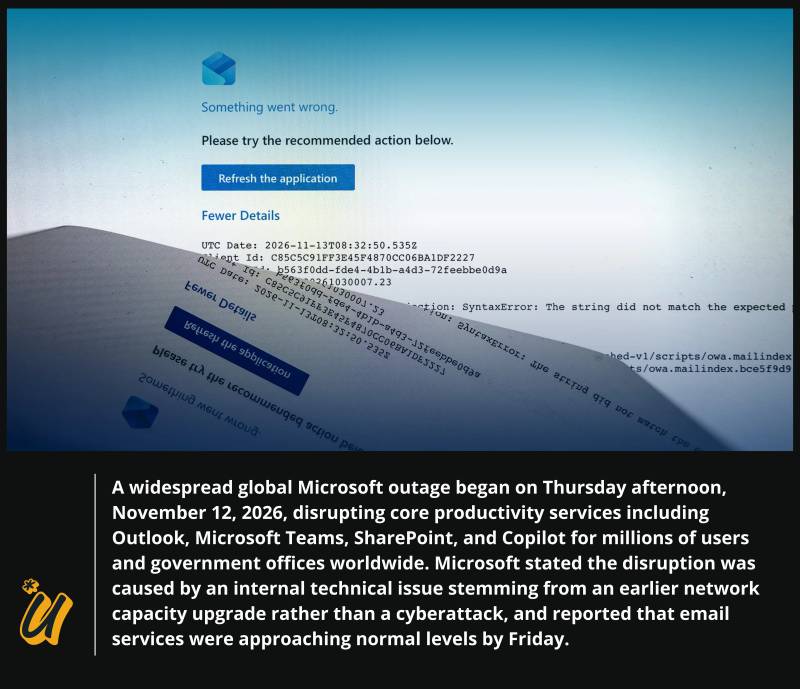
At the same time, the rapid expansion and interconnectedness of modern digital systems have brought renewed scrutiny to infrastructure reliability. Over recent weeks, a series of disruptive technical outages affecting critical sectors—including commercial air travel and government operations—has sparked widespread public anxiety and speculation regarding potential vulnerabilities. However, cybersecurity and systems engineering experts have moved quickly to clarify the root causes behind these disruptions. According to industry specialists, the recent failures are neither coordinated nor the result of malicious cyberattacks by hostile actors. Instead, experts point to the growing complexity of enterprise software stacks, routine system updates, and cascading dependencies within internal IT infrastructures. As organizations integrate increasingly sophisticated cloud services and automated tools into legacy frameworks, minor configuration errors or routine software patches can trigger widespread operational interruptions—a sobering reminder that even as the technology sector reaches new heights in artificial intelligence and computing power, foundational resilience remains an ongoing engineering challenge.