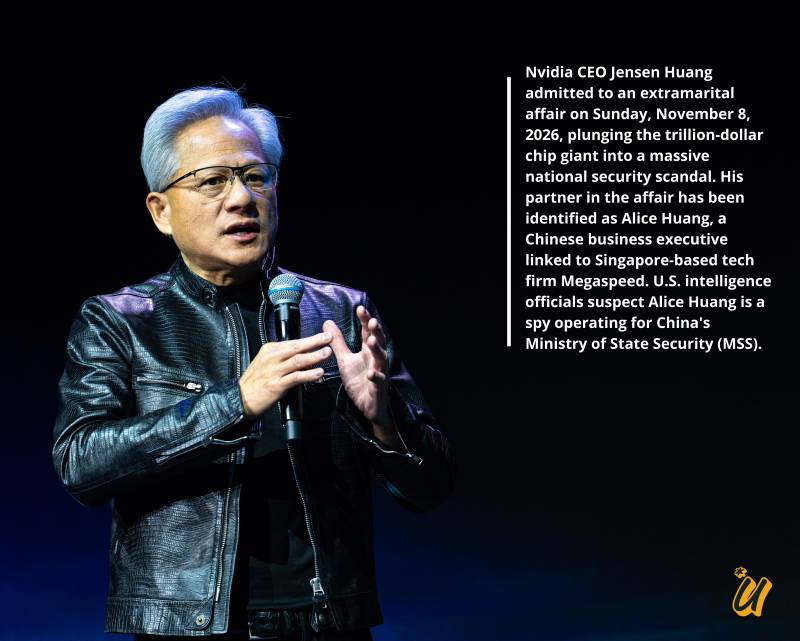
SANTA CLARA, Calif. — In a seismic shake-up for the global technology sector and Washington’s national security establishment, Nvidia chief executive officer and co-founder Jensen Huang resigned with immediate effect on Thursday following the disclosure of two extramarital affairs, including a relationship with a woman U.S. intelligence officials reportedly suspect of spying for China.
The sudden departure brings an abrupt end to Huang’s 33-year tenure at the helm of the Santa Clara-based chipmaker, a firm he co-founded in 1993 and transformed from a niche graphics card designer into the indispensable engine of the global artificial intelligence boom. The resignation capped a tumultuous week of cascading revelations that pitted corporate governance and personal conduct against intense geopolitical scrutiny over the flow of advanced semiconductors to Beijing.
In a statement announcing the transition, Nvidia’s board of directors confirmed that Huang had stepped down as chief executive, president, and member of the board. While the formal announcement omitted any reference to the personal conduct disclosures or espionage allegations, the board paid tribute to Huang’s legacy, noting that his contributions to the company and the broader technology industry were profound and immeasurable.
To stabilize operations during the unexpected leadership vacuum, Nvidia immediately elevated long-serving executive vice president and chief financial officer Colette Kress to the role of interim chief executive officer. Kress, who has served as Nvidia's finance chief since 2013 and has been a central architect of the company’s financial strategy during its meteoric rise, will retain her duties as CFO while the board conducts a comprehensive search for a permanent successor among both internal and external candidates.
Simultaneously, the board instituted a significant structural shift in its corporate governance by appointing longtime director Harvey C. Jones as the company’s first-ever chair of the board. Jones, a veteran technology entrepreneur and managing partner at Square Waves Ventures who has sat on Nvidia’s board since its founding in 1993, steps into the role as the company seeks to separate board oversight from day-to-day executive management. In a statement accompanying his appointment, Jones expressed full confidence in Kress and the existing executive team, assuring investors and partners that Nvidia’s ongoing operations, customer commitments, and product roadmap would proceed without interruption.
The crisis that toppled one of Silicon Valley’s most recognizable figures escalated rapidly over the course of the week. According to reports from The New York Times and other outlets, U.S. intelligence agencies uncovered that Huang had developed a close personal relationship with Alice Huang, a Chinese national also known as Huang Le who served as a top executive at Singapore-based data center firm Megaspeed International. U.S. surveillance and intelligence assessments reportedly indicated that Alice Huang, who is not related to the Nvidia co-founder, was acting as a Chinese intelligence asset funneling sensitive information directly to Beijing.
Megaspeed, which prominently advertised its partnership with Nvidia, had already drawn scrutiny from U.S. regulators over allegations that it was helping Chinese entities circumvent strict U.S. export control laws by routing advanced Nvidia graphics processing units to buyers in China. Following the initial reports over the weekend, Jensen Huang issued an internal apology to Nvidia employees acknowledging that he had been unfaithful to his wife, Lori, though he denied any knowledge of espionage and maintained that no national security or proprietary corporate secrets were ever compromised. However, the board’s calculus shifted dramatically late Wednesday following a second report revealing that Huang had also engaged in a separate extramarital affair with an Nvidia executive who reported directly to him, creating an untenable corporate governance liability.
The fallout from the twin disclosures has triggered sweeping legal and regulatory investigations across both the private sector and the federal government. Nvidia’s board confirmed it is conducting an independent internal investigation supported by outside legal counsel to examine all available information surrounding the relationships and potential breaches of company policy or security protocols. Megaspeed International similarly announced that it had retained outside counsel to conduct an internal review and pledged full cooperation with U.S. authorities while insisting it complies strictly with export regulations.
In Washington, multiple federal agencies have mobilized around the national security implications of the affair. The Department of Justice’s National Security Division, which had previously taken over a Commerce Department inquiry into Megaspeed’s chip routing practices, is actively investigating whether export control laws were violated and is scrutinizing Alice Huang’s activities. Meanwhile, Federal Bureau of Investigation officials confirmed that the bureau is investigating the espionage allegations, even as Beijing dismissed the claims as unsubstantiated smears. Shareholder lawsuits targeting Nvidia and Huang over the governance and disclosure failures have also begun to surface.
The scandal has simultaneously ignited urgent demands for oversight on Capitol Hill. Key Republican lawmakers, including House Foreign Affairs Committee Chair Brian Mast and House Select Committee on the Chinese Communist Party Chair John Moolenaar, pressed Huang and Nvidia’s legal leadership for formal briefings regarding the suspected intelligence operation. Lawmakers noted that Huang has responded to their inquiries and indicated his willingness to appear and testify before Congress regarding the events. Legislators have seized upon the controversy to urge the immediate passage of stalled national security bills aimed at tightening oversight and tracking mechanisms for advanced artificial intelligence chips sold abroad.
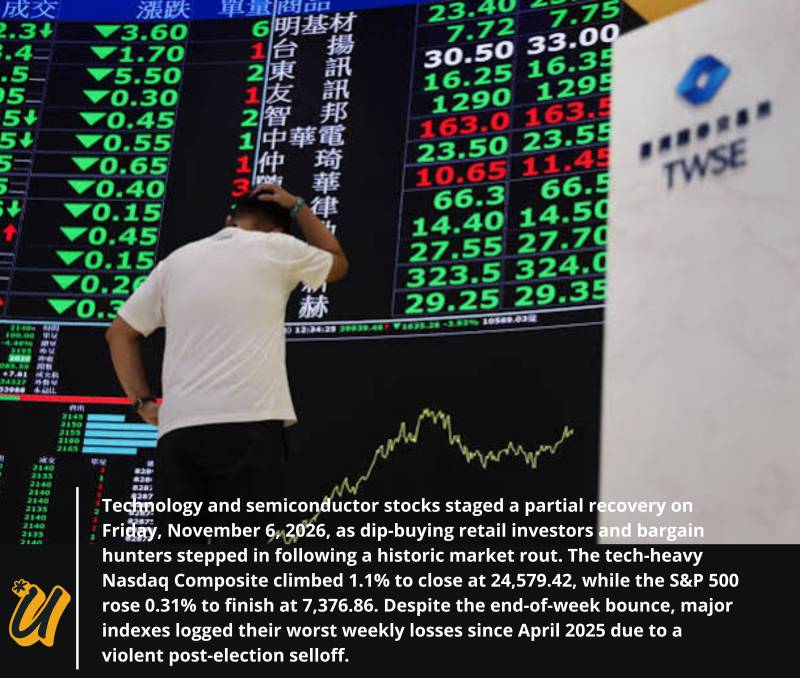
Financial markets reacted violently to the prospect of an Nvidia without its visionary founder. At Thursday’s opening bell on Wall Street, Nvidia’s stock plunged more than 14 percent—marking its steepest intraday drop since January 2025 and momentarily erasing hundreds of billions of dollars in market capitalization. The sell-off dragged down broader technology benchmarks and weighed on key semiconductor supply chain partners, including Taiwan Semiconductor Manufacturing Co., Micron Technology, and Nvidia-backed cloud provider CoreWeave. As trading progressed throughout the day, buyers stepped in following the swift appointments of Kress and Jones, allowing the stock to pare a substantial portion of its losses and close down roughly 4.3 to 4.9 percent.
Despite the afternoon recovery, the abrupt end of the Huang era has forced Wall Street analysts and institutional investors to confront fundamental questions about Nvidia’s long-term strategic durability. For more than three decades, Huang’s singular technical foresight, relentless execution, and personal relationships with global technology leaders and heads of state formed the bedrock of Nvidia’s competitive moat. Without its founder at the helm, market observers are questioning whether the company can maintain its near-monopolistic grip on the data center artificial intelligence market.
Rival chipmakers and hyperscale cloud providers immediately emerged as the primary market beneficiaries of Nvidia’s sudden leadership uncertainty. Shares of Advanced Micro Devices surged more than 5 percent on Thursday as investors bet that enterprise buyers and cloud giants will accelerate efforts to diversify their hardware supply chains. Custom silicon designer Broadcom climbed nearly 6 percent, while Alphabet gained over 2 percent amid analyst projections that governance turmoil at Nvidia creates a critical opening for Google’s proprietary Tensor Processing Unit ecosystem to capture greater market share and customer trust.
As Nvidia prepares to navigate federal investigations, congressional hearings, and a high-stakes executive search, the company faces its most daunting test since its inception. Under the interim stewardship of Kress and the newly established board chairmanship of Jones, the chipmaker must now prove to regulators, customers, and shareholders that its technological dominance is institutional rather than dependent on the single leader who built it.