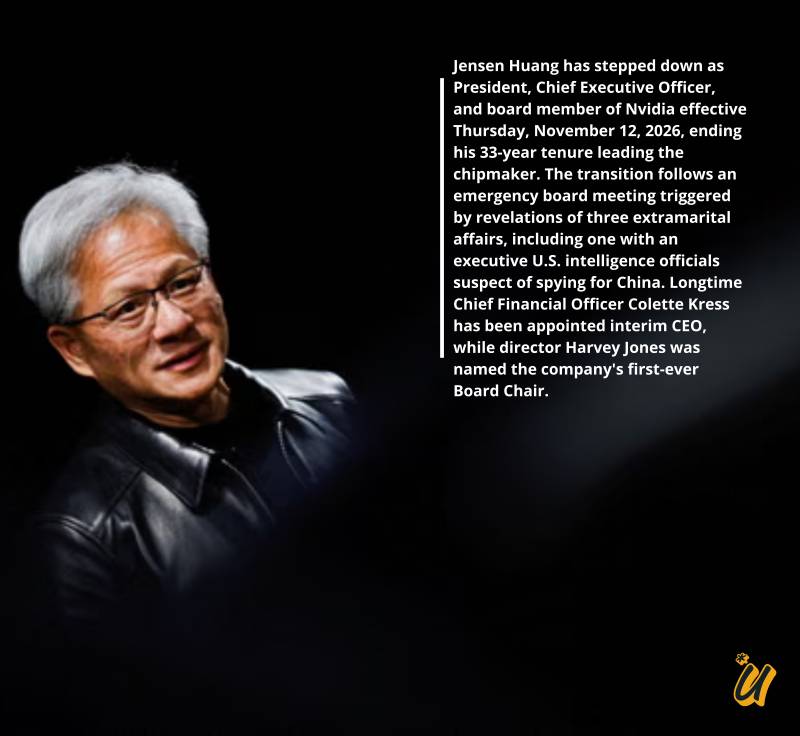
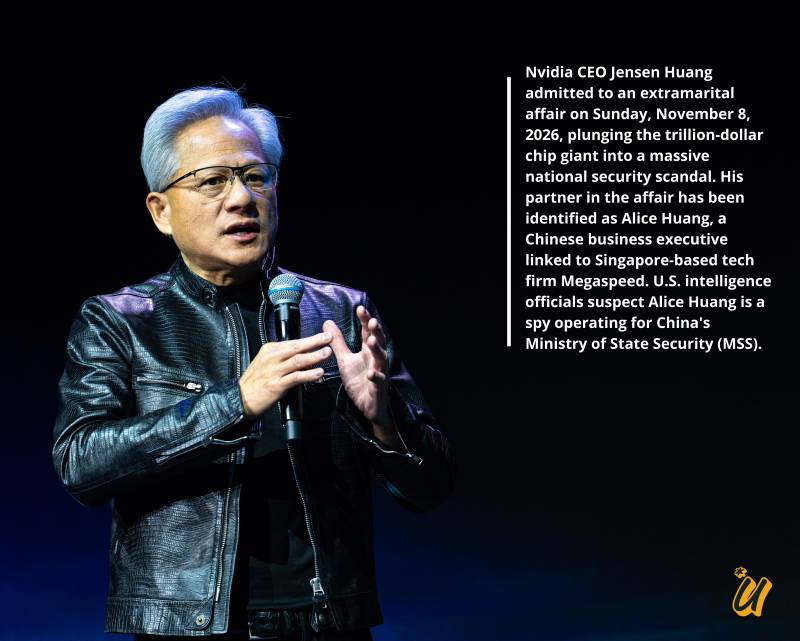
SAN FRANCISCO — The global technology sector is reeling from one of the most turbulent weeks in its modern history, marked by an unprecedented leadership crisis at the world’s most consequential artificial intelligence chipmaker, a crippling worldwide outage across enterprise software, a potential trillion-dollar corporate merger, and high-stakes financial maneuvers reshaping the artificial intelligence landscape. At the epicenter of the upheaval is Nvidia, where longtime co-founder and chief executive Jensen Huang has abruptly resigned, plunging the semiconductor giant into uncharted territory and sending shockwaves through Wall Street and global supply chains.
Huang’s departure brings a sudden end to a transformative era in which he steered Nvidia from a niche graphics card designer into the indispensable engine of the global artificial intelligence boom. In the immediate wake of the resignation, Nvidia’s board of directors moved swiftly to stabilize the company, appointing longtime chief financial officer Colette Kress as interim chief executive officer. Board Chairman Harvey C. Jones sought to reassure customers and investors that daily operations, existing customer commitments, and the company’s aggressive product roadmap will continue without interruption. Nevertheless, the sudden vacuum at the top has triggered intense scrutiny across financial markets, where Nvidia shares slid more than two percent in Friday trading as investors weighed the long-term implications of losing the visionary architect behind the company’s dominance.
Behind the scenes, Kress inherits a company navigating treacherous strategic and regulatory waters. Reports surrounding the resignation point to mounting boardroom friction over the sheer scale and financial risk of Nvidia’s multibillion-dollar artificial intelligence investments, alongside controversial personal disclosures that complicated Huang’s position at the helm. For years, Kress stood out within Nvidia’s executive ranks as a disciplined financial counterweight willing to question the pace and price tag of Huang’s sweeping capital commitments. Now, as interim chief executive, she must manage both internal governance concerns and ongoing regulatory probes that threaten to slow the company’s deal flow and constrain its strategic flexibility. While a vocal contingent of employees and industry figures—including Elon Musk—have rallied behind calls to reinstate Huang, institutional analysts remain focused on whether Kress can preserve Nvidia’s unmatched execution speed while reassessing its risk exposure.
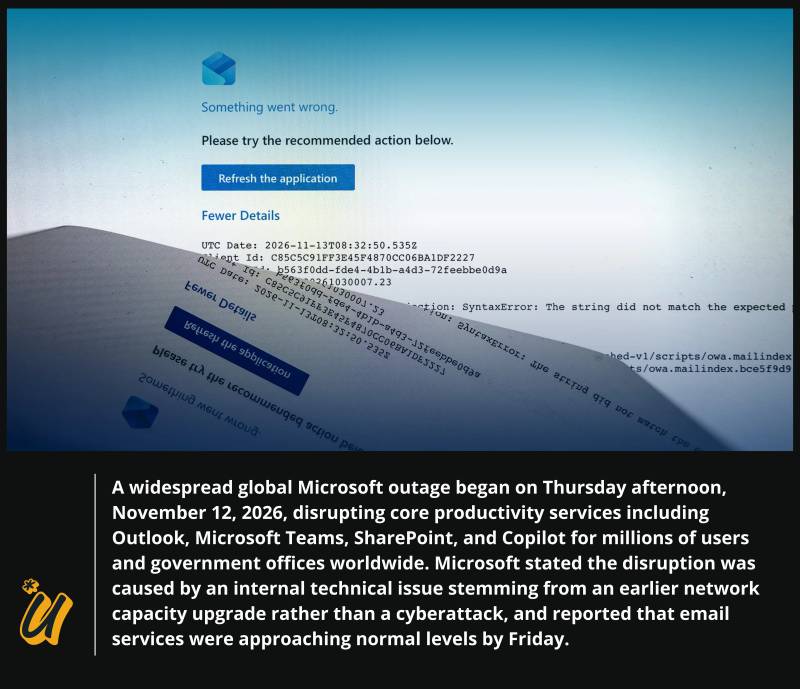
Even as hardware markets digested the leadership shock at Nvidia, the enterprise software world suffered a stark reminder of its own systemic fragility. A massive, multi-day global outage crippled Microsoft 365 services, knocking out core communication tools including Outlook, Microsoft Teams, and Copilot for millions of users across businesses, municipal agencies, and government offices worldwide. Beginning on November 12 and stretching well into November 13, the disruption paralyzed routine workflows, delayed municipal court and bond processing in the United States, and forced public-sector officials in the United Kingdom and elsewhere to rely on contingency protocols for back-office communications.
Microsoft executives, including corporate vice president Charles Lamanna, issued public apologies as engineering teams worked around the clock to untangle server and infrastructure failures. While Microsoft emphasized that the incident stemmed from an internal technical fault rather than a cyberattack or an artificial intelligence system failure, the prolonged downtime reignited fierce debate among enterprise technology administrators over the risks of deep cloud consolidation. By late Friday, Microsoft reported broad recovery and stabilized email delivery across its global infrastructure, yet the episode left corporate technology leaders questioning their reliance on tightly coupled cloud ecosystems.
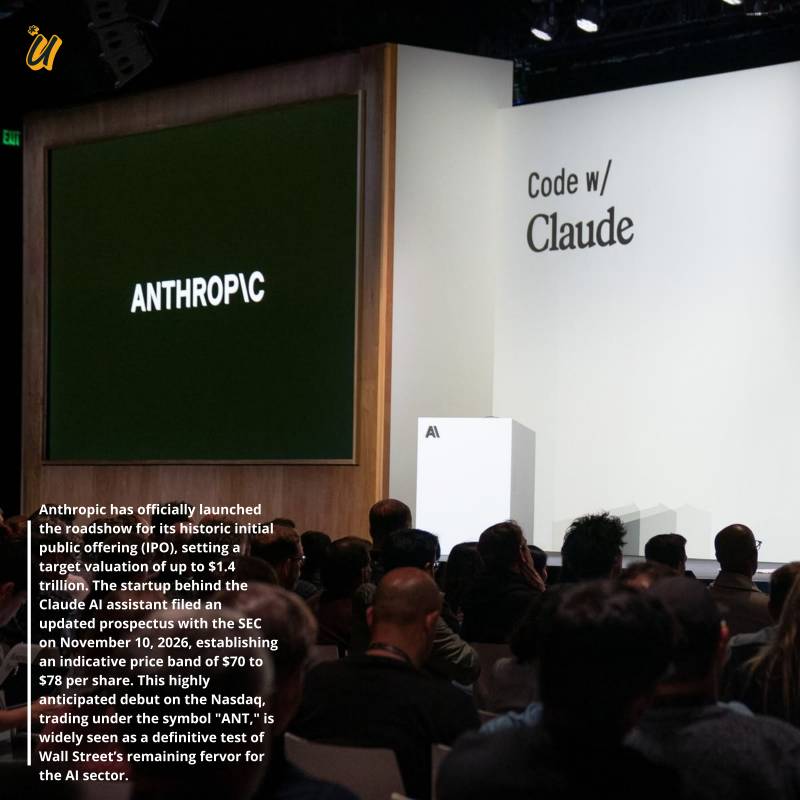
Amid the operational chaos at legacy tech titans, Wall Street’s attention turned toward the next generation of artificial intelligence powerhouses as Anthropic intensified its push toward a blockbuster initial public offering. Ahead of a planned Nasdaq listing under the ticker symbol ANT, Anthropic chief executive Dario Amodei appeared alongside JPMorgan Chase chief executive Jamie Dimon for a closely watched livestreamed discussion aimed at institutional and retail investors alike. The pairing underscored JPMorgan’s multifaceted role in the offering: the banking giant is both leading the retail share allocation—where 15 to 20 percent of the offering is earmarked for individual investors—and acting as a major enterprise customer deploying Anthropic’s Claude models across hundreds of internal applications.
During the discussion, Amodei offered a candid assessment of the economic tightrope facing frontier artificial intelligence developers, describing compute procurement as the deepest business dilemma confronting his company. Rather than overextending capital on fixed data center commitments, Amodei explained that Anthropic deliberately purchases baseline compute conservatively and relies on the spot market during demand surges—a strategy designed to protect margins in a volatile hardware environment. Despite strong institutional demand and an expected pricing range that values Anthropic well above $1.1 trillion, financial observers noted a distinctly more measured atmosphere surrounding the roadshow compared to the euphoric tech debuts of previous cycles. Following a broader market pullback in artificial intelligence equities and an earlier prospectus revision, investors are scrutinizing unit economics and capital discipline far more rigorously than they did even a few months ago.
While Anthropic prepares to test public market appetite for standalone artificial intelligence software, Elon Musk is reportedly orchestrating a corporate consolidation of historic proportions. According to sources familiar with the negotiations, SpaceX and Tesla have entered advanced merger discussions, with boards and financial advisers on both sides actively negotiating valuation terms, share exchange ratios, and governance structures. With Tesla’s annual shareholder meeting scheduled for December 3, dealmakers are aiming for a formal announcement as early as next month, setting the stage for what would easily become the largest corporate tie-up in financial history.
The proposed combination reflects the shifting balance of power within Musk’s industrial empire. Following SpaceX’s massive public debut earlier this year, which propelled its valuation past $1.9 trillion, the aerospace and satellite communications giant now commands a market capitalization exceeding Tesla’s roughly $1.5 trillion valuation. Consequently, the transaction is taking shape as an absorption of Tesla by SpaceX, uniting electric vehicles, autonomous robotics, energy storage, orbital launch infrastructure, and satellite networks under a single corporate roof. Beyond industrial synergies, political timing appears to be accelerating the negotiations; with a newly elected Democratic congressional majority preparing to take office in January and promising heightened oversight of Musk’s enterprises, executives are eager to lock in the deal’s framework before the end of the year. Still, significant hurdles remain, including special committee approvals, shareholder votes, and complex regulatory questions surrounding Tesla’s vital manufacturing operations in Shanghai.
Rounding out a week of sweeping industry realignment, specialized chipmaker Cerebras Systems demonstrated how aggressive challengers are capitalizing on the shifting dynamics in artificial intelligence infrastructure. Reporting record third-quarter financial results, Cerebras chief executive Andrew Feldman unveiled a bullish fourth-quarter revenue forecast of $310 million to $330 million—well ahead of Wall Street consensus estimates—and projected that the company’s total revenue will triple in 2027. The surge is driven by explosive demand for ultra-fast artificial intelligence inference, where Cerebras’s wafer-scale processors allow cloud providers and enterprise developers to run complex reasoning models at speeds far outpacing conventional graphics processing units.
Feldman highlighted that Cerebras’s cloud and services revenue surged more than 265 percent year-over-year, buoyed by major infrastructure agreements with top-tier hyperscalers including Microsoft, Oracle, and Amazon Web Services. Backed by a $26.1 billion order backlog and 700 megawatts of contracted data center capacity, Cerebras is rapidly transitioning from a niche hardware vendor into a full-scale artificial intelligence cloud operator. As Nvidia confronts leadership uncertainty and customers actively seek alternative compute architectures to avoid supply bottlenecks and memory constraints, Cerebras’s momentum underscores a broader truth emerging across the technology sector: no incumbent’s dominance is permanent, and the next phase of the artificial intelligence era is wide open for disruption.