A tectonic realignment is sweeping through the technology sector, driven by unprecedented capital deployment, rapid advances in artificial intelligence, and structural shifts in executive leadership and labor markets. In a landscape defined by fierce global competition, Silicon Valley heavyweights and international rivals alike are aggressively positioning themselves for the next era of computing. From massive private credit facilities aimed at funding market debuts to the rollout of frontier artificial general intelligence (AGI) models and sweeping changes at legacy software giants, the industry is undergoing one of its most consequential transformations in decades.
At the center of this financial momentum is artificial intelligence powerhouse Anthropic, which is finalizing a massive $15 billion revolving credit facility. The strategic move serves as a vital financial buffer designed to solidify the company's balance sheet ahead of a highly anticipated initial public offering. Market analysts expect the public filing to arrive in late September or early October, marking what could be one of the largest market debuts in tech history. Secure credit lines of this magnitude signal deep institutional confidence while granting Anthropic the immediate liquidity needed to scale its compute footprint, fund research, and compete directly with deep-pocketed hyperscalers without diluting equity prior to going public.
Yet, even as capital flows freely into artificial intelligence infrastructure, the broader technology employment landscape is experiencing a stark divergence. While overall United States labor metrics remain resilient, the information technology sector shed 23,000 jobs in August alone. Industry observers note that these job cuts do not necessarily point to broader economic distress, but rather a fundamental realignment within tech corporations. Enterprise budgets are increasingly shifting away from traditional software engineering and mid-level IT roles toward AI-driven efficiency initiatives. Consequently, changing skill requirements are altering entry-level hiring, forcing the workforce to adapt quickly as automated systems take over legacy programming and administrative tasks.
Beyond American borders, the geopolitical race for AI dominance is intensifying as foreign players seek independence from U.S. hardware supply chains. DeepSeek, a prominent Chinese AI research firm, has announced plans to deploy a massive cluster of 160,000 Huawei AI processors at a giant new data center facility under construction in Inner Mongolia. This deployment represents a major step forward in China's strategic push to build sovereign computing infrastructure independent of Western chipmaker Nvidia. By scaling native hardware capabilities on such a large footprint, Chinese firms are attempting to prove that high-performance AI models can be trained and run locally despite stringent export controls and supply constraints.
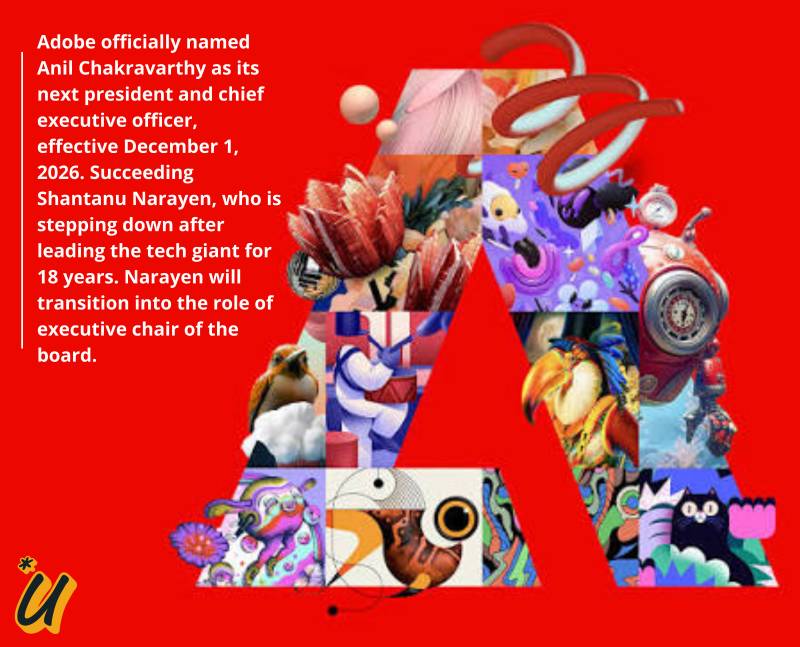
This technological paradigm shift is also accelerating changes in legacy corporate boardrooms, where established software leaders are restructuring to stay ahead. In a surprise executive transition, Adobe has named Anil Chakravarthy as its new Chief Executive Officer. Chakravarthy takes the helm during a critical period as the creative software giant navigates mounting competitive pressures from fast-moving AI startups. With disruptive generative art and automation tools threatening Adobe’s core creative suite, Chakravarthy’s leadership is expected to focus on deeply embedding frontier AI capabilities across the company's product line to protect its long-standing market dominance.
Meanwhile, the quest for artificial general intelligence reached a new milestone as OpenAI began rolling out its latest frontier model, GPT-6 Astra. Promoted as a decisive leap toward AGI, GPT-6 Astra introduces advanced reasoning, sophisticated task handling, and unprecedented autonomous agent capabilities. Chief Executive Officer Sam Altman emphasized that pushing the boundaries of AI capability requires strict adherence to safety protocols. Altman highlighted the necessity of "clear red lines" and robust guardrails to mitigate systemic cybersecurity risks while empowering end-users with agentic tools.
Rounding out a dramatic period for the tech industry, consumer hardware giant Apple is preparing for a landmark chapter of its own. The company is ushering in the John Ternus era with what industry insiders anticipate will be the largest product launch event in Apple’s history. Expected reveals include the debut of Apple’s long-rumored foldable device, the next-generation iPhone 18 series, and a series of smart home hub innovations aimed at unifying ecosystem control. Together, these major developments highlight an industry aggressively reinventing itself—balancing high-stakes hardware updates and structural corporate shifts with a relentless drive toward an AI-first future.