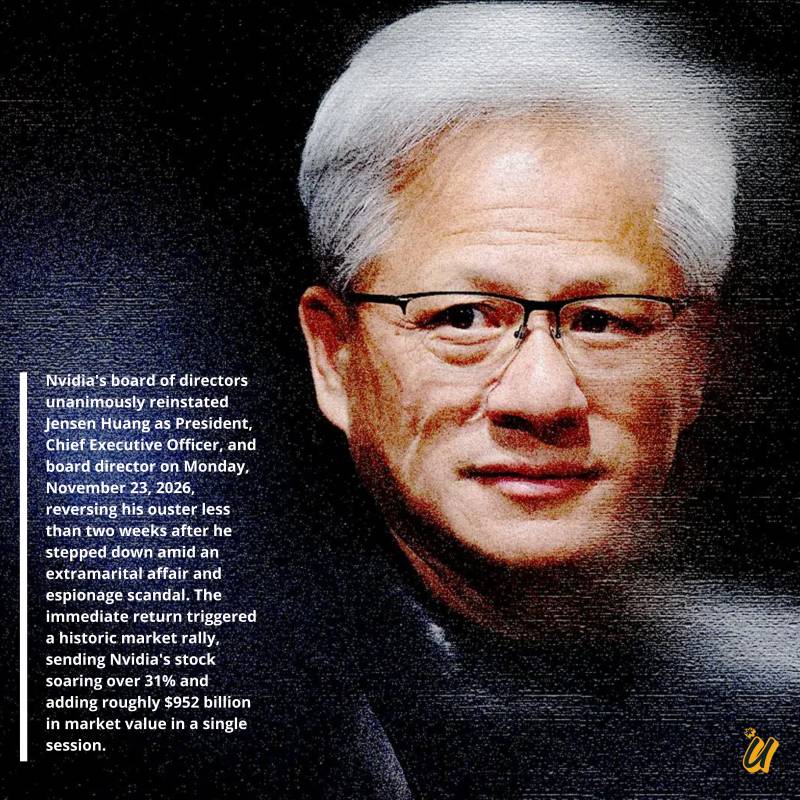
Washington’s escalating effort to restrict China’s access to advanced artificial intelligence semiconductors is reshaping the competitive landscape across Asia, forcing Chinese technology giants to overhaul their development strategies while sending shockwaves through Southeast Asia’s rapidly expanding data center industry. Following the high-profile reinstatement of Nvidia Chief Executive Officer Jensen Huang after an eleven-day absence—a move backed by President Donald Trump that has reignited bipartisan calls in Congress for even stricter export legislation—both Washington and Beijing are accelerating their efforts to secure dominance in the global artificial intelligence race. At the center of the latest friction is a sweeping interim rule issued by the U.S. Commerce Department’s Bureau of Industry and Security, which seeks to close off not only direct shipments of high-end processors but also the overseas cloud computing loopholes that Chinese developers have increasingly relied upon.
For years, U.S. export controls focused primarily on preventing American semiconductor designers such as Nvidia and Advanced Micro Devices from selling their most powerful chips directly to Chinese entities. Yet the rapid globalization of cloud infrastructure created an unintended workaround: Chinese companies could simply rent computing power hosted in third-country data centers or acquire hardware through complex international intermediaries. The political urgency in Washington to seal these pathways intensified in mid-November 2026. Huang’s sudden return to the helm of Nvidia—after stepping down amid scrutiny over personal conduct and an inquiry into potential export violations—prompted lawmakers on Capitol Hill to push for embedding new chip export restrictions into year-end defense legislation. Even as the White House argued that retaining Huang’s leadership was vital to preserving American technological superiority, the Commerce Department moved forward with new licensing requirements targeting shipments of advanced AI chips and servers to key transit and hosting hubs, including Malaysia, Thailand, Indonesia, Singapore, and Brazil.
Inside China, the cumulative weight of these restrictions is already visible in corporate earnings, product timelines, and capital allocation strategies. Major technology conglomerates, most notably Tencent and Alibaba, have reported tangible delays in their artificial intelligence model development and a moderation in cloud computing growth as access to top-tier foreign processors tighten. Historically, these cloud giants built their AI ecosystems around Nvidia’s graphics processing units, which remain the gold standard for training massive foundational models. Confronted with dwindling inventories of imported hardware and heightened regulatory scrutiny over offshore computing arrangements—including reports of canceled cross-border cloud partnerships and strict mandates requiring overseas providers to reserve a majority of their capacity for non-Chinese clients—China’s biggest tech firms have been compelled to pivot aggressively toward domestic semiconductor alternatives.
That forced transition, however, has exposed stark asymmetries within China’s domestic chip ecosystem and divided the country’s artificial intelligence sector into distinct tiers of resilience. While homegrown processors, such as Huawei’s Ascend series, have demonstrated growing capability in running inference workloads—the process of generating answers from already trained models—they still lag behind Nvidia’s flagship architectures when it comes to large-scale, frontier model training. Furthermore, domestic foundry capacity remains severely constrained, leaving Chinese buyers competing fiercely for limited local chip allocations and facing wait times stretching beyond a year for major orders. For China’s pure-play AI startups and leaner research laboratories that lack massive balance sheets or proprietary cloud infrastructure, the crackdown poses an existential threat. Having built their business models on renting offshore computing clusters rather than purchasing hardware outright, many of these smaller labs now face acute compute starvation.
In contrast, certain Chinese AI developers have weathered the storm far more effectively by rethinking how models are engineered from the ground up. DeepSeek, a prominent Chinese artificial intelligence firm, has emerged as a standout example of relative resilience amid the hardware squeeze. Rather than relying solely on brute-force computing scale powered by imported chips, DeepSeek invested early in deep software-hardware co-design, optimizing its model architectures and training algorithms to extract maximum efficiency from domestic silicon. By adopting homegrown chips early and tailoring its software stack to compensate for hardware bottlenecks, the company has insulated itself from the worst disruptions hitting peers that remained dependent on foreign cloud access and Western processor architectures. Industry analysts note that this bifurcation—between vertically integrated giants or hardware-adapted pioneers on one side, and compute-dependent renters on the other—is rapidly consolidating China’s AI landscape.
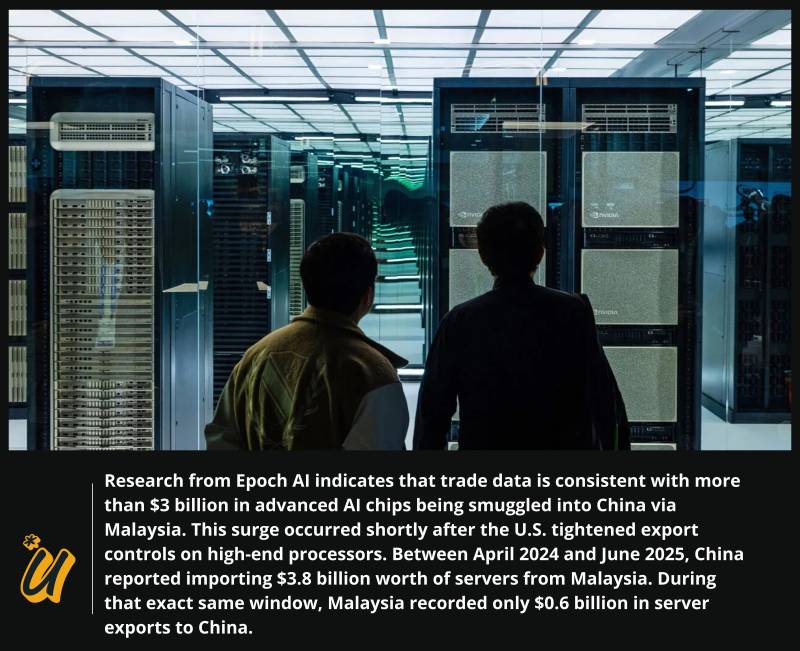
Despite Washington’s tightening dragnet, advanced American semiconductors have continued to find their way into Chinese hands through gray-market networks and indirect supply routes. Research conducted by Epoch AI underscores the persistent challenge of enforcing semiconductor embargoes across globalized supply chains. According to Epoch AI’s analysis, significant volumes of restricted chips have continued to reach China via diversion channels, accompanied by a marked surge in advanced processor imports into Southeast Asian nations, particularly Malaysia. Because high-end server racks and graphics processing units are high-value, compact goods that can be routed through shell companies or mislabeled in transit, tracking final end-users has proven difficult for regulators. The scale of these diversion concerns was underscored when U.S. Commerce and Justice Department officials confirmed ongoing investigations into suspected export control violations involving regional intermediaries, culminating in moves to place alleged diversion networks on federal trade blacklists.
The fallout from Washington’s determination to stamp out smuggling and remote compute workarounds is now reverberating far beyond Beijing and Silicon Valley, inflicting collateral damage across Southeast Asia’s booming digital infrastructure sector. Over the past two years, countries like Malaysia and Thailand positioned themselves as premier destinations for hyperscale data center investment, attracting billions of dollars in capital from global tech firms, real estate developers, and infrastructure funds. Malaysia, in particular, committed gigawatts of electrical power capacity to support a massive wave of data center construction aimed at serving surging regional demand for cloud and AI computing.
Now, the Commerce Department’s new licensing regime—which requires exporters to obtain federal approval before shipping advanced AI chips to data centers in Malaysia, Thailand, and neighboring hubs if those facilities could provide computing power to Chinese clients—has injected deep uncertainty into the region. Data center operators and their financial backers in Kuala Lumpur, Johor, and Bangkok are suddenly confronting the prospect of delayed hardware deliveries, stricter compliance audits, and the loss of lucrative Chinese tenants who had fueled much of the region’s recent capacity expansion. Industry observers warn that losing high-paying Chinese customers threatens to depress utilization rates and squeeze profit margins for facilities that were financed and powered on the assumption of uninterrupted regional demand. While exemptions exist for data centers owned by U.S.-headquartered companies or those dedicated strictly to benign commercial tasks such as online retail recommendation engines, local operators must now navigate an intricate web of end-user verification and reporting mandates.
As 2026 draws to a close, the confrontation over artificial intelligence hardware has evolved from a bilateral trade dispute into a comprehensive restructuring of Asia’s technology ecosystem. In Washington, political momentum behind closing every remaining loophole shows little sign of fading, even as American chipmakers warn that overly broad restrictions risk ceding long-term market share to foreign competitors. In China, the pressure of export controls is accelerating an urgent, state-backed drive toward semiconductor self-sufficiency, forcing companies like Tencent, Alibaba, and DeepSeek to innovate around hardware constraints while enduring near-term growing pains. Meanwhile, across Southeast Asia, governments and investors are left to recalibrate their digital infrastructure ambitions, caught squarely in the crossfire of a technological rivalry that is redrawing the map of global computing.