Following its armed incursion into Ukraine, Russia's role as the world's largest exporter of wheat has caused concern in several countries.
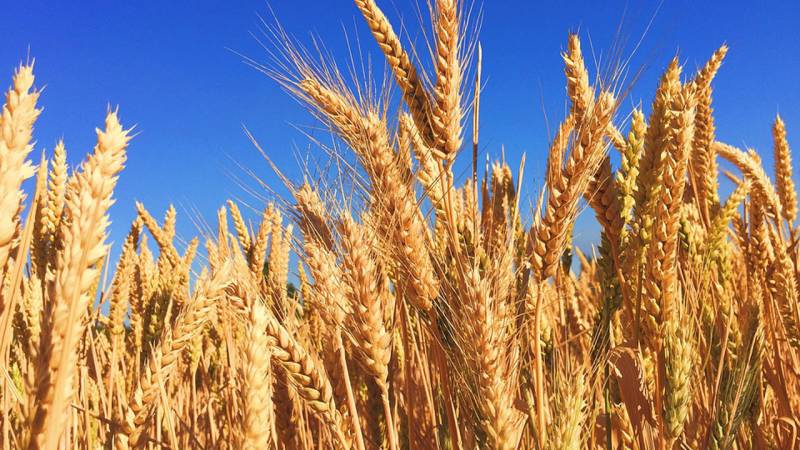
Wheat is currently one of the most widely consumed grains in the planet. It's also utilized in the making of noodles, pasta, cakes, and other sweets.
According to recent reports, the fighting has already pushed up food prices around the world, the Food and Agriculture Organization (FAO) said on Friday.
Poorer countries in northern Africa, Asia, and the Middle East that rely significantly on wheat imports, according to the organization, are at risk of serious food insecurity.
The data further showed that Russia exported $8.14 billion worth of wheat and thus emerged as the largest wheat exporter in 2019.
The United States exported $6.94 billion worth of wheat, while Canada exported $5.97 billion worth of wheat to occupy the second and third positions respectively. And France with $4.54 billion in wheat exports, and Ukraine with $3.11 billion, completed the list of the top five wheat exporters across the world in 2019.
According to the data, 31.3 per cent of the wheat used in Egypt in 2019 came from Russia. Same year, Turkey met 17 per cent of its wheat needs from Russia, while Bangladesh and Nigeria sourced 6.4 per cent and 4.8 per cent of their wheat imports from Russia.
Other African countries that imported wheat from Russia in 2019 were Sudan, 2.5 per cent, Kenya and Tanzania, 1.3 per cent respectively.
The top five importers of wheat in that year were Egypt, $4.67 billion; Indonesia, $2.31 billion; Turkey, $2.15 billion; Italy, $1.69 billion, and the Philippines, $1.63 billion.
The trade data showed that Egypt, Turkey, Bangladesh and Nigeria were the top destinations of Russia’s wheat in 2019, and the trend has not changed.
Also, Egypt led other African countries that imported the most wheat from Ukraine in 2019, as wheat sourced from Ukraine accounted for 22 per cent of the wheat used in that country. Tunisia and Morocco met 6.3 per cent and 5.7 per cent of their wheat imports from Ukraine.
In 2019, N349 billion worth of wheat was imported into the country. In 2020, Nigeria’s total wheat imports amounted to N756.9 billion of which N186 billion was sourced from the United States; N144 billion from Russia; N132.3 billion from Canada; N110.6 billion from Lithuania, and N101.9 billion from Latvia.
According to Nigeria’s data agency, the National Bureau of Statistics (NBS), Nigeria imported N898.2 billion worth of wheat in nine months that ended September 2021.
The top origins of wheat in Nigeria in 2021 included the USA, N194.2 billion; Canada, N136.4 billion, Russia, N124 billion, Lithuania, N122.3 billion and Latvia, N115.9 billion.
With the Russia/Ukraine conflict’s intensity and duration uncertain, “the likely disruptions to agricultural activities of these two major exporters of staple commodities could seriously escalate food insecurity globally when international food and input prices are already high and vulnerable,” said Qu Dongyu, director-general of the Rome-based FAO.
It was gathered that the price of a bushel of wheat has risen by 5.7 per cent to $9.347 following the escalation of the conflict.
In the statement, Qu said it was not clear if Ukraine’s farmers will be able to harvest wheat ready for the market in June. In Ukraine, “massive population displacement has reduced the number of agricultural labourers and workers. Accessing agricultural fields would be difficult,” he stated.
Based on the 2021 grain production data released by the Foreign Affairs Service of the United States Department of Agriculture, Nigeria’s wheat production increased to 99,000 metric tonnes (MT) from 55,000 MT recorded in 2020. This led to an 8.9 per cent decrease in importation as Nigeria imported about 6.0 million MTs in 2021, from the 6.6 million MT imported in 2020.
ACCORDING to the Wheat Farmers’ Association of Nigeria (WFAN), the country spends over $4.2 billion yearly on the importation of wheat to meet local demand of over 5.0 million MTs, yet the country is blessed with both human and material resources to meet the demand and export.
Wheat is used in flour milling industry; bread and other confectionaries take more than 80 per cent of total flour produced in Nigeria.