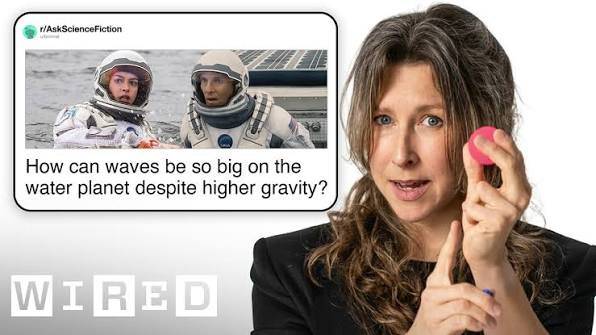
The architecture of planetary oceanography, thermodynamic equilibrium, and cosmic habitability reaches a masterly, illuminating peak in a wide-ranging scientific dialogue led by physicist and oceanographer Helen Czerski. Unpacking the profound physical laws that govern Earth’s oceans while extending that framework outward across the solar system, the discussion dismantles popular clichés to reveal water as the primary engine of planetary stability and biological emergence. In an exceptionally detailed science feature report and planetary systems analysis, chroniclers examine a conversation defined by debunking lunar-versus-oceanic knowledge myths, framing Earth as a self-regulating ocean system, expanding astrobiological habitability zones to icy moons, decoding the physical mechanics of ocean circulation and hydrothermal vents, and confronting the unresolved frontiers of oceanic energy transfer.
At the opening intellectual pivot of the dialogue lies Czerski’s incisive dismantling of one of science communication’s most overused tropes: the claim that humanity knows more about the surface of the moon than the depths of our own oceans. Challenging that false equivalence, she emphasizes that mapping a dry, geologically static lunar rock face is fundamentally incomparable to comprehending a vast, dynamic, three-dimensional fluid system constantly churning with heat, chemistry, currents, and living organisms. Where the moon sits frozen in vacuum, Earth’s oceans represent an endlessly moving engine essential to sustaining every breath taken on land. Through emotional precision, hearing a physicist defend the living complexity of Earth’s waters against glib comparisons exposes the quiet humility required when studying our own planet, proving that true scientific wonder begins when we stop treating the sea as empty space and start seeing it as Earth’s beating heart.
Central to understanding why life thrives on this planet is recognizing Earth fundamentally as an ocean system rather than a collection of disconnected continents. The speakers illuminate how water’s extraordinary heat capacity allows the global ocean to function as a colossal thermal battery—absorbing, storing, and redistributing solar energy to buffer the climate against violent temperature extremes while maintaining a remarkably stable chemical environment. Tracing the intellectual evolution from James Lovelock and Lynn Margulis’s Gaia hypothesis—the visionary concept that Earth operates as an interdependent, self-regulating organism—into modern Earth system science, the conversation illustrates how biology, atmosphere, rock, and seawater continuously co-engineer the conditions necessary for survival.

Related article - Uphorial Shopify

Through intelligent curation of astrobiological insight, this terrestrial ocean framework expands dramatically outward into the cosmos. While classical astronomy focused narrowly on the traditional Goldilocks zone—the orbital distance where liquid water can pool on a planet’s sunlit surface—the speakers explore broader concepts such as the echolawatt zone, revealing that vast subsurface oceans are surprisingly abundant throughout our own solar system. Beneath thick, fractured shells of ice on distant moons like Jupiter’s Europa and Saturn’s Enceladus, gravitational tidal flexing keeps dark global oceans liquid, transforming frozen outer worlds into prime candidates in the search for extraterrestrial life.
Through a deep structural understanding of marine physics, the discussion then dives beneath the waves to explain precisely how physical forces dictate biological possibility. Ocean layering, subtle gradients in salinity, and massive global overturning circulation govern how nutrients and oxygen travel between the sunlit surface and the abyssal floor. Crucially, life cannot flourish in static equilibrium; it requires sharp chemical and thermal gradients to harvest energy. Deep-sea hydrothermal vents emerge within this framework as vital crucibles of disequilibrium—superheated mineral chimneys piercing icy ocean darkness to create the exact energetic imbalance needed for chemosynthetic ecosystems to ignite and endure.
Strategic storytelling guides the conversation toward the exhilarating frontiers that still keep modern oceanographers awake at night. Czerski identifies the turbulent movement of kinetic and thermal energy through swirling ocean eddies, alongside the intricate, non-linear feedback loops linking marine life to global climate regulation, as major open questions driving contemporary research.Through transformational framing, this chronicle of Helen Czerski’s oceanic exploration transcends standard popular science summaries. It stands as an enduring scientific chronicle, proving that when rigorous fluid physics, planetary systems thinking, cosmic curiosity, and deep ecological reverence align, the ocean rises beyond mere geography—revealing itself as the fundamental architecture of life both on Earth and across the universe.