The architecture of modern exoplanet astronomy, celestial mechanics, and cosmic habitability research reaches a masterly, illuminating peak in a comprehensive examination of how scientists hunt for worlds beyond our solar system. Unpacking the extraordinary ingenuity required to detect microscopic signatures across vast interstellar distances, astrophysicist Dr. Ruth Angus demystifies the primary detection techniques, extreme planetary architectures, atmospheric biosignatures, stellar false positives, and cinematic portrayals of alien worlds. In an exceptionally detailed science feature report and astronomical analysis, chroniclers examine a frontier defined by photometric transit shadows, gravitational star wobbles, circumbinary and molten planetary extremes, the delicate criteria for extraterrestrial life, spectral atmospheric fingerprinting, and the real physics behind Hollywood’s most famous ocean planet.
At the observational foundation of exoplanet discovery lies a remarkable triumph of indirect measurement: finding worlds too faint and distant to photograph directly by watching how they disturb the light of their host stars. Astronomers rely primarily on two complementary engines of discovery—the transit method and the radial velocity method. In the transit method, telescopes monitor thousands of stars simultaneously, waiting for the precise, periodic dip in brightness that occurs when an orbiting planet crosses directly between its star and Earth. Measuring the depth and duration of that miniature eclipse reveals the planet's physical radius and orbital period. Working alongside photometry is the radial velocity method, which tracks the subtle gravitational tug-of-war between star and planet. Because a planet's gravity pulls its host star into a tiny reflex orbit around their shared center of mass, astronomers use high-precision spectrographs to detect the resulting Doppler shift—watching starlight stretch slightly redder as the star wobbles away and compress slightly bluer as it moves toward Earth, thereby unveiling the unseen planet's mass. Through emotional precision, realizing that humanity deciphers the existence of distant worlds by measuring tiny fluctuations in ancient starlight that traveled decades or centuries to reach our mirrors exposes the quiet poetry of astrophysics, proving that patience and mathematical precision can turn faint pinpricks of light into vivid portraits of alien landscapes.

Related article - Uphorial Shopify
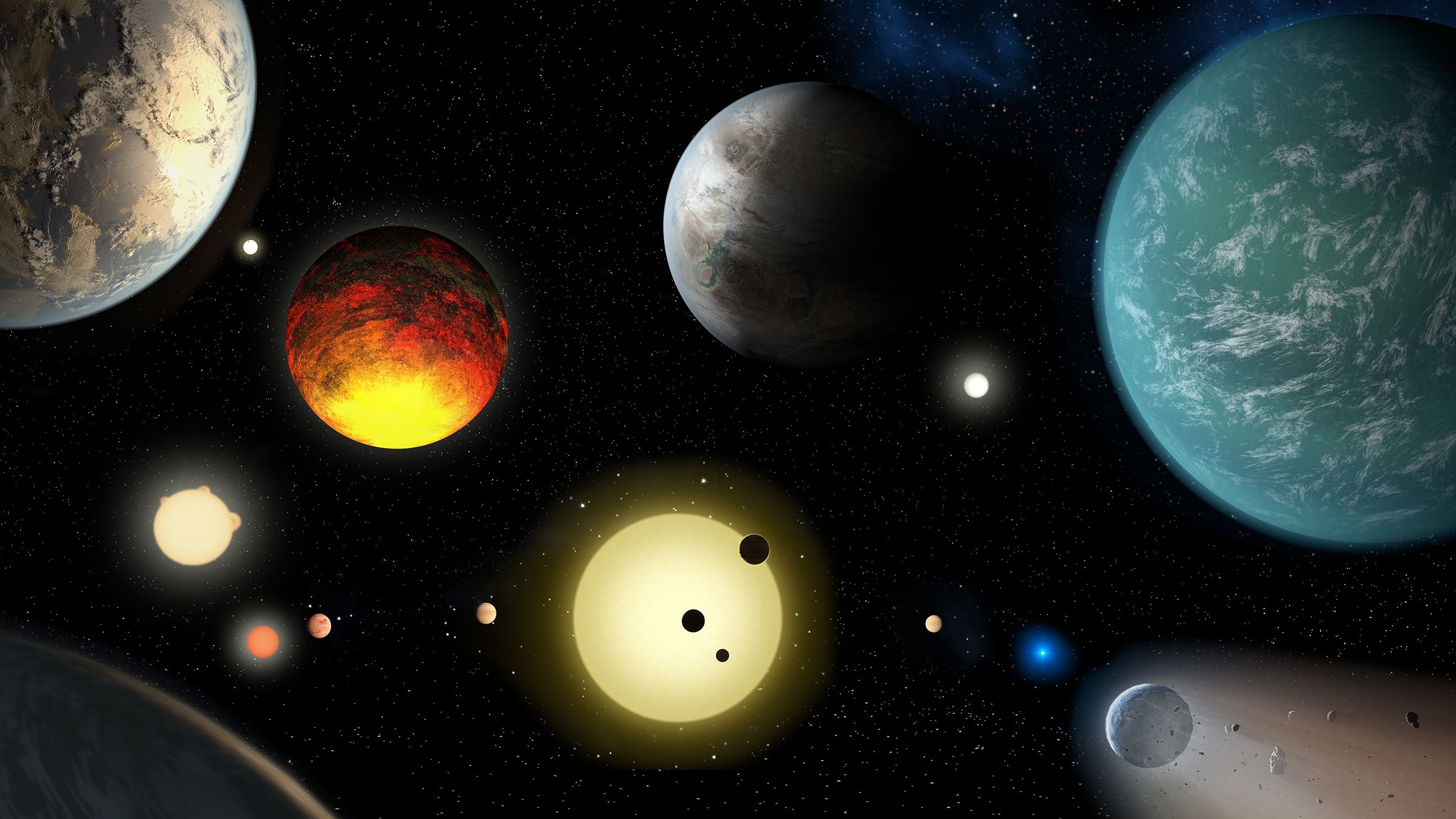
Central to the excitement of modern exoplanet surveys is the astonishing diversity of worlds populating the Milky Way—many of which defy every assumption built around our own orderly solar system. Rather than finding neat carbon copies of Earth, Mars, or Jupiter, astronomers have uncovered dramatic planetary extremes, including circumbinary planets that orbit two suns simultaneously, casting double shadows across alien horizons, alongside scorching lava worlds locked so tightly to their host stars that their surfaces remain oceans of molten rock and an entire orbital year lasts mere hours. Through intelligent curation of these cosmic discoveries, the galactic census reveals that nature’s capacity for planetary architecture far exceeds human imagination.
Through a deep structural understanding of planetary evolution and astrobiology, the conversation turns toward humanity’s most enduring question: what actually makes a distant world hospitable to life? While scientists have yet to confirm a truly habitable exoplanet, Dr. Angus outlines four foundational pillars required for a world to sustain biology as we understand it. Beyond sitting at the proper orbital distance to maintain liquid water on its surface, a promising candidate requires a stable atmosphere capable of regulating temperature and pressure, a protective global magnetic field to shield fragile surface chemistry from lethal cosmic radiation, and a stable, calm host star free from violent, atmosphere-stripping superflares.

Even from light-years away, astronomers possess a remarkably refined tool for probing whether those habitability conditions exist: transmission spectroscopy. During a planetary transit, a tiny fraction of starlight skims directly through the outer rim of the exoplanet's atmosphere before reaching space telescopes. Because specific gases absorb distinct wavelengths of light, splitting that filtered starlight into a spectrum allows scientists to identify chemical fingerprints such as carbon dioxide and oxygen—crucial atmospheric clues when evaluating planetary climates and searching for potential biosignatures. Yet this detective work carries formidable observational traps, most notably the challenge of stellar activity. Dark, magnetic starspots rotating across the surface of an active star can mimic the brightness dips or spectral shifts of an orbiting planet, requiring rigorous analysis to separate genuine planetary signals from noisy, turbulent stellar surfaces.
Strategic storytelling brings these astrophysical principles down to Earth by examining how popular culture translates complex space science onto the big screen, specifically dissecting the unforgettable water planet featured in Christopher Nolan’s Interstellar. By evaluating the physics behind the film’s towering, mountain-sized tidal waves, Dr. Angus separates genuine gravitational reality—how extreme proximity to a supermassive black hole generates colossal tidal forces—from the dramatic creative liberties filmmakers take to heighten visual spectacle and human urgency.
Through transformational framing, this exploration of exoplanet science transcends routine astronomical summaries. It stands as an enduring scientific chronicle, proving that when ingenious indirect detection, spectroscopic atmospheric detective work, rigorous skepticism toward stellar noise, and boundless human curiosity align, humanity transforms the night sky from a silent backdrop into an endless frontier of living worlds waiting to be understood.