Mediums for recorded audio have changed a lot over the years, and each new generation tries to make up for the shortcomings of the technology that came before it. Thomas Edison invented the phonograph in 1877, and though it originally used tin foil cylinders, it eventually switched to more durable and better-sounding wax cylinders (via Tees Valley Museums). According to COMSOL, next were 78 rpm vinyl records and then 33⅓ rpm and 45 rpm records came along with their respective advantages over the previous 78s.
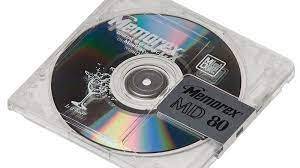
Vinyl ruled until the 1960s, when audio cassettes set off a decades-long deluge of new forms of recorded audio media, including 8-tracks, microcassettes, CDs, and digital audio tape, among others. MP3s came along and erased the need for physical media (per Yale University Library). In between all of those innovations were other creations that simply failed to catch on for one reason or another. One of those was Sony's MiniDisc.
There couldn't be a MiniDisc without the compact disc. Compact discs — or DCs, as everyone on the planet calls them — were invented in 1979. That was the year that a prototype of CD technology was put on display in Europe and Japan, and major electronics companies Philips and Sony put aside competition and worked together to develop a consumer version of CD technology (per the BBC).
In 1982, Swedish pop group ABBA released their album "The Visitors" on CD, making it the first commercially available album using the storage format. Just the year before, the BBC television program "Tomorrow's World" ran a segment on burgeoning technology, and the presenter pondered "whether there's a market for this kind of disc."
To put it mildly, there was. CDs had some major advantages over cassettes, including the ability to skip from track to track, plus there was no need to rewind or flip a CD halfway through an album. According to Time, when they were rolled out, CD players cost thousands, and CDs themselves cost about $17 — around $40 today — a piece. But sell they did, and the number of CDs sold increased each year until the early 2000s (via Statista).
According to Yale University Library, digital audio tape, or DAT, was introduced in 1987. It combined the digital technology employed in CDs and crossed it with magnetic tape, which had been around for decades. DAT cassettes came out in 1990, but they never really caught on with the general public (via Techopedia), partially because of the simple fact that not many recordings were released using the format. However, the digital audio tape was used in a lot of recording studios into the 2000s.
Just a few years after DAT cassettes were introduced, Sony — who had helped engineer the first consumer CDs — thought they had come up with the answer to what would replace CDs once and for all.