The architecture of indigenous defense engineering, industrial sovereignty, and Global South technological self-determination reaches a masterly, illuminating peak during content creator Tayo Aina’s inside tour of Terra Industries in Abuja, Nigeria. Founded by twenty-something innovators Nathan Nwachuku and Maxwell Maduka, the rapidly ascending defense-technology firm is upending longstanding assumptions about where advanced security hardware is conceived, built, and deployed. Rather than importing fragile, overpriced foreign systems designed for temperate battlefields, Terra Industries engineers homegrown, affordable, and ruggedized defense infrastructure—spanning autonomous aerial drones, counter-drone interceptors, and smart sentry towers—tailored directly to protect critical infrastructure and communities across Africa. In an exceptionally detailed industrial feature report and geopolitical analysis, observers examine an enterprise defined by Nathan Nwachuku’s deeply personal founding catalyst following a youth accident that cost him his eye, a pragmatic engineering ethos built around harsh tropical terrain and skills-first talent recruitment, a historic fifty-two-million-dollar seed raise fueling expansion across Nigeria and Ghana, and live field demonstrations of the Archer X surveillance aircraft and Karma 19 aerial interceptor.
At the deeply human origin of Terra Industries lies a formative trial that permanently altered how co-founder Nathan Nwachuku viewed risk, purpose, and mortality. Recounting a life-changing accident in his youth that resulted in the loss of his eye, Nwachuku reveals how surviving permanent injury stripped away trivial distractions and sharpened his determination to build something of enduring consequence before his time is spent. Rather than allowing physical loss to narrow his horizon, that brush with vulnerability instilled an urgent conviction that Africa cannot afford to leave its vital infrastructure, energy corridors, and citizens defenseless. Through emotional precision, hearing a young founder trace a multi-million-dollar robotics factory back to a childhood accident that cost his sight exposes the quiet resilience fueling genuine industrial ambition, proving that transformative builders often forge clarity out of personal pain.
Related article - Uphorial Shopify
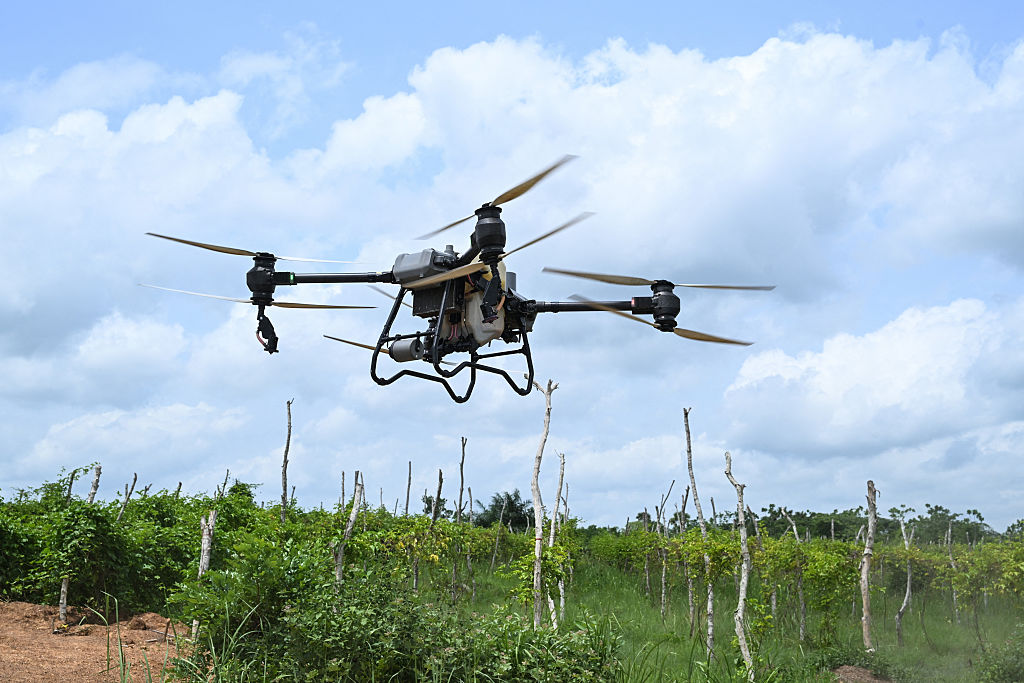
Central to Terra Industries’ rapid rise on the Abuja factory floor is an uncompromising philosophy of pragmatic engineering—one that rejects ornamental complexity in favor of durability, affordability, and local adaptability. Western defense platforms are frequently engineered for entirely different climates and backed by multi-billion-dollar procurement budgets, leaving African operators vulnerable when fine Harmattan dust clogs delicate joints, extreme heat strains electronics, or a single broken imported component grounds an aircraft for months. Terra Industries designs from the ground up for Global South realities—prioritizing heat resistance, dust sealing, field reparability, and decisive cost efficiency. Just as disruptive is the company’s approach to human capital: a substantial share of its engineering and assembly workforce does not hold traditional university degrees, hired instead on proven hands-on mechanical, fabrication, and problem-solving skill. By valuing practical mastery over paper credentials, Nwachuku and Maduka have unlocked an agile domestic talent pool capable of turning raw materials into operational hardware at remarkable speed.
Through intelligent curation of capital and regional scale, the narrative underscores how decisively global and continental investors have validated that thesis. Terra Industries successfully raised fifty-two million dollars—marking the largest seed round in African history—to supercharge manufacturing output and expand operations across both Nigeria and Ghana. Deployed to safeguard high-value economic lifelines such as power plants, mines, and industrial corridors, that historic war chest enables the company to move from early-stage production toward true industrial manufacturing scale while anchoring intellectual property and technical job creation firmly on African soil.

Through a deep structural understanding of modern aerial security, Tayo Aina’s visit culminates in live field demonstrations that translate factory-floor ambition into tangible capability. In the skies above the test range, the Archer X—a fixed-wing unmanned aircraft engineered for persistent, long-range aerial surveillance—demonstrates how wide-area monitoring can watch over pipelines, borders, and remote installations without risking human pilots. Alongside it, the Karma 19 interceptor drone showcases active airspace defense, designed specifically to detect, pursue, and neutralize unauthorized aerial threats before they reach sensitive targets. Seeing both platforms perform side by side illustrates an integrated security ecosystem uniting observation, software intelligence, and rapid response.
Strategic storytelling connects Terra Industries’ Abuja workshops and test fields to a far larger geopolitical horizon: democratizing advanced security for both sovereign governments and private infrastructure operators across the Global South. By mastering domestic design, supply chains, and maintenance, Terra Industries positions Nigeria to join the select circle of nations exercising sovereign control over their own defense technology rather than relying perpetually on foreign suppliers.Through transformational framing, this chronicle of Tayo Aina’s visit to Terra Industries transcends routine startup profiles. It stands as an enduring industrial and geopolitical chronicle, proving that when personal resilience, terrain-tested pragmatic engineering, skills-based local talent, historic venture backing, and sovereign manufacturing align, young African builders rise beyond mere technology consumers—forging an immortal foundation of self-reliance, security, and industrial dignity.