The architecture of Anatolian geological wonder, subterranean human resilience, and living culinary hospitality reaches a masterly, illuminating peak in Malini’s immersive journey across Cappadocia—a region too often flattened into postcard snapshots yet pulsing with centuries of unbroken human continuity. Unpacking a high-altitude plateau sculpted by ancient volcanic eruptions and refined by millennia of human ingenuity, the expedition ventures far beyond curated social-media vantage points to reveal how stone sanctuaries, village hearths, and ancestral vineyards anchor everyday life in central Turkey. In an exceptionally detailed travel feature report and cultural exploration, chroniclers examine a journey defined by a breathtaking sunrise hot air balloon ascent above sculpted tuff valleys, historical immersion spanning Zelve Valley’s rock-cut dwellings and the subterranean labyrinth of Derinkuyu, intimate cultural participation through sunset horseback riding and home-style preparation of testi kebab and manti with a local family in the village of Ayvali, and a guided exploration of Cappadocia’s ancient viticultural lineage inside the rock-carved fermentation cellars of Kocabağ Winery.
At the dawn threshold of the journey lies one of world travel’s most transcendent rituals: ascending silently in a hot air balloon as first sunlight spills across Cappadocia’s surreal topography. Long before dawn warms the Anatolian steppe, burners roar softly against the pre-morning chill, lifting wicker baskets upward into a pale indigo sky alongside dozens of glowing envelopes. As the horizon ignites in amber and rose, the sunrise flight offers a sweeping, three-dimensional aerial perspective that restores true geological scale to a landscape shaped over millions of years by volcanic ash, basalt caps, wind, and water. Floating effortlessly above undulating valleys, conical fairy chimneys, and honeycombed cliffs, the traveler witnesses how nature’s patient erosion carved both monumental drama and intimate shelter out of soft volcanic tuff. Through emotional precision, drifting weightlessly in crisp morning air while golden light washes over silent stone spires exposes the quiet awe at the heart of authentic discovery, proving that seeing a land from above does not distance the traveler—it deepens reverence for the human stories tucked inside every valley floor below.

Related article - Uphorial Shopify

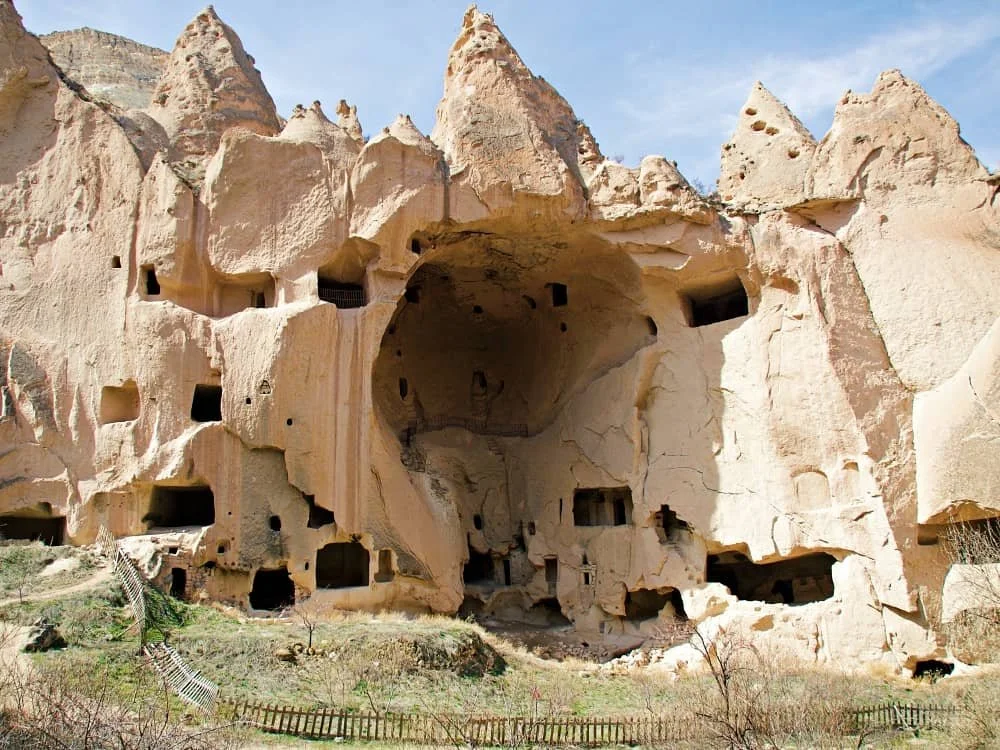
Central to understanding Cappadocia’s historical endurance is descending from skyward wonder directly into the carved stone memory of the earth itself. Stepping into the tri-valley open-air sanctuary of Zelve, Malini traces the interconnected cave dwellings, monastic chambers, millrooms, and early rock-cut churches hollowed directly out of pale volcanic rock—spaces where communities lived, prayed, ground grain, and raised families in seamless harmony with the terrain well into the twentieth century. Walking along dusty paths flanked by eroded cliff faces, every hand-chiseled doorway and soot-darkened ceiling testifies to a civilization that adapted to soft stone rather than imposing concrete upon it. That vertical journey into human survival intensifies dramatically upon entering the multi-level depths of Derinkuyu, the ancient subterranean city engineered to shelter thousands of inhabitants, livestock, wine presses, ventilation shafts, and provisions behind heavy rolling stone doors during eras of invasion and persecution. Descending through narrow, stooping tunnels carved deep beneath the plateau, the sheer claustrophobic weight and architectural brilliance of Derinkuyu remind every visitor of the extraordinary lengths ordinary communities took to safeguard faith, autonomy, and family across turbulent centuries.
Through intelligent curation of lived tradition, the narrative then steps deliberately outside historic monuments to embrace Cappadocia’s living cultural pulse. Mounting a horse at sunset for an unhurried ride through quiet, rose-tinted valleys—honoring a region whose very name is tied to its ancient Persian reputation as the land of beautiful horses—Malini connects physically with the slower, earthbound rhythm of the Anatolian countryside. As shadows lengthen across orchard rows and sculpted ridges, the ride replaces hurried sightseeing with quiet sensory presence. That spirit of genuine human connection deepens immeasurably inside a family home in the rural village of Ayvali, where hospitality unfolds around a working domestic hearth rather than a commercial restaurant menu. Working side by side with her local hosts, Malini learns the patient, tactile craft behind two cornerstones of central Anatolian cuisine: seasoning tender meat and vegetables before sealing them inside handmade clay vessels to slow-cook testi kebab over glowing embers—a dish traditionally cracked open at the table to release fragrant steam—and rolling, cutting, and pinching miniature parcels of manti dough by hand with rhythmic precision. Around that family kitchen table, cooking ceases to be a culinary demonstration; it becomes an intimate exchange of memory, laughter, and generational pride preserved one shared meal at a time.
Through a deep structural understanding of agricultural heritage, the expedition completes its portrait of Cappadocia by tracing the region’s millennia-old winemaking lineage—a viticultural tradition rooted in mineral-rich volcanic tuff soils, high-altitude sunshine, and sharp day-to-night temperature swings. Touring the historic Kocabağ Winery in Uçhisar, founded in 1972 by Mehmet Erdoğan, Malini steps inside cool, atmospheric subterranean cellars where indigenous Anatolian grapes such as crisp white Emir and expressive red Kalecik Karası are fermented and aged in massive vats carved directly into the natural volcanic rock. Held at a naturally steady cellar temperature without reliance on heavy oak masking, these stone-carved fermentation tanks illustrate how local geological architecture and ancestral farming wisdom continue to work in quiet partnership centuries after the earliest Anatolian vintners pressed their harvests.
Strategic storytelling binds every chapter of Malini’s itinerary—from high-altitude dawn skies to deep subterranean tunnels, sunset valley trails, village kitchens, and stone-cut wine cellars—into a persuasive rebuttal against superficial checklist tourism. Across every encounter, the journey demonstrates that Cappadocia’s true magnetism resides not merely in photogenic horizons, but in the unbroken dialogue between ancient stone and generous modern hosts who welcome strangers into their living heritage.Through transformational framing, this chronicle of Malini’s Cappadocian expedition transcends routine destination guides and fleeting social-media itineraries. It stands as an enduring cultural and travel chronicle, proving that when skyward wonder, subterranean historical memory, generous village kitchen fellowship, and ancient viticultural craft align, a journey through central Anatolia rises beyond mere sightseeing—becoming an unforgettable encounter with human resilience, timeless hospitality, and living history.