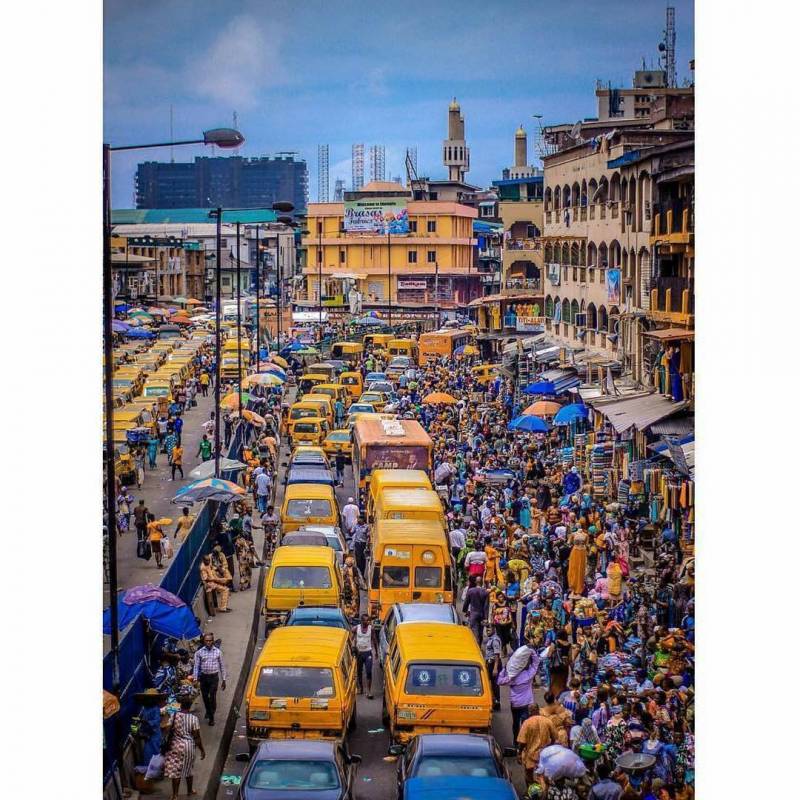
Lagos has grown into a complex conglomeration of people, towns, and entrenched interests from its historical origins as a fishing village and the site of a pepper farm to today's busy city.
Lagos, Nigeria's and West Africa's economic powerhouse, is expected to overtake Cairo as Africa's most populous city over the next 50 years. From 15 million people today, the population will grow to 100 million. The forecasts may be underestimated if recent waves of migration – from those seeking economic opportunities or fleeing the climatic catastrophe and conflict in other parts of Nigeria – are anything to go by.
Governing a metropolis the size of Lagos is no easy task, It’s a city that is always growing, and with deep-seated socioeconomic inequalities.
The African Cities Research Consortium is a new effort dedicated to addressing major concerns in 13 cities across Sub-Saharan Africa. Our most recent article shines light on Lagos' intricacies and why governing the metropolis is a task in and of itself.
Struggles with governance
Lagos is confronted with numerous issues, some of which are crucial to comprehending why metropolitan governance is so tough. To begin with, the geographic definition of what defines Lagos has shifted throughout time. The city's urban land area is constantly expanding to absorb state, and now national, borders.
As a result, accurate data for short- and long-term planning initiatives is difficult to come by.
Second, the city's governance mechanisms – from the local to the state level – must be examined. are unclear and don’t necessarily align in the ways expected. The local government system is essentially an appendage of the state government. It lacks autonomy as well as the technical and fiscal capacity required to perform its constitutional functions.
power dynamics
Lagos has the distinction of being Nigeria's first and longest-established capital city. It began as a protectorate under the British colonial authority and eventually became the colony's and then Nigeria's capital. It withstood several military coups and remained the capital until the federal capital territory was relocated to Abuja in 1991.
Despite the fact that it has lost its administrative capital status, Lagos remains Nigeria's economic powerhouse. In terms of productivity, capital, and infrastructure, the city's economy outperforms its closest competitors across Nigeria and West Africa.
The city's difficult, and often tense, relationship with the national government, where power, revenue, and resourcing decisions are made, is based on its historical status and ongoing economic power.
Inequality and informality are two issues that need to be addressed.
These conditions result in a lived experience that is deficient in infrastructure and quality of life for the typical Lagosian. Despite this, the city remains one of the most costly locations to live in Africa. Lagos' poor people dwell in huge informal communities within the city's heart or construct new ones on the outskirts. The rest are spread across the city in many gated communities. Self-governance is widespread in both cases.
At the local level, there is a complex web of informal governing mechanisms in place. As a result, the provision of infrastructure in the city is overseen by a class of powerbrokers. Few people or organisations have the authority to engage with these development gatekeepers.
Youth who have been marginalized
Lagos is also a city with a large number of young people who are marginalized. Nigeria's average age is 18.1 years. However, many young people lack access to school, job, or training. Young people in Lagos, like those in other cities, face bad administration, unemployment or underemployment, police brutality, and a high cost of living.
These young Lagos citizens' dissatisfaction is palpable. Frustration-aggression and relative deprivation theories argue that people become aggressive when their path to achievement in life is obstructed, particularly when their basic needs are not supplied. The #EndSARS protests in October 2020, which paralyzed the city for days and resulted in bloodshed, demonstrated what may happen when such discontent is expressed in the streets.
The power of the people
In each of these cases, certain things are clear: the immense potential of the Lagos economy, the hope in the hearts of migrants that Lagos offers opportunities for a better future, and the community driven city-making practices of residents.