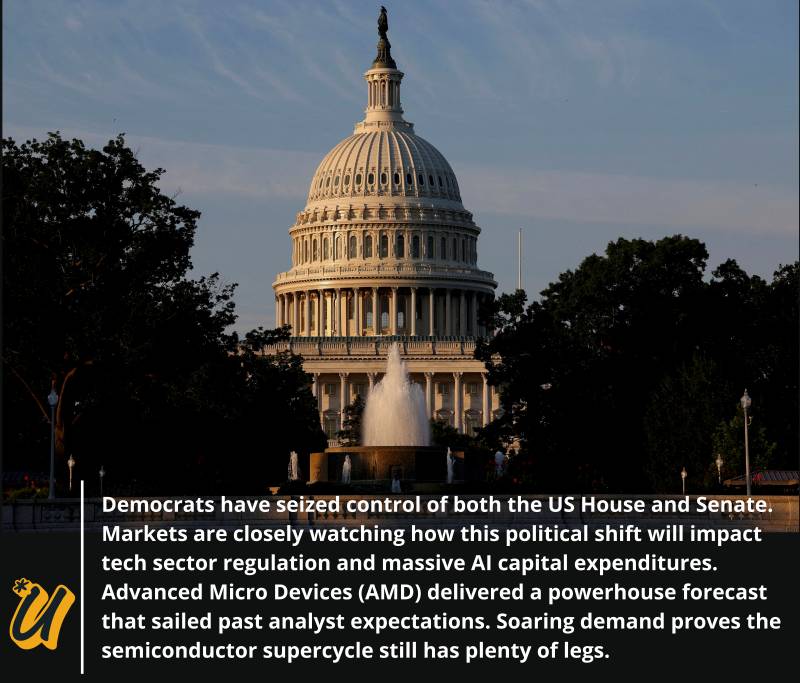
NEW YORK — Wall Street experienced a dramatic turn of events today as a heavy market selloff swept across the technology sector, hitting chipmakers and artificial intelligence firms particularly hard following the political shift signaled by the midterm election results. The sudden reversal in market sentiment highlights growing anxiety among investors over potential shifts in regulatory oversight, legislative priorities, and corporate spending trajectories for advanced technologies.
The slide was spearheaded by a steep drop in semiconductor and hardware equities. The NASDAQ 100 benchmark suffered its worst intraday decline since March 2020, dropping by more than 6% during peak trading hours. Leading industry titans found themselves under immense selling pressure, with semiconductor heavyweights including Nvidia, Advanced Micro Devices (AMD), and Qualcomm suffering significant drops as investors scrambled to reassess valuation models in a changing policy landscape.
Driving much of the angst across trading desks is intense speculation regarding legislative changes following Democratic gains in Congress. Analysts note that market participants are reacting aggressively to the prospect of a Democratic-led congressional majority introducing stricter AI regulatory frameworks. Wall Street fears that heightened regulatory scrutiny could impose new compliance hurdles, slow down approvals, and curb the rapid buildout of energy-intensive data centers critical for training next-generation artificial intelligence models.

The political fallout extended beyond public software and hardware vendors into high-profile private and affiliated enterprises. Elon Musk’s flagship companies, Tesla and SpaceX, saw their shares tumble for a second consecutive session. Traders pointed to political uncertainty and shifting state-level dynamics—particularly regarding their operational footprint, manufacturing presence, and policy standing in Texas—as key triggers for the continued selloff across the Musk corporate ecosystem.
Despite the broader market turmoil, landmark business and innovation milestones continued to unfold across tech sectors. Agility Robotics officially made its public debut on the NASDAQ under the ticker symbol AGLT. Chief Executive Officer Peggy Johnson addressed the launch, highlighting how the company’s flagship humanoid robot, Digit, is targeted directly at addressing persistent labor shortages in logistics and industrial operations.
Simultaneously, questions around cloud infrastructure spending added further friction to the technology sector. Reports emerged that Microsoft is exercising significantly greater scrutiny over multi-billion-dollar infrastructure contracts with Neocloud operators, such as CoreWeave. This increased fiscal discipline from major hyperscalers has introduced fresh anxiety regarding the immediate revenue trajectory and capital expenditure requirements for specialized AI hosting facilities.
Conversely, private funding and strategic consolidation within defense tech showed robust resilience. Defense technology company Shield AI made a major announcement, confirming the acquisition of Echodyne for $5.3 billion alongside a new $2.5 billion funding round. The deal propels Shield AI to a massive $29 billion valuation, underscoring ongoing investor appetite for autonomous defense capabilities.
In another major expansion update, autonomous drone delivery pioneer Zipline reached a $20 billion valuation. The company revealed a significant expansion of its delivery partnership with retail giant Walmart, showcasing continued commercial momentum for commercial drone logistics despite the turbulent broader market environment.