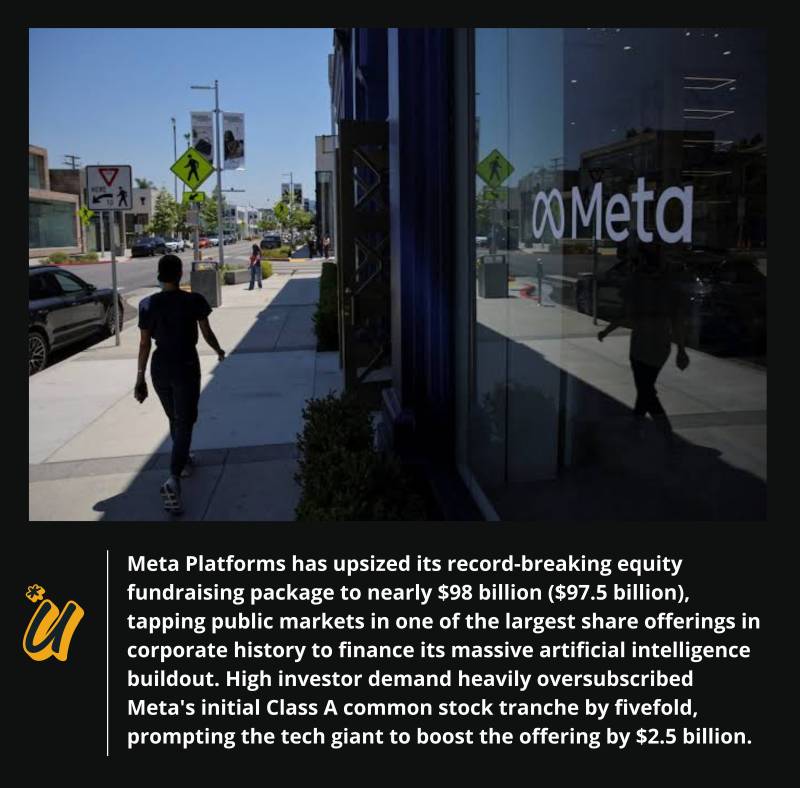
The technology industry is undergoing a seismic realignment as massive capital expenditure, unprecedented corporate restructuring, and high-stakes financial maneuvers converge across global markets. At the center of this transformation is an escalating race for artificial intelligence dominance, forcing technology giants and emerging frontier labs alike to seek historic levels of capital. The operational reality of sustaining cutting-edge AI infrastructure has transformed balance sheets across Silicon Valley, sparking intense market debate over unit economics, monetization timelines, and the broader macro implications of unprecedented corporate debt.
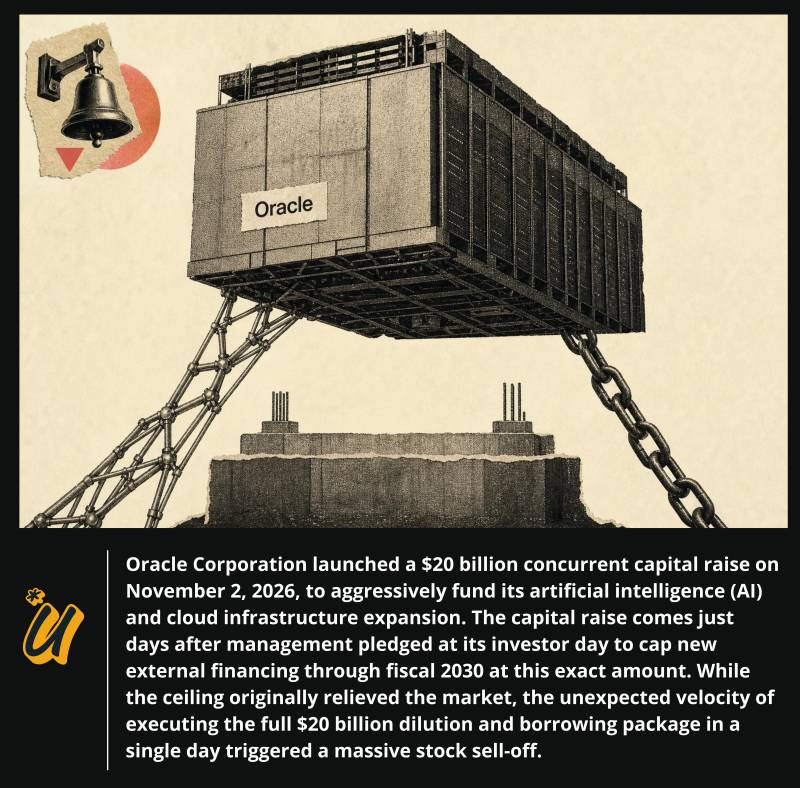
Leading the charge in capital deployment are tech hyperscalers scrambling to build out the compute capacity required for next-generation intelligence. Oracle has launched a massive $20 billion capital raise specifically earmarked to expand its global AI infrastructure network. Simultaneously, Alphabet is tapping European debt markets to secure favorable financing for its own ongoing data center and hardware expansions. This relentless "capex story" has become a central focus for institutional investors, who are voicing growing concern over the substantial timing gap between immediate multi-billion-dollar infrastructure expenditures and the eventual, multi-year monetization of enterprise AI products.
Nowhere are the scale and risks of these financial commitments more visible than in the public filings of frontier AI research labs. Anthropic’s recent amended S-1 registration statement reveals a dramatic revenue trajectory alongside unprecedented capital commitments. The company reported third-quarter revenue approaching $17 billion, marking a twelvefold increase year-over-year. However, the filing also exposed $895.4 billion in total committed spending—primarily tied to long-term compute contracts and data center capacity. Examining the company's position, Matt Witheiler of Wellington Management highlighted the unique unit economics governing companies at the AI frontier, where explosive top-line growth is perpetually counterbalanced by the staggering ongoing cost of raw compute infrastructure.
As capital demands escalate, Wall Street is turning its focus toward public tech earnings, searching for validation that high valuations can be sustained in an environment of heavy capex spending. Apple enters its earnings release trading at its highest valuation relative to earnings since 2008. The hardware giant has increasingly been viewed by public market investors as a defensive "AI-alternative" play—a company positioned to benefit from consumer-facing AI distribution without carrying the immense balance-sheet burden of training foundation models. Consequently, market analysts emphasize that Apple faces intense pressure to deliver a near-perfect financial report to justify its premium valuation in an increasingly skittish equity environment.
Beyond public equity markets, strategic consolidation is reshaping the hardware components powering global network backbones. In one of the year’s largest semiconductor transactions, Marvell has reached a definitive agreement to acquire optical networking company Lumentum in a deal valued at $115 billion. The massive transaction underscores how critical optical interconnects, photonics, and high-speed data transmission have become as data centers struggle to eliminate bandwidth bottlenecks between massive clusters of AI accelerators.
Parallel to ground-based computing developments, aerospace and satellite communication platforms are attracting substantial capital to solve global data transfer challenges. Satellite infrastructure startup Northwood Space recently closed a $375 million funding round at a $2 billion valuation. Led by CEO Bridgit Mendler, Northwood is developing modular, phased-array antenna systems engineered to connect Earth stations with satellite constellations in low Orbit. The company aims to address the critical communications bottleneck between orbital data assets and terrestrial computing hubs, highlighting a growing convergence between deep-space infrastructure and terrestrial enterprise software.
As infrastructure costs mount, market strategists are increasingly challenging the assumption that foundation model developers will capture the bulk of the economic value created by artificial intelligence. Will Manudis, co-author of the influential essay The Commanding Heights, argues that the ultimate long-term winners of the AI transformation will likely not be the frontier research laboratories absorbing massive compute liabilities. Instead, economic rents are expected to accrue to the enterprise entities controlling the "rails"—the distribution networks, proprietary data interfaces, and transaction layers that power AI-driven commerce.
Compounding these technological shifts are shifting macroeconomic and political dynamics, particularly upcoming political votes that could alter financial landscapes across major tech hubs. Investors and corporate leadership teams are closely monitoring key state ballot initiatives in the upcoming midterm elections. Most notable among these is California’s Proposition 40—commonly referred to as the "billionaires tax"—which proposes structural changes to wealth taxation that could significantly alter the personal financial positioning of prominent technology founders, angel investors, and venture capitalists, with broader implications for domestic startup capital allocation.