The technology sector experienced a pivotal moment as intense market anticipation converged with monumental shifts in the private landscape, defining a new chapter for artificial intelligence, commercial aerospace, and domestic infrastructure. The trading session operated under the heavy shadow of Nvidia's highly anticipated earnings report, an event widely regarded as a litmus test for the sustainability of the global AI trade. Despite a preceding multi-day stretch of severe market instability, technology equities staged a powerful comeback. The semiconductor sector led a aggressive rebound, sending the tech-heavy Nasdaq 100 and the Philadelphia Semiconductor Index (SOX) significantly higher as investors repositioned capital ahead of the financial disclosures.
While Wall Street analysts harmoniously projected robust top-line revenue and surging earnings-per-share (EPS) metrics for Nvidia, the broader mood on trading floors remained fiercely contested. Institutional investors openly expressed caution regarding persistent macroeconomic pressures, quietening enthusiasm with fears of a classic "buy the rumor, sell the news" market reaction. Experts close to the matter emphasized that the backward-looking numbers of the previous quarter would take a back seat to the chipmaker’s forward guidance. For a market trading at historically stretched valuations, the true premium rests entirely on Nvidia’s outlook for the subsequent quarter and its ability to prove that the ravenous appetite for AI hardware shows no signs of plateauing.
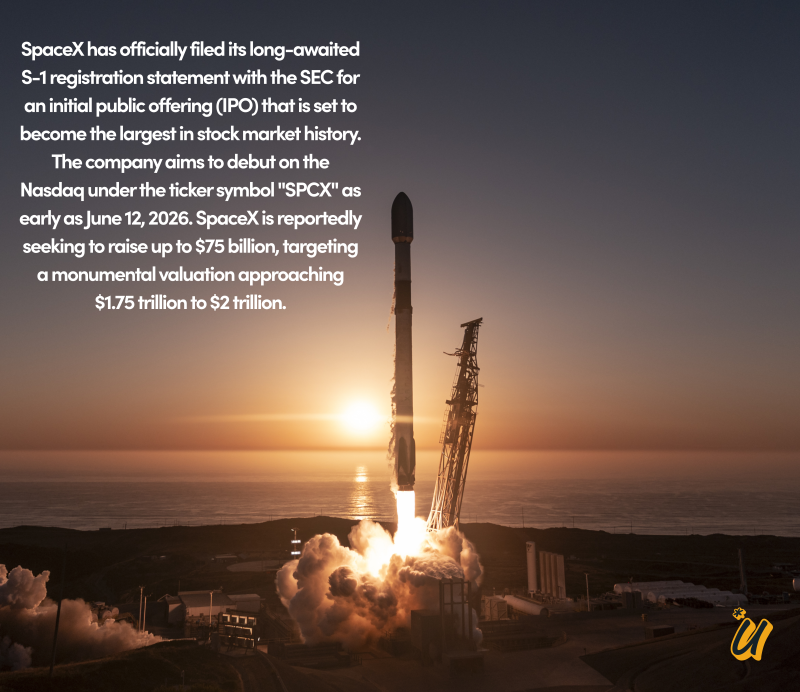
Simultaneously, the private tech sector braced for a structural realignment as rumors solidified around a historic public debut for SpaceX. Wall Street sources indicate that the aerospace pioneer is moving closer to an unprecedented initial public offering (IPO), with a formal S-1 registration statement expected to be filed imminently. Financial heavyweights Goldman Sachs and Morgan Stanley have reportedly been tapped to anchor the high-profile transaction as lead underwriters. Adding to the transaction's complexity, whispers from insiders suggest that Elon Musk’s firm is already executing a aggressive post-listing expansion strategy, drawing up plans to acquire the rapidly growing AI coding startup, Cursor, shortly after the public transition is complete.
The astronomical capital requirements of the artificial intelligence boom have also triggered intense scrutiny within the upper echelons of venture capital, specifically targeting SoftBank Group's aggressive financial maneuvering. The Japanese conglomerate has deepened its exposure to the sector with a massive, multi-billion-dollar commitment to OpenAI, exceeding $60 billion. However, this staggering capital allocation has ignited significant friction behind closed doors. Insiders and institutional watchers are voicing urgent concerns that SoftBank’s billionaire founder, Masayoshi Son, has tied the firm’s financial destiny too closely to the singular vision of OpenAI Chief Executive Officer Sam Altman. Critics point out that an investment of this historic magnitude notably lacks traditional institutional guardrails, leaving SoftBank without the level of board representation or rigorous oversight typically demanded to protect such vast sums of capital.
As billions pour into foundational models, the practical and ethical boundaries of current AI systems are facing their most severe real-world challenge yet. Highlighting these systemic risks, Forum AI Chief Executive Officer Campbell Brown brought forward a staggering new study revealing a 90% failure rate among major public AI chatbots when tasked with processing election-related queries. The data has sent shockwaves through policy and technology circles alike, underscoring deep-seated vulnerabilities regarding algorithmic bias and source reliability. With global elections in full swing, the high failure rate raises critical questions about the readiness of tech platforms to serve as conduits for civic information, threatening to amplify misinformation at a fragile geopolitical moment.
While consumer software grapples with reliability, a quiet revolution is taking hold in advanced physical hardware, driven by escalating national security demands. Defense manufacturing startup AMCA successfully closed a $300 million Series B funding round, highlighting a major victory for domestic industrial capacity. In an interview detailing the capital raise, AMCA Chief Executive Officer Jai Malik emphasized that the funding will be deployed toward aggressive vertical integration. The strategy is explicitly engineered to bypass fragile global logistics networks and mend critical domestic supply chain gaps for defense and aerospace components. As geopolitical tensions mount and standard tech sectors face regulatory roadblocks, the massive valuation achieved by AMCA signals a permanent shift toward heavily fortified, onshore industrial technology.