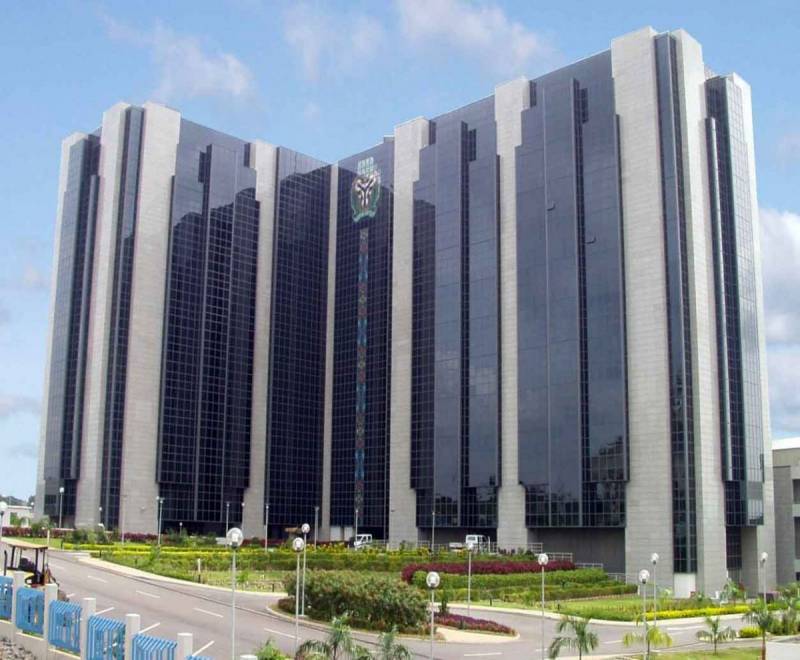
The Central Bank of Nigeria really deserves some commendation for being so prolific in churning out ‘intervention policies’ in practically all sectors of the Nigerian economy, the latest being the one it says is aimed at re-introducing and driving ‘export-led’ economic growth and development of the country.
Governor of the apex bank, Mr. Godwin Emefiele, while speaking at a recent seminar for finance correspondents and business editors in Akure, Ondo State, announced the new initiative which he called “Produce, Add Value and Export (PAVE).
The Central Bank of Nigeria really deserves some commendation for being so prolific in churning out ‘intervention policies’ in practically all sectors of the Nigerian economy, the latest being the one it says is aimed at re-introducing and driving ‘export-led’ economic growth and development of the country.
Governor of the apex bank, Mr. Godwin Emefiele, while speaking at a recent seminar for finance correspondents and business editors in Akure, Ondo State, announced the new initiative which he called “Produce, Add Value and Export (PAVE).
Over and over again, Nigeria has tried but failed woefully to make Nigerians consume what they produce. Successive administrations (military and civilian) have come up with initiatives to tame Nigerians’ rabid taste (and preference) for foreign goods to no avail. This consumption pattern (in favour of imported goods) even when there are available local substitutes has constituted a drain on the foreign exchange (forex) earnings of the country.
A huge chunk of the nation’s forex that should have built up its stock of external reserves is usually gulped by unrestrained importation of foreign goods to meet local tastes. It is therefore doubtful if the apex bank possesses any magic wand this time around to enforce ‘lifestyle change’ on Nigerians, especially the high propensity for conspicuous consumption.
In 2015, the CBN excluded importers of 41 items, including some food products, from accessing forex at the official window of the foreign exchange market in a “bid to conserve the external reserves as well as encourage local production of those items.”
Now, almost seven years down the line, it is apposite to showcase the gains (if any) from the fate of the 41 items. Are those items truly being produced locally here in Nigeria? Or, did the affected companies ‘beat the system’ to keep accessing forex (even through dubious bureaux de change)? Or, have some of the affected concerns closed shops; or relocated outside Nigeria as many are known to have done? And so on.
In denying the 41 items access to forex to “conserve the external reserves as well as encourage local production of those items”, the apex bank unwittingly attempted an ‘import substitution industrialization policy.
Indeed, had the policy been comprehensively packaged as an integral part of an overarching development plan, producers of those 41 items would have been ‘nurtured’ to stability and ‘maturity’. However, the forex measure was a ‘stand-alone’ policy to ‘whip’ those businesses into line.
Denial of official access to forex should have been accompanied by other incentives to attenuate the sudden ‘harsh’ policy. But that was not the case; rather, those businesses were allowed to be scorched by their ‘new reality.
Now, PAVE is intended to fast-track the elimination of almost-sole- dependence on crude oil exports for forex earnings by Nigeria. This is to be achieved through value addition (that is, processing) to local primary produce; consumption of such local products, and export of the ‘excess’. So, the ultimate goal is to fast-track manufacturing on such a scale as to meet local demand/consumption and have a surplus for the export market. This, from all indications, is an ‘export-led’ economic diversification/industrialization strategy. But beyond the ‘beautiful’ paperwork, as done by the apex bank, is the Nigerian business environment conducive to manufacturing (i.e. ‘value addition’ or processing) to the point of substantial export?
The environment has almost always been hostile: marked by forex liquidity concerns (more so, these days); policy somersaults; weak consumer power; tattered infrastructure, etc. Today, more than ever before, the state of basic infrastructure in Nigeria remains awful. Epileptic power supply has deteriorated to the almost total collapse of the national grid—leading to lingering blackouts nationwide. Yet, the tariff for electricity has been raised several times in recent months (both for industrial and domestic users). Operators in the manufacturing sector have almost been choked out of their businesses by the scarcity of refined petroleum products (diesel, Premium motor spirit, kerosene, etc.). Where and when these fuels are available, their prices are sky-high; thus, driving the cost of business to uncompetitive levels. High costs of other essential inputs and raw materials, especially imported ones, are getting scary.