Milan is a city where centuries of history meet the energy of modern European life. Renowned internationally as one of the world's leading centres of fashion, finance, design and commerce, the northern Italian metropolis offers visitors much more than luxury boutiques, sophisticated architecture and corporate headquarters. Beneath its contemporary image lies a fascinating historical landscape shaped by Roman civilisation, medieval ambition, Renaissance influence and generations of artistic and architectural achievement. For travellers seeking a destination that combines cultural discovery, culinary experiences, architectural beauty and scenic excursions, Milan offers an extraordinary introduction to the many dimensions of Italy.
Unlike the romanticised image of Italy often associated with the coastal villages, vineyards and historic towns of the south, Milan presents a different expression of Italian identity. It is energetic, commercially driven and internationally connected, yet deeply protective of its traditions. Its streets reveal an intriguing relationship between the old and the new, where ancient churches stand alongside modern skyscrapers, historic shopping arcades coexist with global luxury brands, and traditional restaurants continue to preserve recipes that have been passed down through generations.
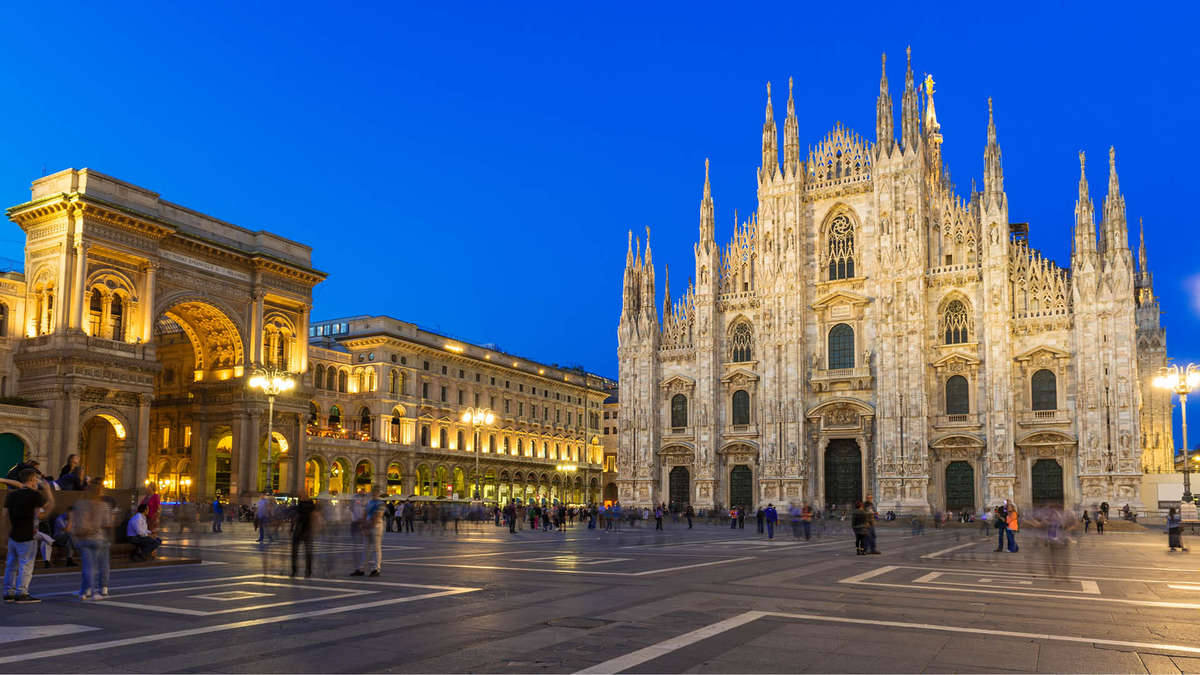
The city's character becomes particularly evident around the magnificent Duomo di Milano, one of Europe's most recognisable Gothic cathedrals and the architectural heart of Milan. Standing prominently in the city's central square, Piazza del Duomo, the cathedral is a monument to religious devotion, artistic ambition and the extraordinary patience required to complete a construction project spanning several centuries.Construction of the Duomo began in 1386 under the patronage of Gian Galeazzo Visconti, ruler of Milan, during a period when the city was emerging as an important political, religious and economic centre in northern Italy. Its development continued across generations, with architects, sculptors, craftsmen and engineers contributing to a project that underwent numerous changes in design and execution. Although much of the principal construction took place over several centuries, the cathedral's decorative and finishing works continued well into modern times, making its development a remarkable chapter in European architectural history.

Related article - Uphorial Shopify

The building's extraordinary Gothic design immediately captures attention. Its exterior is covered with elaborate marble carvings, sculpted figures, decorative pinnacles and intricate architectural details that create an almost overwhelming visual experience. Thousands of sculptures and decorative elements contribute to the cathedral's distinctive appearance, giving the impression of a structure that has been carefully transformed into an enormous work of stone artistry.The extensive use of white and pink-hued Candoglia marble gives the cathedral its distinctive appearance, particularly when sunlight illuminates its façade. Every section reveals a different detail, from religious figures and ornamental patterns to towering spires that rise towards the sky. The central structure is crowned by the celebrated Madonnina, a golden statue of the Virgin Mary that has become one of Milan's most recognisable symbols.
Inside, the cathedral offers an equally impressive experience. Its vast interior is supported by towering columns, enormous stained-glass windows and elaborate religious artwork. The atmosphere is markedly different from the activity outside, providing a sense of quiet reflection in the middle of one of Italy's busiest urban centres. Visitors can explore its chapels, admire the stained glass and appreciate the craftsmanship that has preserved the cathedral's spiritual and artistic significance over the centuries.Among the fascinating features associated with the Duomo is its astronomical sundial, an instrument embedded in the cathedral's floor that has been used to indicate solar time. Installed in the late eighteenth century, it demonstrates how religious institutions historically served as centres of scientific observation and knowledge. A beam of sunlight enters through an opening in the cathedral and interacts with the brass line on the floor, allowing observers to identify the position of the sun and the corresponding time of the year.
The feature offers an interesting reminder that medieval and early modern religious architecture was not concerned exclusively with worship. Cathedrals were also places where mathematics, astronomy, engineering and artistic expression intersected. The sundial therefore adds another layer to the Duomo's historical importance, showing how scientific understanding was incorporated into the design and functioning of major religious buildings.The cathedral is also associated with important religious relics, including a tradition surrounding a fragment believed to be from one of the nails used in the crucifixion of Jesus Christ. Known as the Holy Nail, the relic is preserved within the cathedral and is traditionally displayed during a special religious ceremony known as the Rite of the Nivola. During the ceremony, an elaborate mechanical structure is used to retrieve the relic from its elevated location. The tradition reflects the continuing importance of religious heritage in Milan and the relationship between faith, history and cultural identity.