MILAN – The heavy, industrial doors of the Milanese show space open into an environment that feels less like a temporary runway and more like a living, breathing monument to human capability. For the presentation of the Tod's Fall Winter 2026/27 women’s collection, titled "Italian Signature," Creative Director Matteo Tamburini chooses not to shield the labor of fashion from its ultimate consumers. Instead, he places the raw, visceral reality of the workshop directly into the path of the viewing public. Stationed along the perimeter of the room, master artisans work in real-time, their hands cutting, stitching, and shaping raw hides under focused spotlights. This staging choice collapses the traditional distance between the quiet sanctuary of the studio and the high-energy spectacle of Milan Fashion Week, establishing a tense, beautiful dialogue between process and final product. The atmosphere carries the rich, organic scent of treated leather, immediately anchoring the audience in a sensory experience that values time, patience, and physical touch. Tamburini’s curation asserts that luxury cannot be mass-produced by algorithm or automated speed, framing true Italian heritage as a defiant, living resistance against a rapidly digitizing world.
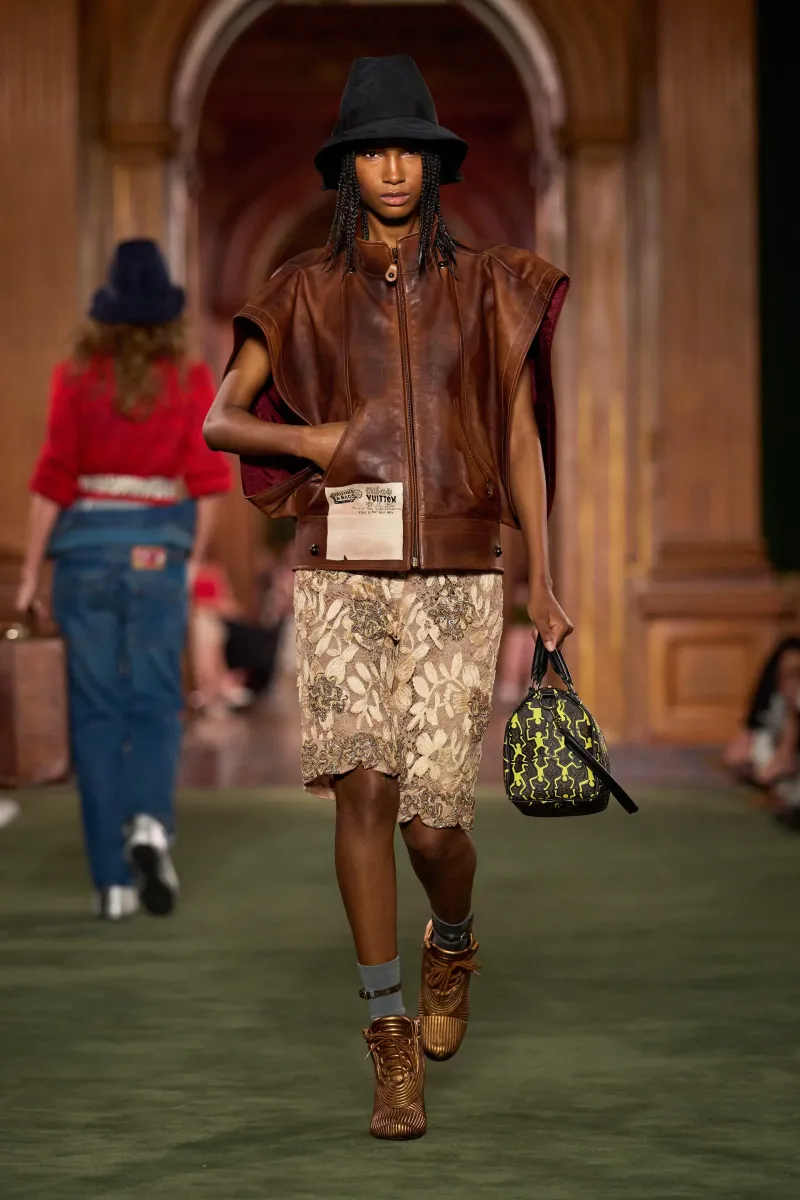
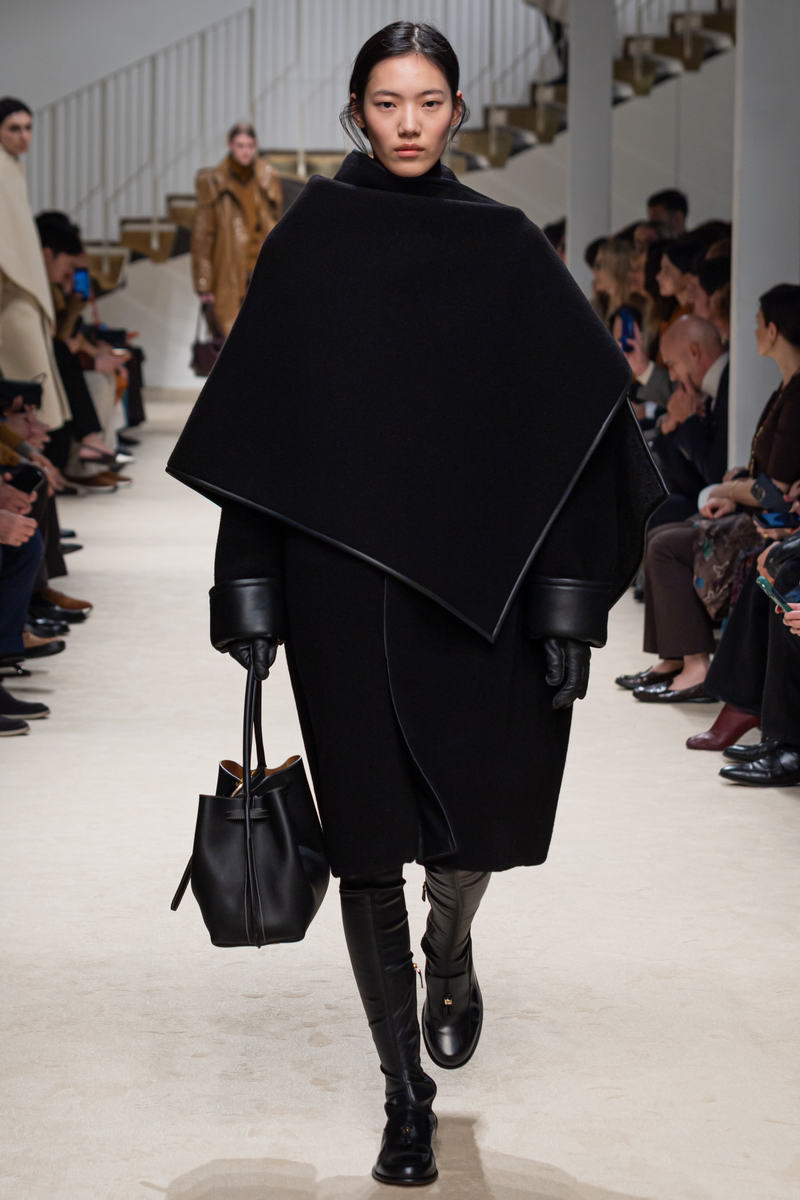
As the first models emerge, the clothes articulate a powerful shift toward material emotionality, where the garments carry the history of their making on their surface. Leather is stripped of any sterile, over-processed perfection, arriving instead with washed, crinkled, and deliberately aged finishes that suggest a life already lived. The material bears a tactile memory, catching the light on uneven surfaces that demand to be touched and understood up close. This treatment transforms outerwear from mere protective clothing into an emotional armor, offering a sense of history and permanence in an era defined by the temporary. Tamburini introduces the Pashmy selection as the technical peak of this material exploration, utilizing calfskin leather refined to such an extreme lightness that it behaves like silk fluidly draped over the human form. When tailored into skirts and trousers, this hyper-luxurious material shifts away from historical rigidity, moving with an unprecedented fluidity that redefines leather as a second skin. The collection balances this extreme softness with an intelligent understanding of historical form, contrasting cocooning, oversized trench coats and protective peacoats against razor-sharp tailored power dresses that echo the severe, minimalist confidence of the late 1990s.

Related article - Uphorial Shopify
Beneath the structural weight of the outerwear, the collection introduces an unexpected, deeply intellectual layer of artistic dialogue. Foulard dresses and fluid skirts become canvases for intricate intarsia work and graphic patchwork patterns, drawing direct inspiration from the raw, disruptive visual languages of artist Sterling Ruby and photographer Daido Moriyama. The inclusion of these references injects a contemporary, urban edge into the traditional lexicon of the house. The patchworks do not feel accidental; they are strategic architectural constructions within the clothing, breaking up long silhouettes with sudden shocks of contrasting texture and tone. This artistic integration mirrors the complexity of modern identity, blending the gritty, high-contrast reality of street photography with the elite craftsmanship of an archival Italian house. The color palette reinforces this grounded, deeply rooted sensibility, steering completely clear of fleeting, hyper-bright internet trends. The runway flows through an ecosystem of rich, warm earth tones, dominated by burnt caramel, spiced ginger, and deep, dark chocolate. These organic shades are periodically punctuated by sharp, uncompromising cuts of stark black and graphic white, creating a visual rhythm that feels both ancient and radically current.

The evolutionary philosophy of the collection extends directly into the smallest details, transforming traditional luxury accessories into deeply intimate statements of identity. Tamburini introduces a system of bespoke lettering, where refined metal initials are integrated into slim leather belts and delicate bracelets. This design choice shifts the concept of luxury branding away from the corporate logo and redirects it toward the wearer, allowing individuals to compose their own names or private meanings within the framework of the accessory. On the feet, the classic Tod's footwear codes undergo a significant structural evolution. The iconic loafer is updated with a pronounced, modern rounded toe that alters the shoe's traditional proportions, while character-driven ankle boots are fortified with heavy, saddlery-inspired ankle straps that evoke equestrian strength. Even the house’s most famous casual staple, the Gommino sneaker, receives a transformative tactile upgrade through the integration of rich pony hair panels, blurring the boundary between athletic utility and high-craft texture.
The handbag lineup functions as the structural anchor of the entire presentation, balancing archival reverence with a forward-looking commercial strategy. The iconic Di Bag is re-engineered into a structured bowling version, subverting its classic utility with a sporty, energetic silhouette that caters to the demands of modern global travel. Concurrently, fresh interpretations of the Wave Bag and the T Timeless Bag appear in updated proportions, showcasing clean lines and a total reliance on structural integrity rather than loud embellishments. By presenting these legendary shapes alongside the live artisans who understand their every stitch, Tod's successfully frames these objects not as seasonal commodities, but as lifetime investments. The "Italian Signature" collection ultimate succeeds because it does not simply look back at history with nostalgia; it weaponizes heritage, using centuries of accumulated physical skill to carve out a meaningful, emotionally resonant space in the modern cultural landscape.