The tech sector finds itself at a pivotal inflection point as mega-cap corporations navigate massive artificial intelligence expenditures while hardware makers, software pioneers, and gaming leaders' chart new territory across the global economy. Highlighted in a broad-ranging broadcast of Bloomberg Technology, industry shifts are accelerating across cloud infrastructure, artificial intelligence development, semiconductor manufacturing, robotics investment, digital entertainment, and premium consumer hardware.
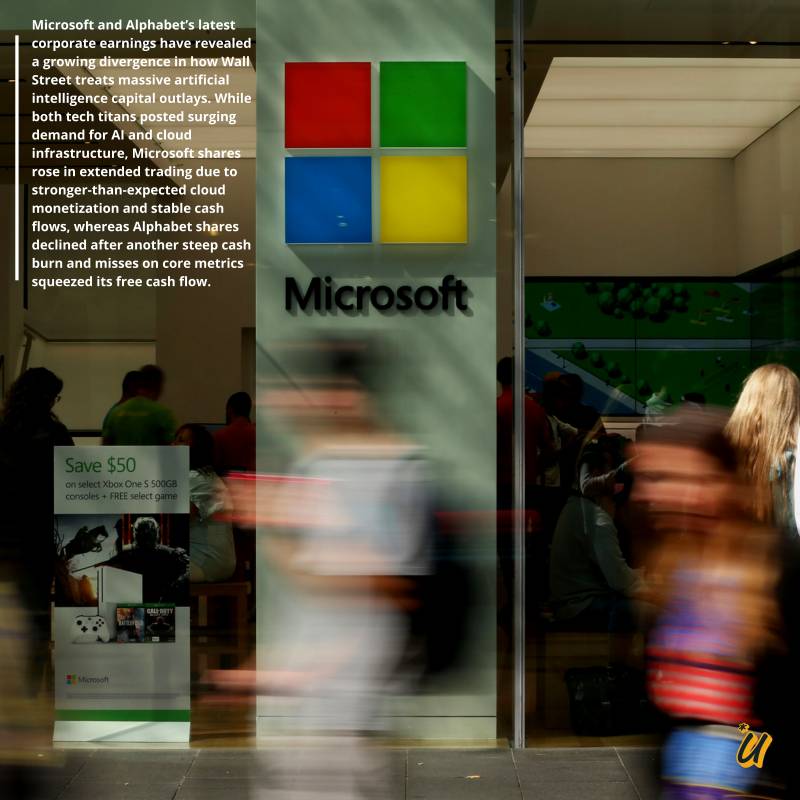
At the center of market attention are the upcoming quarterly financial reports from industry titans Microsoft and Alphabet. Wall Street analysts and institutional investors are watching with heightened scrutiny as both conglomerates attempt to justify the tens of billions of dollars currently channeled into generative AI infrastructure and model training. Early financial assessments signal a distinct strategic divergence between the two behemoths: Microsoft enters the earnings window backed by exceptionally resilient free cash flow margins, whereas Alphabet continues to showcase accelerated revenue expansion driven by Google Cloud's aggressive market share gains.
The broader artificial intelligence ecosystem is witnessing significant developments in governance, public markets, and supply chains. Artificial intelligence powerhouse Anthropic has selected financial services giant JPMorgan to underwrite its initial public offering, aiming directly at retail investor participation in the United States. The filing coincides with stark disclosures from Anthropic leadership warning that the firm's outspoken public advocacy for AI safety guardrails and regulatory compliance could potentially trigger government retaliation or political friction.
Simultaneously, the physical backbone powering artificial intelligence is undergoing radical transformation. Escalating compute demands have accelerated data center expansion across global regions, forcing tech leaders to place newfound priority on securing local community support, municipal approval, and sustainable energy access. Further shaking up the hardware ecosystem, reporting indicates that OpenAI is exploring strategic discussions to source custom-designed silicon chips directly from Google, potentially disrupting long-standing enterprise supplier relationships across the cloud landscape.
In the hardware market, memory giant SK Hynix posted a monumental seven-fold surge in operating profits. Driven by an insatiable global appetite for high-bandwidth memory essential to AI processing tasks, the South Korean chipmaker announced a massive $45 billion capital allocation framework dedicated to boosting shareholder returns.
Investor excitement is expanding into advanced physical AI systems. Physical Intelligence, a startup developing foundational artificial intelligence models tailored for general-purpose robotics, is in funding negotiations that could double the company's valuation to approximately $20 billion.
Turning to digital interactive media, Kleiner Perkins adviser Bing Gordon weighed in on the transformative pressures sweeping the video game industry. Gordon highlighted how artificial intelligence is fundamentally altering development pipelines, lowering production costs, and reshaping player experiences—even as global gaming markets build high anticipation for Take-Two Interactive’s release of Grand Theft Auto 6.
Concluding the industry overview, Apple is preparing to shake up its personal computing lineup by introducing a flagship MacBook Pro equipped with a touchscreen for the first time in the line's history. Expected to carry a premium starting price tag of roughly $2,900, the device marks a historic design departure for Apple as the company integrates touch-based workflows into its traditional laptop ecosystem.