Socotra, Yemen - In a fascinating global expedition, travel vlogger Joe HaTTab has documented the lives of inhabitants across three of the world’s most secluded islands, revealing how extreme isolation dictates everything from infrastructure and marriage to the survival of prehistoric flora. His journey highlights a spectrum of isolation, from a technologically advanced Nordic archipelago to an Atlantic rock once used as a high-security prison for a deposed emperor.
The expedition began in the Faroe Islands, located between Iceland and Norway. Despite being the "least isolated" on HaTTab’s list, the islands are home to just 50,000 people and a population of sheep that significantly outnumbers its human residents. The Faroes are a study in engineering resilience, boasting a highly developed network of undersea tunnels that include the world’s first undersea roundabout—a glowing, blue-lit subterranean junction that has revolutionized local travel. However, the island's primary industry, fishing, has created a unique social challenge: a significant gender imbalance as young women frequently leave for education abroad. This has led many Faroese men to seek partners from overseas, resulting in a growing community of Filipino women who have moved to the islands, blending Southeast Asian and Viking cultures.

Related article - Uphorial Shopify
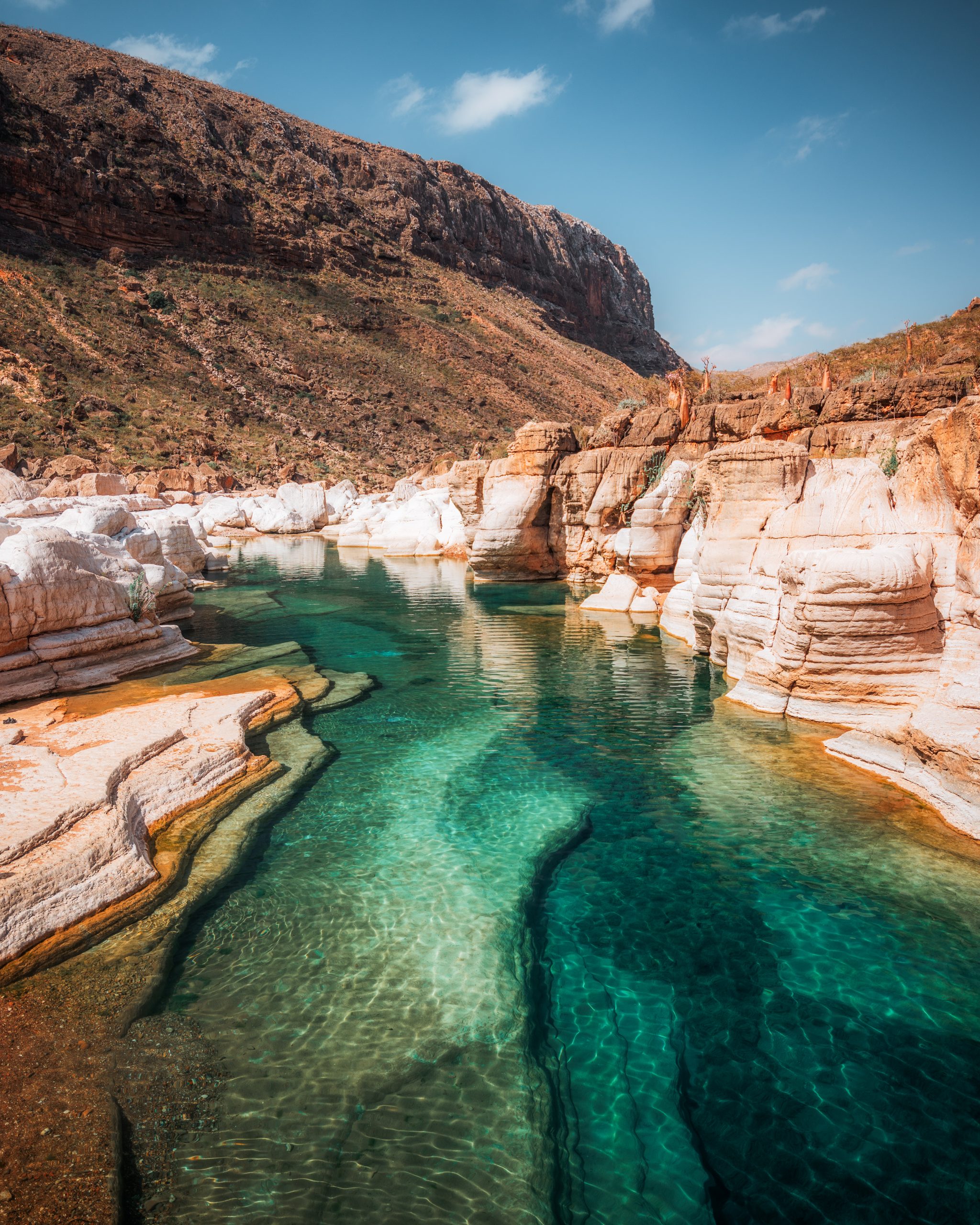

The journey then moved to Socotra, Yemen, described as a "geologically isolated" marvel in the Arabian Sea. Known as the "Galapagos of the Indian Ocean," the island is a biodiversity hotspot where 37% of the plant life is found nowhere else on Earth. HaTTab’s footage captured the iconic Dragon’s Blood Tree, which bleeds red resin and serves as the island’s most famous symbol. Life on Socotra remains primitive by modern standards; some residents still live in caves, resources are scarce, and tourists are often required to camp on beaches due to minimal infrastructure.
The final stop was St. Helena, a British Overseas Territory in the middle of the South Atlantic, categorized as the most isolated of the three. For centuries, the island's jagged cliffs served as a natural prison, most notably for Napoleon Bonaparte. In the capital of Jamestown, HaTTab found a quiet, tight-knit community of 5,000 "Saints." For most of its history, the island was accessible only by a multi-day sea voyage, a barrier that was finally broken in 2017 with the opening of a commercial airport. Even today, the island remains connected to the outside world by only a limited schedule of weekly flights from South Africa.
HaTTab’s exploration underscores a profound global reality: while modern technology can build tunnels and airports, the physical distance of these islands continues to foster cultures and ecosystems that remain uniquely shielded from the homogenization of the modern world.