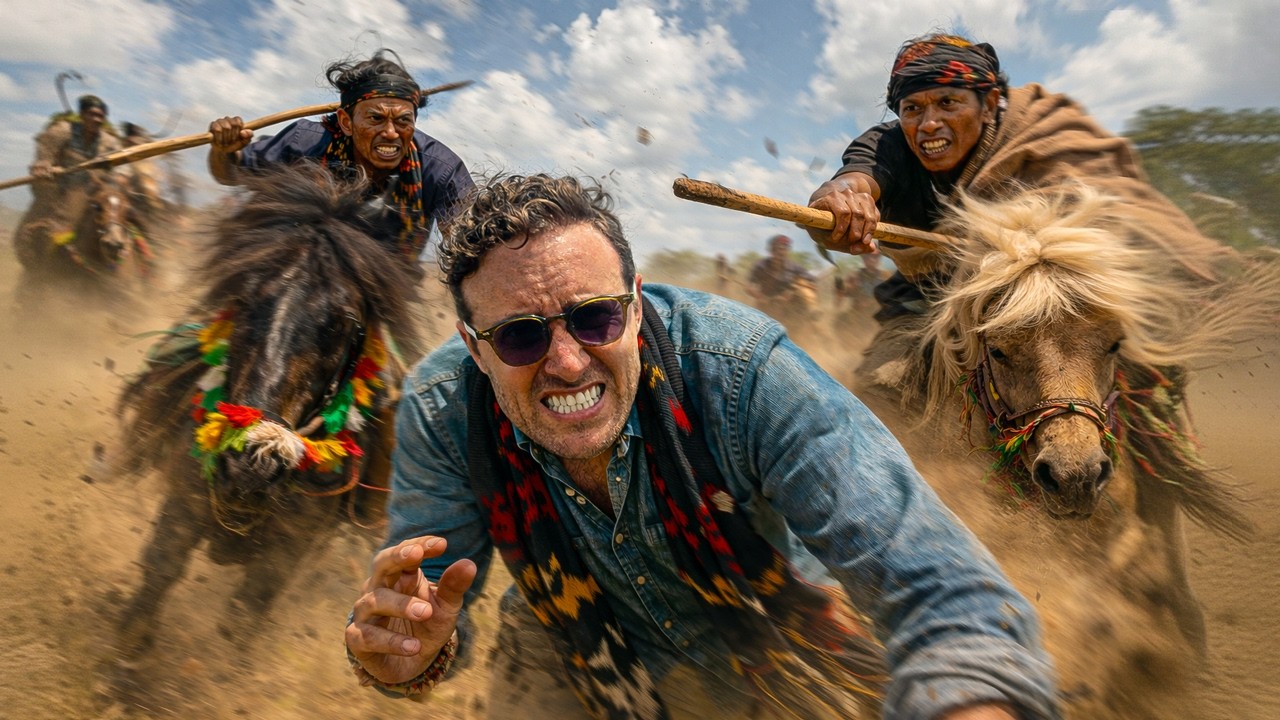
SUMBA ISLAND — On the remote island of Sumba, Indonesia, where the landscape is carved by jagged coastlines and ancient megalithic tombs, a ritual exists that pushes the boundaries of human tradition and physical danger. Pasola, a form of ritualized horseback warfare, has for centuries served as the spiritual and social heartbeat of the island’s western tribes. Traditionally, it is a spectacle of controlled violence where hundreds of riders on horseback charge at one another, hurling blunted spears with the intent of striking their opponents. In the indigenous Marapu belief system, the spilling of blood onto the earth is not a tragedy but a necessity—a sacrificial offering believed to appease the spirits and ensure a fertile harvest and peace for the coming year. However, as the world encroaches upon Sumba, this ancient tradition is finding itself at a volatile crossroads, where sacred blood-letting is increasingly being replaced by uncontrolled, modern chaos.
The commencement of Pasola is not dictated by a calendar, but by the mysterious rhythms of the sea. The ritual is triggered by the annual arrival of the "nyale," or colorful seaworms, along the Sumba coastline. Local priests, known as Rato, monitor the moon and the tides to predict the exact moment these creatures will appear. When the signal is given, the community gathers in massive numbers to collect the worms, an event that serves as a spiritual precursor to the battle. The presence and health of the nyale are viewed as omens for the year ahead, and their arrival acts as the formal permission from the spirit world for the tribes to take to the field. It is a moment of communal unity that quickly gives way to the dust and thunder of the combat arena.
While the ritual is intended to be a sacred vessel for settling tribal grudges through a controlled display of prowess, contemporary reality is beginning to tell a more concerning story. Observers of the most recent events have documented a significant shift in the temperament of the participants. The traditional Marapu belief system, which provided the moral and spiritual framework for the violence, is gradually fading among the younger generation. In its place, a more secular and aggressive energy has emerged. The video documentation of the event reveals that Pasola is increasingly marred by heavy alcohol consumption and the intrusion of modern political or personal tensions. Rather than acting as a release valve for communal pressure, the event is becoming a flashpoint where younger participants prioritize personal vendettas over the preservation of their cultural heritage.
Related article - Uphorial Shopify

This erosion of tradition has led to a noticeable spike in real-world violence that transcends the boundaries of the ritual. What was once a regulated exchange of spears is now frequently spiraling into chaotic brawls. The modern Pasola is often characterized by the terrifying transition from horseback combat to ground-level riots involving stone-throwing and physical altercations. The danger has reached a level where the Indonesian Army and local police are now a mandatory presence at the festivities. Uniformed soldiers are seen patrolling the perimeter and occasionally intervening in the thick of the crowd to maintain a fragile order. This militarization of a religious festival underscores the delicate and often dangerous state of the tradition as it struggles to adapt to a changing social landscape.

Despite these growing pains and the visceral dangers of the field, Sumba remains a place of profound and unique beauty. The island exists in a state of hyper-contrast, described as a "delicate transition period" where raw, ancient traditions sit alongside world-class, comfortable travel experiences. It is one of the few places left on earth where a visitor can witness a Neolithic-style war in the morning and return to the luxury of a high-end resort by evening. This juxtaposition defines Sumba’s current identity; it is a destination at a cultural crossroads, fighting to hold onto the "old ways" while grappling with the influences of tourism, technology, and globalization.
The evolution of Pasola serves as a powerful metaphor for the island itself. The ritual was designed to turn conflict into peace through sacrifice, but the modern world is testing whether that peace can still be bought with blood. As the Rato priests look to the seaworms for guidance and the young men look to their rivals with increasingly personal animosity, the future of the ritual remains uncertain. For now, the dust of the Pasola field continues to rise, carrying with it the spirits of the ancestors and the anxieties of a new generation, as Sumba navigates its path through the complexities of the twenty-first century. Ultimately, the story of Pasola is a reminder that culture is not a static artifact but a living, breathing, and sometimes bleeding entity. Whether the ritual can return to its sacred roots or will eventually be consumed by the very violence it was meant to contain is a question that only the people of Sumba can answer. As the Indonesian Army watches from the sidelines and the nyale vanish back into the surf, the island waits for the next season to see if the earth has been sufficiently appeased.