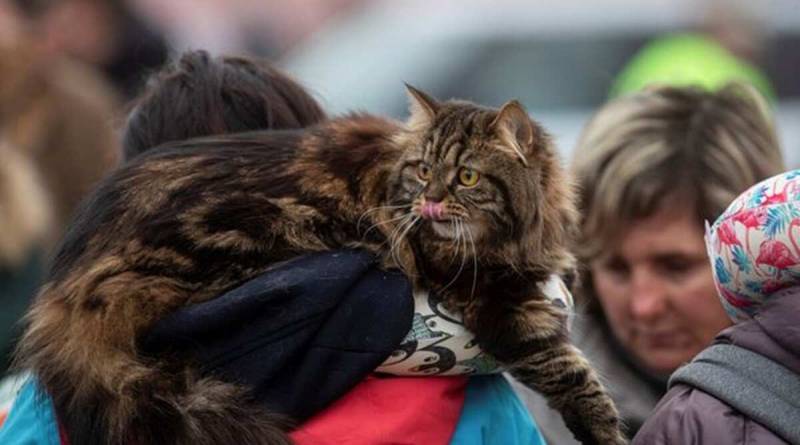
More than one million people have fled Ukraine, with the EU estimating that the figure might increase to four million.
The tragedy's scope is still being revealed, and although the focus is squarely on the humanitarian calamity, it has forced some people to make agonizing decisions about what they take with them.
This includes what happens to their cherished pets.
"The damage generated by some of these rocket assaults, that open environment full of glass, concrete, and metal, is deadly not just to people but also to animals," says James Sawyer, UK director of the International Fund for Animal Welfare (IFAW), on Radio 1 Newsbeat.
His organization assists shelters in Ukraine, offering resources such as food and veterinary supplies, as well as paying staff salary throughout the war, to ensure animals may continue to be cared for.
"Local supplies are running low, and one of the two animal shelters we help has been damaged by shells, resulting in the loss of one of the animals," he continues.
According to James, it is "very dangerous to put boots on the ground," thus the IFAW is focusing on providing the best possible support remotely.
They've been assisting workers who have reported a grave scenario with 1,100 canines in their care.
And staying to care for the animals is plainly risky. Staff at one shelter claim they are afraid to build a fire for fear of causing a fire.
There are also difficulties in evacuating animals across the border, as restrictions about microchipping and vaccination for animals are generally in force.
According to Jennifer White of the animal rights organization, PETA Germany has been on the border trying to "shepherd animals out safely."
Like IFAW, she says the group is working with partner organisations in neighbouring Romania who've managed to get into Ukraine to rescue abandoned animals, along with offering to vaccinate dogs and cats.