The accelerating adoption of Artificial Intelligence is reshaping corporate strategies, intensifying market competition, and exposing critical vulnerabilities in the United States' energy infrastructure, according to recent reporting by Bloomberg Technology. This phenomenon is creating a dual reality: generating high demand for tech providers while straining the systems that power them.
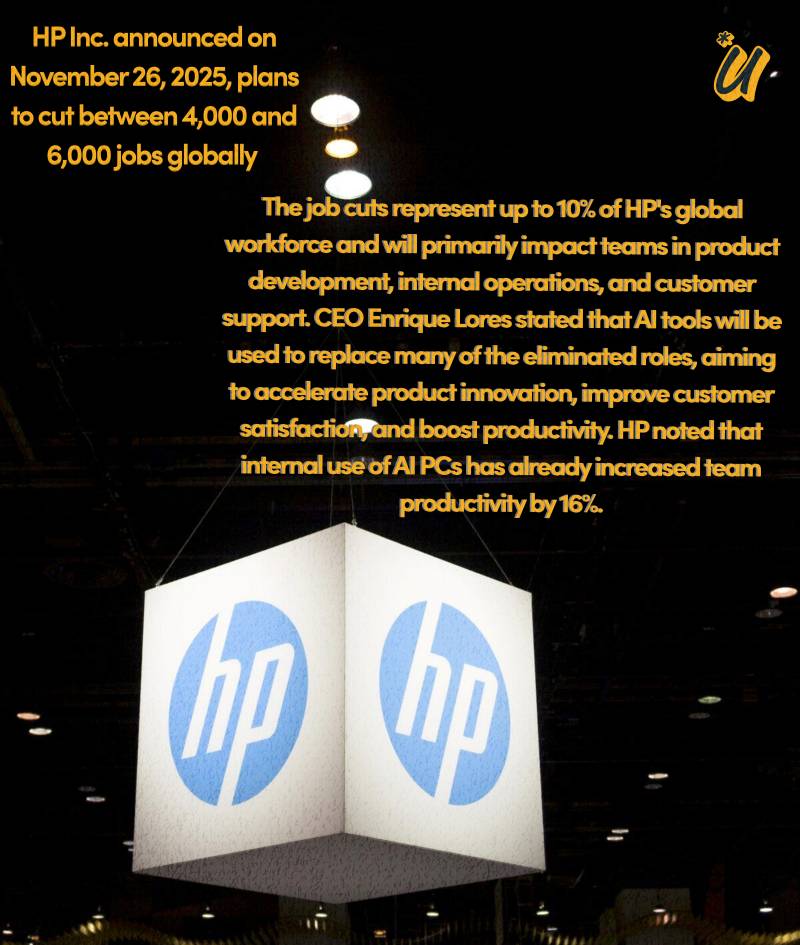
In the corporate sphere, Dell is experiencing strong demand for its AI servers and consequently raising its annual projections for this market. However, to make this business more profitable, Dell is consciously pulling back from deals that incur significant costs, succeeding in serving a more diverse group of customers with more profitable deals in the last quarter. Conversely, HP stock is under pressure after the company announced plans for 4,000 to 6,000 job cuts—up to 10% of its workforce—through the fiscal year 2028. While HP has had similar periodic efficiency plans in the past three years, the new element is the company's planned use of more AI tools and models for tasks like product development, customer service, and sales, contributing to these reductions. Meanwhile, HP is facing a different challenge: issuing a lower-than-expected profit guide for the next fiscal year due to increases in memory prices, an issue also hitting Dell. McKinsey, a consulting rival, has also cut about 200 global tech jobs recently as it assesses what tasks can be carried out by AI and ramps up its use of the technology.
The AI trade itself is facing skepticism amid rising competition. NVIDIA shares have recently taken a hit, down more than 3% over five days, as investors question whether Google’s Tensor Processing Units (TPUs) can compete with NVIDIA’s Graphics Processing Units (GPUs). Alphabet’s TPUs are specifically designed for AI workloads in the cloud, which represents the dominant use case for much of the new AI infrastructure. Deals with Anthropic and Meta show Alphabet’s emergence as a supplier, putting pressure on NVIDIA's market share. While analysts are reassessing what market shares will look like, most are holding firm on their positive outlook for NVIDIA, noting its software system and developer community—analogous to Apple’s App Store—will sustain enviable earnings growth, even if market share drops slightly. Despite concerns, most analysts are bullish on both Alphabet and NVIDIA, given their size and performance, as they jockey for market capitalization. Analysts acknowledge that NVIDIA may lose some market share to rivals like AMD and custom silicon from companies like Alphabet and Broadcom but stress the total market opportunity is massive.
A major concern highlighted by Bloomberg Technology is the surge in power demand driven by AI. Data from Schneider Electric forecasts a potential electricity crisis in the U.S. due to the aggressive build-out of AI data centers, combined with increased electrification and the onshoring of manufacturing. Power demand in the U.S. had been flat for two decades until the AI acceleration began. The data suggests the U.S. will reach a crunch point in 2028, where available supply will not be able to meet demand without relying on emergency reserves, increasing the grid's strain and vulnerability. Experts warn that the energy infrastructure has not been sufficiently invested in or built out. The short answer to whether the U.S. can reliably upgrade the grid in time is "no," as most necessary generation and transmission projects take around 10 years. This infrastructure problem poses a major risk to U.S. data center growth, potentially giving China, which has cheaper and more abundant power, a structural advantage in the race to be the AI superpower. The U.S. must rely on solutions in the margin, such as battery storage and microgrids, to build out extra capacity in the near term.
Additionally, Bloomberg Technology explored the rise of AI-powered scams targeting consumers during heavy shopping seasons. Cybersecurity expert Theresa Pay long warned that fraudsters are using AI tools to reverse engineer legitimate websites, set up impostor social media accounts, and use bots to generate fake positive reviews. She advised consumers to use credit cards for online purchases because credit card companies offer protection, and to watch out for red flags such as merchants that only accept Venmo, Zelle, gift cards, or wire transfers. For protection, tools like Scam Advisor, URL Void, and Trust Pilot can be used to check domain age and reputation.
Finally, AI is also enabling new business opportunities. For instance, Foodini is a start-up using large language models to ingest restaurant menu, recipe, and product information, breaking it down to the ingredient level to tie to allergens and dietary requirements. This personalized menu solution helps consumers with requirements and aids restaurants in complying with new regulations, such as California’s Senate Bill 68, effective July 1, 2026, which mandates labeling for the major nine food allergens at chains with 20-plus locations nationwide. The conversation highlights how the technology's rapid growth is not just a market story, but a fundamental challenge to national infrastructure and the structure of corporate employment.