GNEW YORK – The quiet, dust-mote-laden atmosphere of a Parisian artist’s studio is a space where the boundaries between function and pure philosophy naturally dissolve into the plaster-stained floorboards. In an elegant retrospective exploring the rare treasures of the legendary Wingate Collection, Sotheby’s has brought forward a stunning visual and narrative examination of two of the twentieth century’s most profound creative forces: the brothers Alberto and Diego Giacometti. Rather than flattening their relationship into a conventional tale of a legendary master and a supporting sibling, the presentation utilizes a masterclass in strategic storytelling and transformational framing. It repositions the brothers as two halves of a singular, dialectical artistic consciousness. For the global art community, this exploration provides an intimate look into a shared creative life, using intelligent curation to map out how one brother stripped the human form down to its absolute, fragile psychological marrow, while the other built an organic, poetic universe designed to be touched, lived with, and utilized.
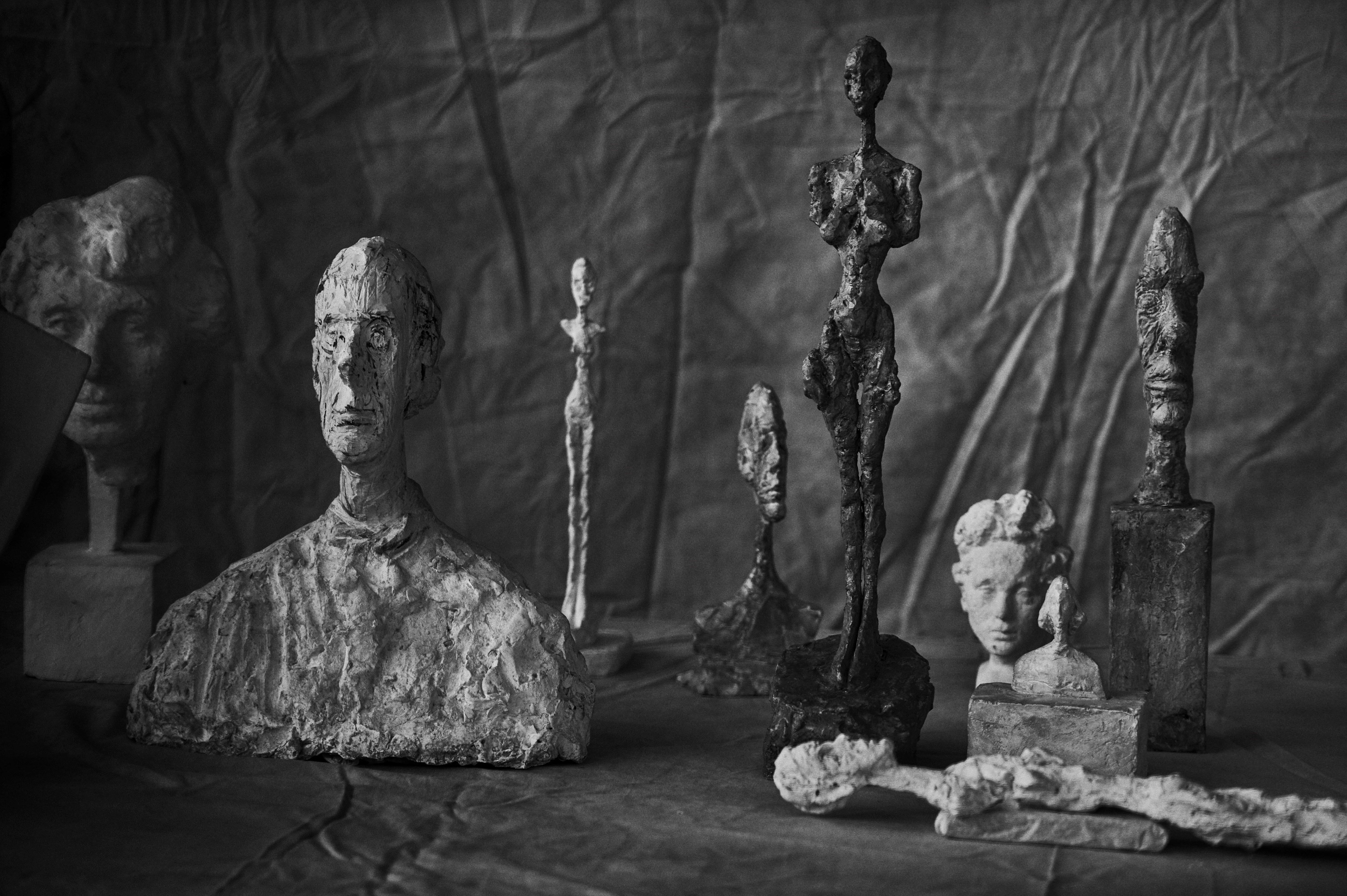
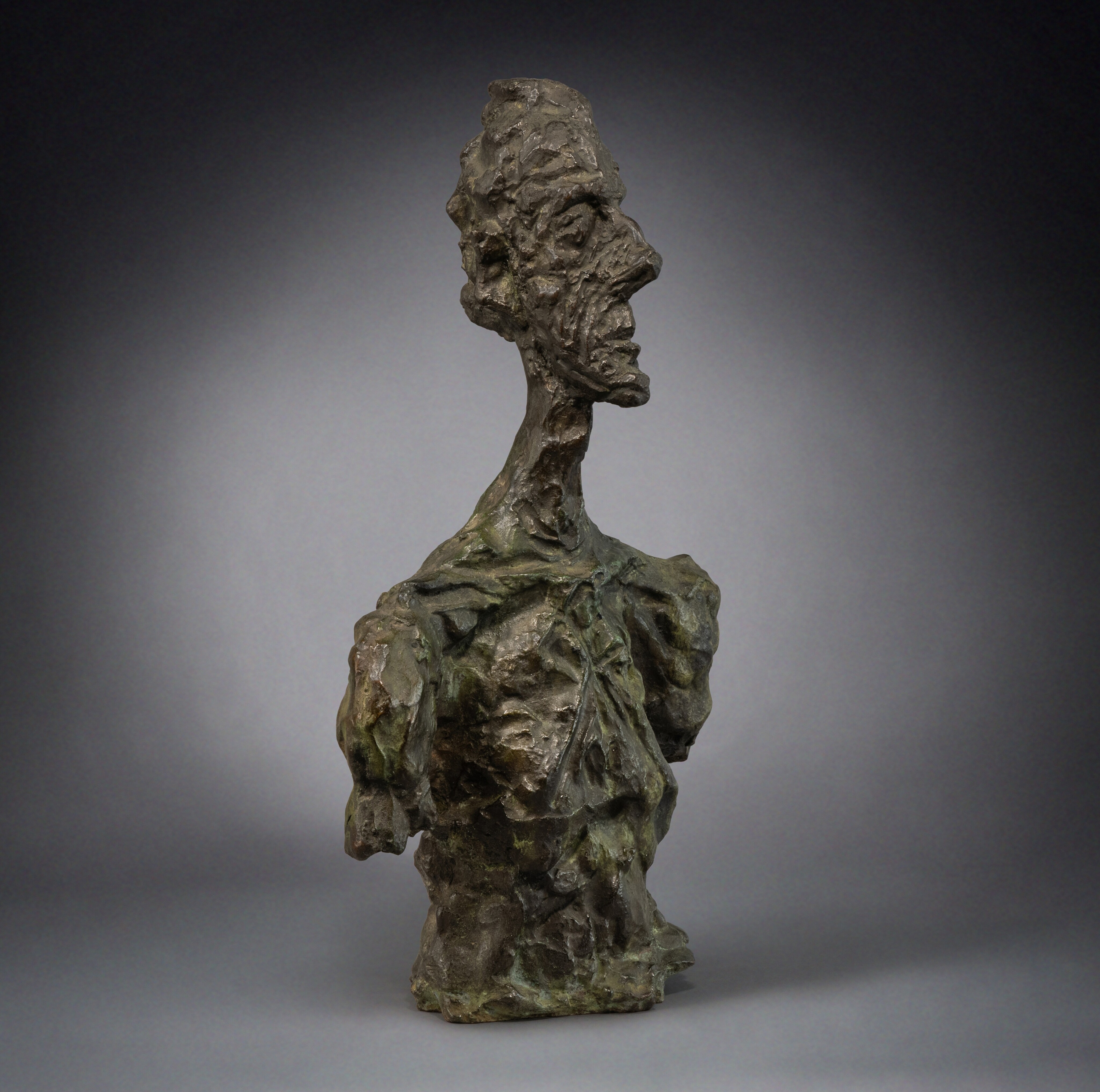
To enter the creative world of Alberto Giacometti is to confront an artistic language driven by a relentless, almost painful emotional precision. Celebrated globally for his instantly recognizable sculptural vocabulary, Alberto's mature work is defined by human figures that are impossibly thin, elongated, and textured like weathered bark. Yet, a deep cultural understanding of his post-war environment reveals that these haunting structures were never meant to be realistic anatomical portrayals. Alberto actively abandoned the comforting rules of traditional realism to pursue something far more elusive: the pure sensation of perception itself. He was obsessed with capturing the exact phenomenological reality of seeing a human figure moving through space from a heavy distance, where forms naturally appear to flicker, compress, and warp out of proportion under the weight of the void surrounding them. His art was an attempt to sculpt the air that isolates us, transforming bronze into a testament of human endurance.
This philosophical pursuit required an agonizing, deeply obsessive studio technique that Prigent-style observation would reveal as a form of creative exorcism. Alberto's process was defined not by building up material, but by an unyielding, destructive act of subtraction. Day after day, he would aggressively cut away at the wet clay and plaster, carving the material down until the figures and faces were reduced to razor-thin planes—frequently described by contemporary critics as "knife blades." This radical methodology pushed the absolute boundaries of structural scale and material fragility, testing how much of a body could be stripped away before it ceased to exist entirely. In doing so, he bypassed superficial social identities to unearth the raw, elemental essence of humanity. His portraits were deeply intimate yet universally detached, frequently using his younger brother, Diego, as a permanent, patient model. By sculpting Diego’s familiar features over and over across decades, Alberto used the specific to explore the universal, turning his brother’s face into a landscape of hyper-reality that reflected the collective trauma and resilience of a fractured century.
Related article - Uphorial Shopify


While Alberto looked inward to capture the agonizing ghost of the human condition, Diego Giacometti took a fundamentally different, yet entirely complementary creative path, choosing to anchor his genius in a vibrant world of tactile objects. Emerging from the shadow of his brother's monumentality, Diego established himself as an elite crafter of functional art. He did not believe that high art should be confined to a distant pedestal; instead, he channeled his profound understanding of materials into creating furniture, tables, lighting fixtures, and deeply poetic household items that were explicitly meant to be touched, lived with, and integrated into the messy reality of daily domestic life. Diego’s work represents a beautiful, transformational framing of design, proving that an everyday utilitarian object could possess the same spiritual and artistic weight as a gallery masterpiece.
Diego's primary creative sanctuary was not the psychological abyss of human consciousness, but the vibrant, unpretentious theater of the natural world. He found his lifelong inspiration in nature and animals, sculpting delicate, whimsical mice that scurried along the rungs of bronze chairs, serene cats perched on table legs, and highly intricate fireplace irons that seemed to grow out of the hearth like living vines. His visual vocabulary beautifully incorporated skeletal, organic forms, balancing the structural weight of metal with the fluid, unpredictable lines of zoological life. Where Alberto saw isolation in space, Diego saw connection; his objects acted as a warm, material bridge between the human home and the wild, unbothered grace of the animal kingdom.
The ultimate triumph of the Sotheby's presentation, however, lies in its refusal to view these distinct creative paths in isolation, choosing instead to highlight the vital, deeply symbiotic partnership that sustained both men throughout their lifetimes. The brothers did not merely share a studio space in Montparnasse; they coexisted within an unshakeable, lifelong collaboration. Diego was the practical anchor of the operation, playing a crucial, protective role in the quality control and technical supervision of Alberto’s chaotic studio, managing the complex casting processes and ensuring that his brother's fragile plaster visions successfully transitioned into permanent bronze. Conversely, Alberto acted as a fierce, loving mentor to his younger sibling, constantly encouraging Diego to validate his own aesthetic voice and step fully into his identity as an independent artist. This report from the Wingate Collection serves as a moving reminder that the historic masterpieces of the Giacometti legacy were never the product of a solitary, lonely genius, but were forged in the fires of a profound, brotherly devotion—a rare creative harmony where the ghostlike figures of the mind found their perfect resting place alongside the poetic objects of the earth.