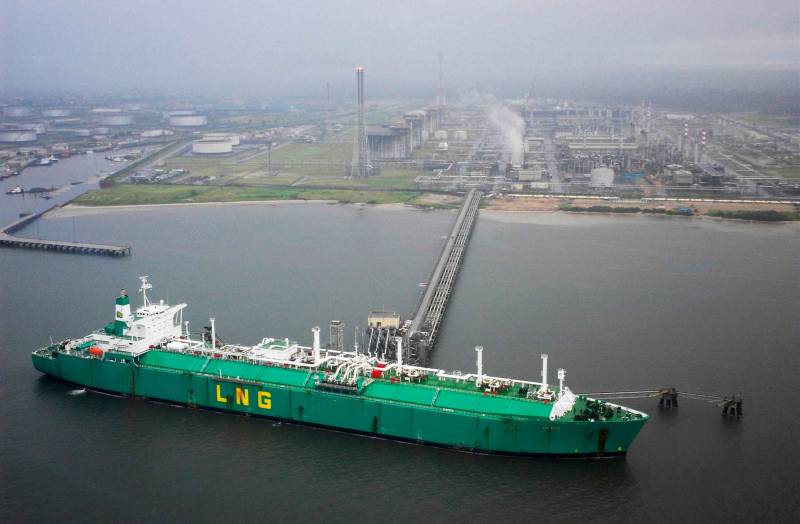
With the United States, the European Union, and the United Kingdom seeking to phase out Russian gas supplies, Western governments may turn to liquefied natural gas projects in Sub-Saharan Africa to cushion the blow.
Russia and the West are still at odds over payment for natural gas exports, on which Europe, in particular, is heavily reliant, with Moscow demanding that "unfriendly" countries pay in Russian rubles for gas deliveries, a demand that the G-7 nations have rejected.
The discrepancy comes after Russia was hit with an unprecedented and coordinated bombardment of international sanctions in response to its invasion of Ukraine.
The United States has imposed a total ban on Russian oil, gas, and coal imports, while the United Kingdom plans to phase out Russian oil by the end of the year and the European Union aims to reduce its reliance on Russian imports by two-thirds.
Around 40% of the EU's natural gas exports come from Russia, with Germany and Italy being particularly vulnerable. On Wednesday, Germany issued a "early warning" that natural gas rationing may be necessary if a full supply crisis occurs.
The EU and the US have agreed to supply an additional 15 billion cubic meters of LNG, but former US Energy Secretary Dan Brouillette stated Monday that this would not be enough to meet Russia's needs.
On Tuesday, Italian Foreign Minister Luigi di Maio told CNBC that he had flown to Mozambique, the Republic of Congo, and Angola in the past month in order to form new LNG supply arrangements.
"Energy security is critical for countries like Italy and many others that are global manufacturing powerhouses, and we must be able to diversify our energy sourcing," Di Maio added.
Africa analysts at political risk firm Verisk Maplecroft wrote in a research note last week that while the continent cannot replace the hole created by Russian natural gas supplies, it can help to shore up supply.
Oil heavyweights BP, TotalEnergies, and Eni, as well as US oil majors like Exxon Mobil, have all established a footprint on the African continent from which to develop.
Verisk Maplecroft said that BP is the most advanced in its efforts to bring a large LNG project in Sub-Saharan Africa online, and that it may increase its efforts, particularly at the Tortue gas reserves on the Senegalese-Mauritanian border.