In the quiet, windswept reaches where the Atlantic meets the jagged coastlines of the northern world, the puffin exists as a master of two domains. It is a creature that defies the binary boundaries of nature, moving with equal grace through the dense, resistive pressure of the ocean and the thin, fluid currents of the sky. This elusive biological reality has long fascinated aeronautical engineers, but it has remained an elusive target for robotics—until now. Researchers at MIT and EPFL have unveiled a breakthrough in bio-inspired engineering: a hybrid drone that mimics the biomechanics of these aquatic-aerial birds, effectively collapsing the distance between two fundamentally different physical worlds.
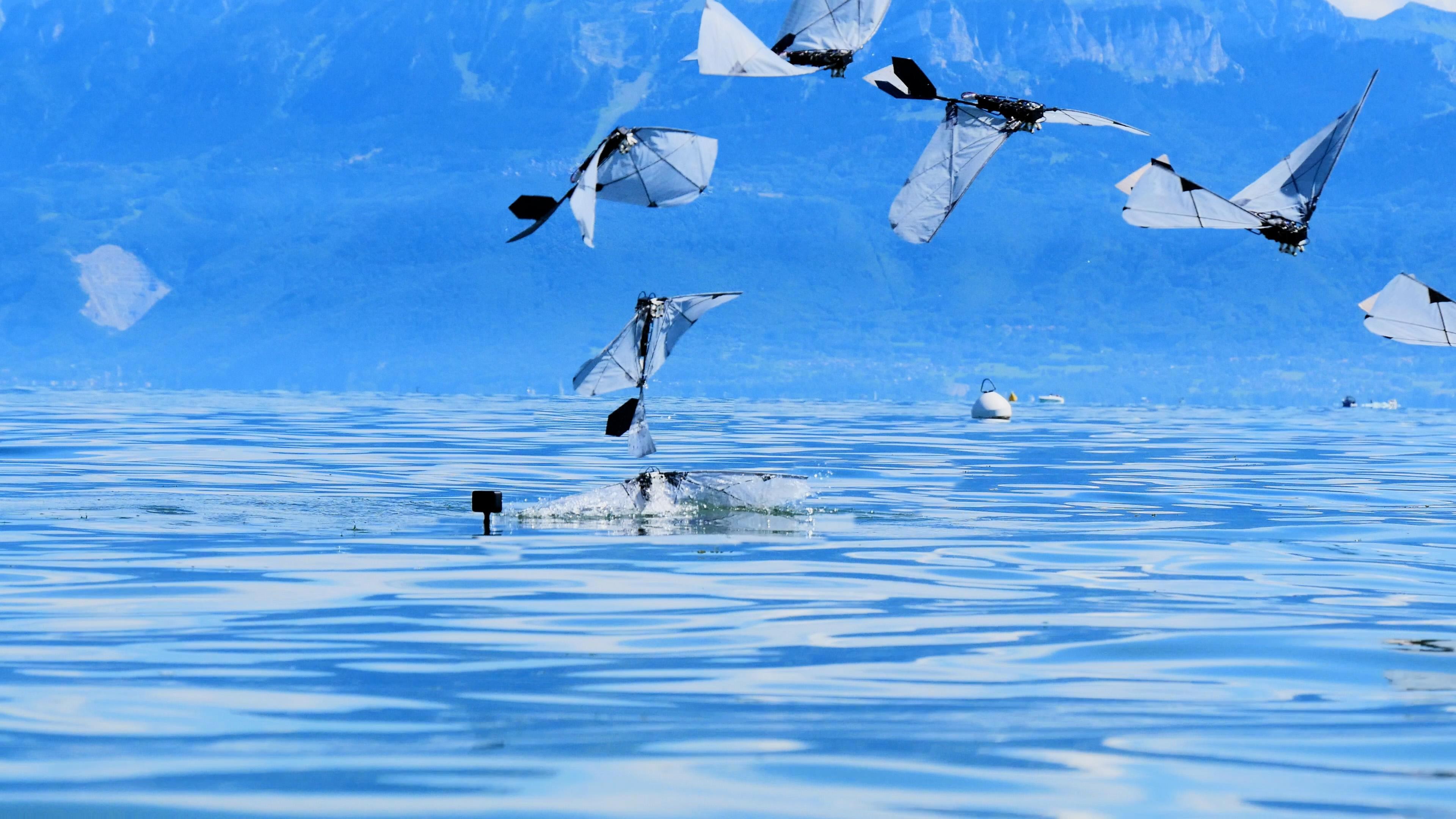
Led by Raphael Zufferey of the MIT AURA Lab, the project began with a fundamental question of adaptation. How does an organism survive the transition from a fluid where density is immense to one where it is negligible? The team quickly realized that the answer lay not in rigidity, but in the intelligent application of flexibility. Traditional drones are built to excel in a singular environment, utilizing stiff airfoils that snap under the pressure of water or flailing wings that lack the rigidity required for stable flight. The puffin-inspired robot, however, employs wings engineered with significant bending flexibility. This adaptability allows the drone to modulate its shape, providing the efficient, sculling propulsion necessary for underwater movement while maintaining the structural integrity required to generate lift in the air.
The engineering challenges extended deep into the core of the machine. A custom-built variable frequency motor was developed to manage the paradoxical requirements of locomotion. In the water, the robot must operate at low, steady frequencies to propel itself through liquid resistance; in the air, the rhythm must spike dramatically to maintain the high-speed oscillation needed for flight. This drive system acts as the heart of the robot, enabling a fluid transition that is rarely achieved in mechanical systems. To ensure that the robot was not dragged down by the weight of heavy, cumbersome protective enclosures, the team opted for a decentralized approach to protection. By individually waterproofing each electronic component, they stripped away unnecessary bulk, maintaining the delicate balance of weight and buoyancy essential for an object intended to soar.
Related article - Uphorial Shopify

The transition from the depths to the surface is perhaps the most precarious moment in the puffin’s journey—and the most difficult to replicate. To manage the exit from the water, the wings are treated with a sophisticated superhydrophobic coating applied to high-strength carbon structures. This coating acts as a repellent, causing water to bead and roll away instantly upon breaking the surface. This ensures that the robot does not carry the "dead weight" of excess water into the sky, which would cause an immediate stall. Furthermore, the team’s research identified a critical "exit angle"—roughly 70 degrees—as the optimal trajectory for breaking the surface tension. It is a precise mathematical dance: too shallow, and the robot lacks the momentum to clear the water; too steep, and the aerodynamic forces become unmanageable.
This development is not merely a feat of engineering; it is a vision of the future of environmental science. The goal is to move beyond the large, ship-bound research equipment that currently defines oceanography. The team envisions a generation of portable, autonomous drones that can be carried in a researcher’s backpack to the most remote, inaccessible corners of the globe. Imagine a device that can be deployed at the edge of a glacier or a hidden coastal inlet, capable of diving into frigid waters to collect precise chemical samples or underwater acoustic measurements, only to launch itself back into the air and return to the shore automatically.
By reimagining the drone as a hybrid entity, the researchers are effectively handing scientists a new set of eyes and hands in environments that were previously too dangerous or logistically impossible to monitor. This is transformational framing at its most practical; the robot is not just a high-tech toy, but a specialized tool for documenting the health of our rapidly changing oceans. It represents a synthesis of biological wisdom and human ingenuity, capturing the essence of the puffin’s dual existence and applying it to the urgent needs of climate research.
As the team continues to refine the agility and autonomous capabilities of these hybrid systems, the implications for oceanography are profound. We are moving toward a future where the distinction between terrestrial, aerial, and aquatic sensing is rendered obsolete. These machines, inspired by the small, hardy puffin, will likely become the vanguard of a new era of remote sensing, allowing us to peek into the depths of the ocean with the same ease that we now monitor the skies. It is a testament to the idea that when we look to nature not just for inspiration, but for fundamental mechanical truths, we find the solutions to the most complex problems of our age. Through the lens of this drone, the boundaries of the natural world are not barriers—they are simply new frontiers for discovery.