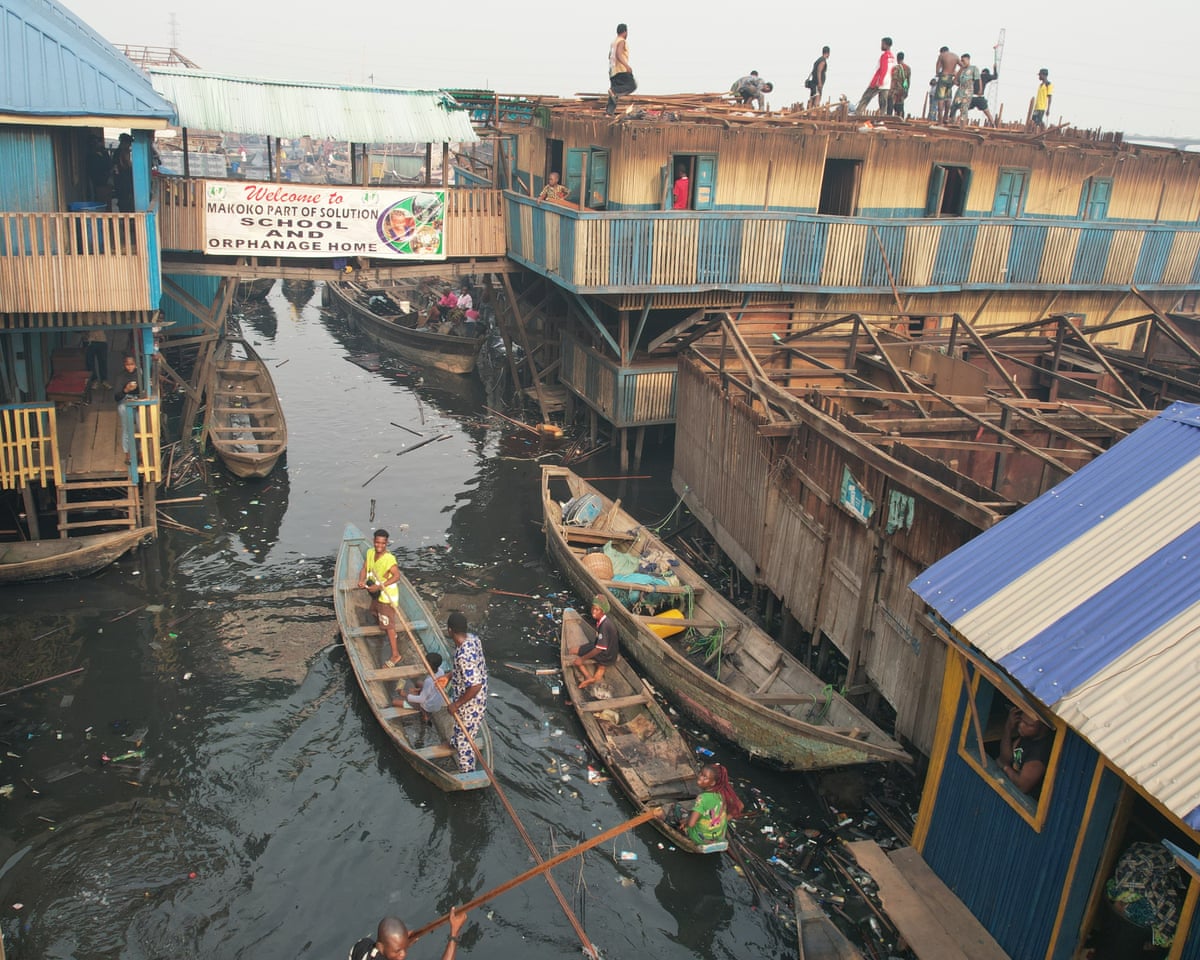
LAGOS - In the heart of Lagos, where the relentless pulse of a megacity meets the ancient, shifting tides of the lagoon, exists a community that challenges every conventional definition of urban life. Makoko, the historic floating settlement, is not merely a collection of wooden structures on stilts; it is a testament to human resilience and a profound cultural artifact of Nigeria’s commercial capital. However, as Lagos accelerates its drive toward a modernized, high-rise future, Makoko finds itself at the center of an increasingly urgent existential battle. A recent broadcast of The 77 Percent has brought this tension into sharp focus, exploring the deepening rift between the city’s rapid, state-led development and the survival of a community that has called these waters home for generations.
The conflict of development in Lagos is one of competing narratives. For the government and urban planners, the demolition of informal settlements is often framed through the lens of public safety, environmental hygiene, and the necessity of modernization. The argument is that for a city to compete on the global stage, it must shed the aesthetic and infrastructural remnants of its past. Yet, residents, human rights activists, and urban sociologists present a more cynical, and perhaps more grounded, view. They argue that these official justifications are frequently a veil for the clearing of prime, high-value waterfront land, paving the way for luxury real estate projects that serve only the elite. This disparity in perspective underscores the fundamental injustice: whose city is Lagos, and who has the right to exist within it?
This tension is exacerbated by a crippling housing crisis that permeates every level of Lagosian society. The city’s real estate market is paradoxically structured; while there is an aggressive surplus of luxury apartments rising along the city's coastlines, these spaces remain largely inaccessible to the vast majority of the population. Consequently, millions are pushed into informal settlements like Makoko, which effectively function as the city’s primary housing provider for the working class. Despite providing this essential service, these communities face a cycle of systemic neglect. When the state does intervene, it is rarely to provide services like water, sanitation, or electricity, but to deliver notices of eviction, effectively criminalizing the existence of families who have nowhere else to turn.
Related article - Uphorial Shopify

The discussion among experts on The 77 Percent suggests that the current trajectory of top-down displacement is not only morally fraught but strategically short-sighted. There is an emerging consensus that the future of Lagos must be built on a foundation of people-centered development. The alternative to demolition is integration. Architects and urban planners are increasingly calling for a shift toward "in-situ" upgrading—a process where existing informal communities are incorporated into the city’s broader master plans rather than erased from them. This approach advocates for leveraging the existing social fabric of Makoko, utilizing local architectural wisdom, and adopting sustainable, cost-effective building materials that are already native to the environment.
At its core, the transformation required is one of philosophy: moving from a mindset of displacement to one of co-creation. The residents of Makoko are not passive victims; they are skilled laborers, entrepreneurs, and citizens who possess a deep, lived knowledge of their environment. By partnering with these communities, urban developers could foster a form of growth that is both organic and stable. This involves formalizing land rights, investing in community-led infrastructure, and ensuring that development plans are the product of dialogue rather than dictates. It is a call to recognize that the strength of a city lies not in its tallest building, but in the stability and dignity of its most vulnerable neighborhoods.

The broadcast concludes with a powerful, unified demand from the community and its advocates: Makoko must be recognized as a vital, productive organ of the Lagosian body. The settlement is not an obstacle to progress; it is an expression of it. The residents are not seeking charity; they are seeking a seat at the table. They demand that the government move away from exclusionary policies that treat their homes as temporary eyesores and toward a policy of inclusion that acknowledges their right to stay. The message is clear: true modernization cannot occur in a city that treats the displacement of its own citizens as a necessary byproduct of progress.
As Lagos continues to expand, its leaders stand at a crossroads. They can continue down the path of exclusionary development, which risks creating a city that is increasingly hollow, fragmented, and unequal. Or, they can choose to embrace the complexity of the city as it actually exists, including the vibrant, floating reality of Makoko. The survival of this community is about more than just the preservation of wooden houses; it is about the soul of Lagos. It is a test of whether the city is capable of evolving into a space where all citizens—regardless of their economic standing or their location on the map—can live with the dignity, security, and permanence they deserve. The dialogue has been opened, and the future of urban Africa may well depend on the outcome.