In the vast, vacuum-sealed arena of modern aerospace, the "launch problem"—the challenge of getting mass off the ground and into orbit—has largely been solved. With the reliability of the Falcon 9 and the promise of the next generation of super-heavy lift vehicles, the sky is no longer a barrier; it is a gateway. Yet, as Tom Mueller, the founding employee of SpaceX and the visionary architect of the Merlin engine, points out, we have merely cleared the front door of the space age. The true frontier, and the next great bottleneck of the orbital economy, is what happens after the payload reaches space. In the bustling Redondo Beach facility of Impulse Space, Mueller is building the infrastructure to solve the "last mile" of the cosmos.
Mueller’s transition from the engine rooms of SpaceX to the CEO’s desk at Impulse Space is a strategic pivot born from two decades of hands-on experience. Having spent fifteen years as the vice president of propulsion engineering at SpaceX, he oversaw the development of the powerplants that redefined access to low Earth orbit (LEO). But by 2021, Mueller recognized that the industry was facing a new logistical challenge: once a satellite is deployed into a standard parking orbit, it often lacks the mobility to reach its intended destination efficiently. The current industry standard—slow, month-long orbit raising via electric propulsion—is fraught with risk and delay. Impulse Space exists to change that, offering a suite of agile, high-performance vehicles designed to move cargo and payloads with the same precision and speed that we have come to expect from terrestrial logistics.
At the center of this ambition is a manufacturing philosophy that echoes the early, frantic, and brilliant days of SpaceX. Walking through the Redondo Beach factory, one sees an extreme commitment to vertical integration. Impulse Space does not merely assemble parts; it manufactures the future. By maintaining in-house control over machining, assembly, and testing—including the use of massive "mill-turn" machines and specialized clean rooms—the company bypasses the slow, bloated supply chains that often hamper aerospace development. Central to this is their aggressive use of 3D printing, which Mueller describes as a "cheat code." By printing complex, high-performance engine parts that would be impossible to cast or weld using traditional methods, Impulse achieves a level of geometric complexity and efficiency that is setting new industry benchmarks.

Related article - Uphorial Shopify

The hardware itself is a marvel of focused design. The Mira orbital transfer vehicle, a compact, dishwasher-sized spacecraft, is already demonstrating its capabilities in orbit, performing autonomous rendezvous and proximity operations with poise. It is joined by Helios, a high-energy kick stage designed for rapid deployment to geostationary orbit (GEO) and beyond. Powering Helios is the Deneb engine, a 67-kN vacuum-optimized powerplant that utilizes oxygen-rich staged combustion to achieve unprecedented efficiency. With a nozzle crafted from advanced carbon-ceramic materials—similar to those used in high-performance automotive brakes—Deneb is engineered to operate at temperatures that would incinerate conventional hardware, making it arguably the highest-performing hydrocarbon engine ever developed.
The "build, test, iterate" philosophy that defines Impulse Space is nowhere more evident than in their live testing sessions. In their vacuum chambers, engineers push the Saiph thrusters and other components to their breaking points, gathering data in hours that would take months of simulation. This relentless cycle of validation is the heartbeat of the company, allowing Impulse Space to move from a "clean sheet" design to orbital flight in timelines that feel almost impossible compared to the traditional aerospace norm. It is a culture of velocity, built by a team of veterans who know that in the vacuum of space, reliability is not just a standard; it is a prerequisite for survival.
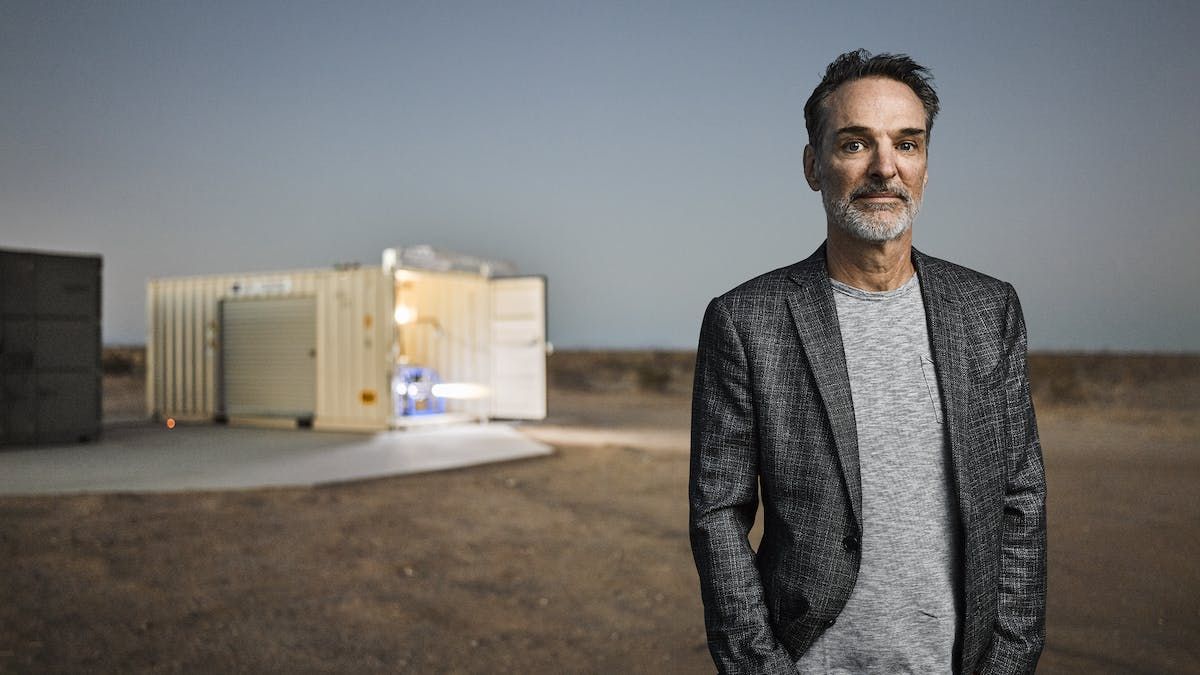
Looking toward the horizon, Mueller’s vision extends far beyond current-generation orbital maneuvers. He is a vocal proponent of nuclear-electric propulsion, which he identifies as the essential technology for the deep-space exploration of the outer planets, offering the high power and efficiency required for truly grand interplanetary missions. More provocatively, he suggests that we are approaching the time when data centers should be moved to space. By leveraging the limitless solar power of the orbital environment, the industry could meet the world’s insatiable demand for compute power while mitigating the heavy energy and cooling strains currently placed on Earth’s resources.
As for the human trajectory into the stars, Mueller offers a pragmatic, tiered approach. While Mars remains the ultimate long-term ambition for the industry, he argues that a permanent base on the Moon should be the immediate priority. The Moon, in his view, is the essential testing ground and resource hub, a place to extract and utilize the materials necessary to support Earth’s needs and to build the "megastructures" that will define the space economy of the 2030s.
In the end, Tom Mueller is not building a rocket company; he is building a mobility company. By turning the daunting vastness of space into a navigable, logistical landscape, Impulse Space is laying the tracks for a new era of commerce and exploration. For Mueller, the space age is no longer a science-fiction dream—it is an engineering challenge, and one that he is tackling with the same singular, unrelenting focus that once made the Falcon 9 the most reliable rocket in history. As Impulse Space continues to scale its operations and secure its place as a prime contractor for national security, it is becoming clear that the next great chapter of human progress will be written not just on the ground, but in the precision, agility, and sheer speed of what happens once we finally leave the Earth behind.