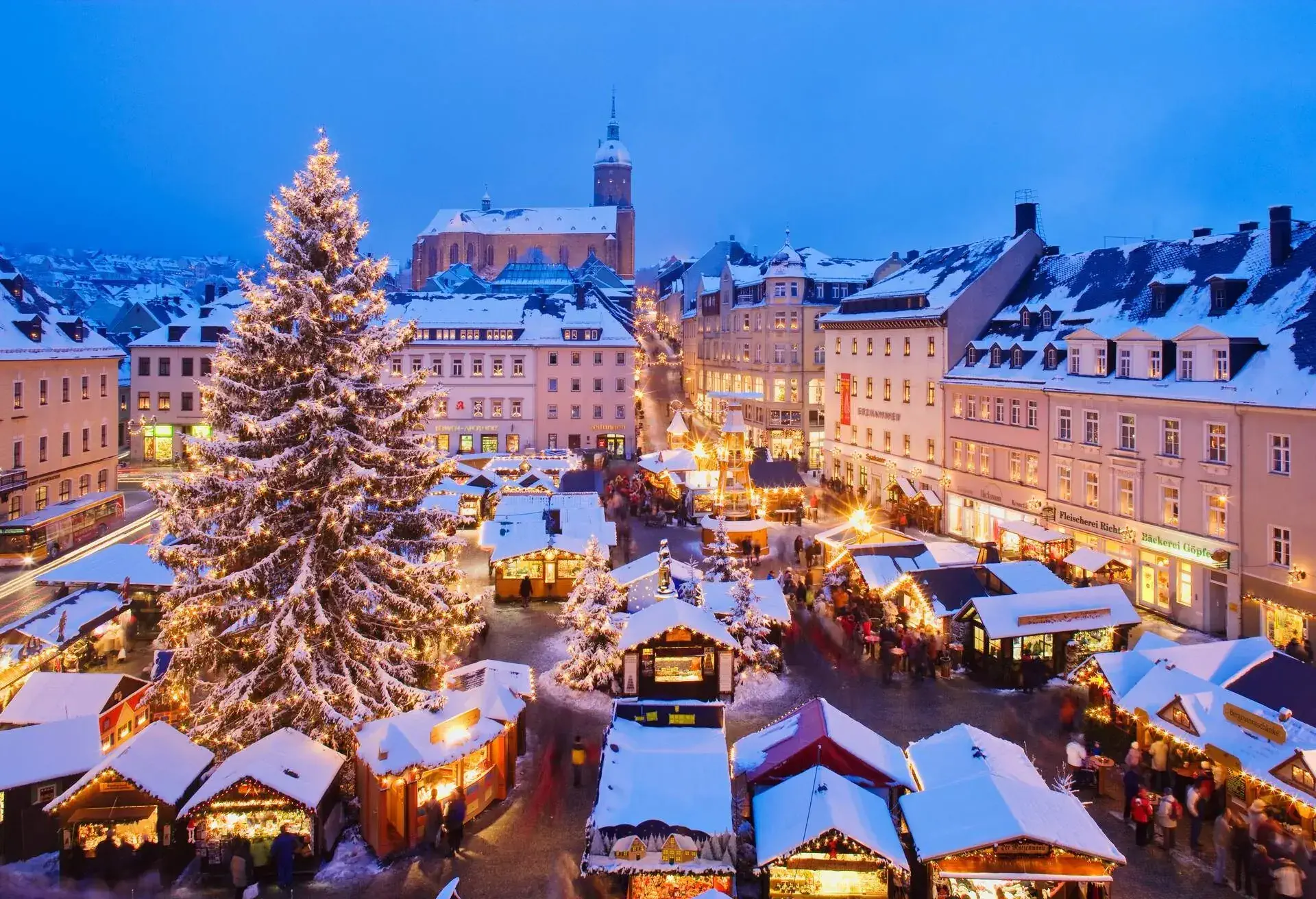
Germany's celebrated tradition of Christmas markets, which commence in late November, marks what is widely considered the most magical time of the year, defined by colors, smells, sights, and fellowship, as detailed by DW Travel. These markets serve as crucial social hubs, providing a setting to meet friends, purchase gifts, and indulge in seasonal delicacies such as Glühwein, Wurst, nuts, and Lebkuchen. With approximately 2,500 Christmas markets available across the country, DW Travel showcased a selection of the most beautiful and famous, while also highlighting delicious regional specialties and unconventional offerings.
The sheer scale of these seasonal gatherings is remarkable, with certain locations setting visitor and size records. The most visited Christmas market is situated at the foot of the Cologne Cathedral, which, according to organizers, attracts around 5 million visitors annually. Despite its grand scale, the Cologne market is a newcomer, having only existed since 1995. In contrast, Germany's oldest market is the Striezel market in Dresden, dating back to 1434. Historically, the Dresden market was held for only one day, but now it lasts about four weeks and is dedicated to the regional specialty, the Striezel, or Dresden Christmas stollen. Dortmund lays claim to the country's largest Christmas tree, a 45-meter-high structure built over four weeks from 1,200 smaller red spruce trees, making it the undeniable star of the city's Christmas market. Meanwhile, the small Hessian town of Schlitz achieved a Guinness World Record by transforming a 42-meter-high tower into the world's tallest Christmas "candle" using red fabric and lights. Berlin, the capital, hosts the highest number of markets—around 90—including classics like the markets around the Neptune fountain and the Kaiser Wilhelm Memorial Church.
:max_bytes(150000):strip_icc()/braunschweig-christmas-market-germany_GERMANXMAS1022-21e0ff2fa68a4aa9ba7acd20dc6298cb.jpg)
Related article - Uphorial Shopify
The markets are also closely linked to a variety of folkloric figures whose roles vary geographically. In northern and eastern Germany, children typically receive gifts from Santa Claus. Conversely, in southern Germany, the "Christ Child" or "Christkind" is the central figure, famously opening the Christ kind market in Nuremberg every year. In Rothenburg ob der Tauber, the medieval-themed "Reiterlesmarkt" is opened by the "Reiterle," a figure from the Middle Ages said to bring good luck. For a wilder experience, Munich hosts the "Krampuslauf," featuring Krampus, pagan figures from the Alpine region who traditionally punished naughty children. Today, these "wild guys" only cause mischief for one day, with the Munich Christmas market remaining a peaceful, traditional affair otherwise.
Beyond general delicacies like mulled wine and Bratwurst, regional food specialties are a significant draw. Aachen is famous for its Printen, a special type of gingerbread that used to be hard for long storage but now comes in both hard and soft varieties. The name derives from the practice of pressing the dough into carved molds. Nuremberg offers the soft and moist "Elisenlebkuchen," which legend suggests was created by a baker for his sick daughter, Elise, using very little flour and lots of nuts and spices. For a hearty savory dish, kale is a typical north German winter food, often served with sausage or other meat. Returning to Dresden’s specialty, the Stollen, or "Striezel," is a rich yeast dough containing butter, flour, candied orange and lemon peel, almonds, raisins, and lots of sugar. Every year, Dresden bakers create a giant stollen and donate the proceeds from its sales to charity.
While tradition is important, some markets lean into the unconventional. Hamburg’s erotic Santa Pauli Christmas market, held in the Reeperbahn, Germany's most famous red-light district, focuses on fun and frivolity. This concept has spread, notably to Berlin’s Nollendorfplatz station, which has hosted "Christmas Avenue" since 2019, where the queer community celebrates with unique gifts and mulled wine that "might be a little extra warm". Admission to this market is restricted to those aged 16 and over. The medieval market in Esslingen offers the unique opportunity to bathe publicly in a hot wash tub.
Furthermore, Germany hosts markets in unexpected locations. Visitors can attend an underground Christmas market 17 meters below ground in the training mine in Recklinghausen, part of the Ruhr region’s mining history. Here, visitors must wear helmets and are surrounded by miner's lamps and mining equipment. Castles and palaces, such as Merode Castle in the Eifel region, provide a traditional and serene backdrop where the Christ kind appears daily to sing Christmas carols. For a dramatic setting, the Christmas market beneath the 40-meter-high railway viaduct in the Ravenna Gorge in the Black Forest is extremely popular, though tickets for the current year are already sold out. The German Christmas market experience, as chronicled by DW Travel, demonstrates a broad spectrum of history, regional culture, and surprising locales.