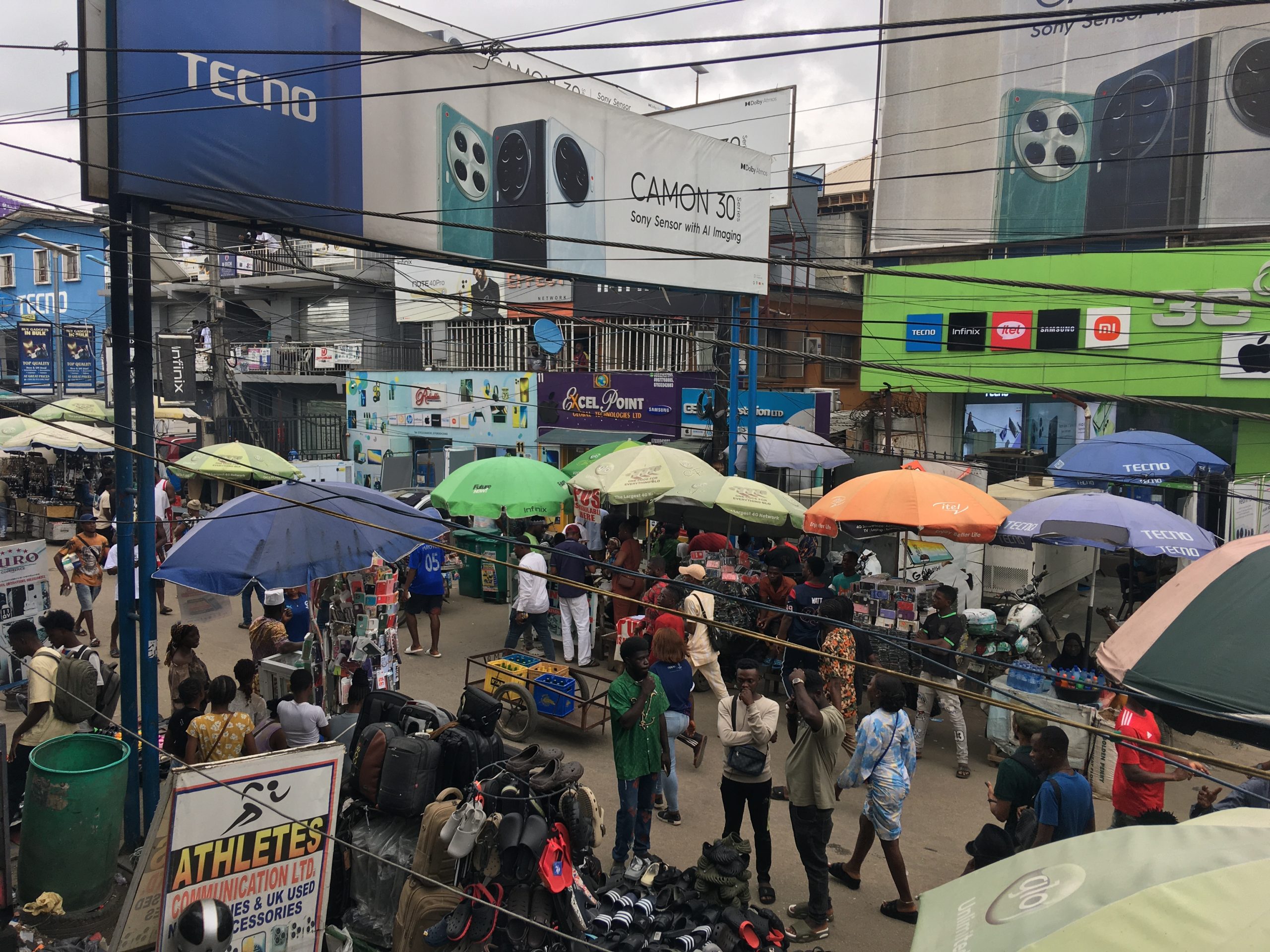
IKEJA LAGOS – The sprawling urban labyrinth of Computer Village in Ikeja, Lagos, stands as the undisputed nerve center of West Africa’s digital economy, yet its vibrant facade masks a sophisticated and grueling struggle against the frictions of global trade. As Nigeria lacks a large-scale domestic electronics manufacturing base, the thousands of merchants operating within this informal hub are tethered to an international supply chain that begins primarily in the manufacturing heartlands of China. In a detailed economic report on the state of the market in 2026, the reality of this trade is revealed to be a high-stakes balancing act where survival depends on a merchant’s ability to navigate chronic dollar scarcity, volatile monetary policies, and a banking system that often feels designed to exclude the small-to-medium enterprise.
At the heart of the crisis is the persistent challenge of foreign exchange liquidity. Local merchants, ranging from boutique smartphone retailers to wholesale parts distributors, face a systemic struggle to access the United States dollar through traditional, formal banking channels. Nigeria’s commercial banks have historically been forced to prioritize major industrial conglomerates and government-led projects, frequently leaving the essential electronics sector to fend for itself. This scarcity has pushed the residents of Computer Village into the parallel markets, where the cost of doing business is dictated by the street rather than the boardroom. The gap between official bank rates and the actual market value of the currency remains a significant hurdle, creating an environment where profit margins can be erased by a single day of currency volatility.
The restrictive nature of national monetary policy has further complicated this landscape. Historically, the banning of certain goods from accessing official exchange rates created a fragmented market, forcing traders to find creative, albeit more expensive, ways to settle international invoices. Because formal banking is often characterized by bureaucratic delays and slow settlement times, the trade has leaned heavily into informality. Today, much of the commerce flowing through Computer Village is facilitated via peer-to-peer networks and instant messaging applications like WeChat. These platforms have become the de facto digital trading floors where payments are negotiated and goods are sourced, bypassing the friction of legacy correspondent banking that can take days to confirm a simple cross-border wire.

Related article - Uphorial Shopify
In response to these structural inefficiencies, a new wave of fintech entrepreneurship is rising within the Lagos tech ecosystem, utilizing stablecoins as a vital bridge for international commerce. For the modern merchant, the appeal of stablecoins is not rooted in a desire for speculative crypto-investment, but in a desperate need for mechanical efficiency. Stablecoins offer a 24/7 settlement layer that operates outside the traditional "banking hours" of the global financial system. By using digital assets pegged to the dollar, a trader in Lagos can settle a debt with a supplier in Shenzhen almost instantly, avoiding the multi-day waiting periods and high transaction fees associated with traditional international transfers.

The goal of these technological innovations is to normalize and accelerate the velocity of money in an economy that has long been constrained by its own infrastructure. For the merchants of Computer Village, the primary concern is not the underlying blockchain technology, but the search for the most cost-effective and compliant way to pay international suppliers. Stablecoins are emerging as a pragmatic tool that mirrors the speed of the informal market while providing a level of digital tracking that traditional cash transactions lack. This shift represents a broader trend in 2026: the "formalization of the informal," where cutting-edge financial technology is being used to solve the very old problems of distance, trust, and currency devaluations.
As the sun sets over the crowded streets of Ikeja, the constant hum of activity in Computer Village serves as a reminder of the resilience of the Nigerian entrepreneurial spirit. Despite the hurdles of dollar scarcity and the complexities of global trade politics, the merchants continue to find ways to keep the region connected. The integration of stablecoins and peer-to-peer networks is more than just a workaround; it is a blueprint for how emerging markets may eventually bypass the bottlenecks of the 20th-century financial system. In the battle to bring the world’s electronics to the Nigerian consumer, the winners are those who can move money as fast as the market moves data, ensuring that even in a climate of scarcity, the digital heart of Lagos never stops beating.