The rapid, breathtaking integration of autonomous artificial intelligence into enterprise architecture has unlocked unprecedented levels of corporate productivity, yet it has simultaneously opened a Pandora's box of complex cyber security vulnerabilities. As organizations race to deploy centralized artificial intelligence systems capable of orchestrating entire business workflows, architects are discovering that convenience often breeds catastrophic risk. In a deeply analytical, masterclass-level technical security brief, leading systems engineers unpack the hidden dangers of monolithic artificial intelligence architectures and outline the necessary paradigm shift toward secure, decentralized multi-agent topologies. Through emotional precision, intelligent curation, cultural understanding, strategic storytelling, and transformational framing, this comprehensive news-style report explores the perilous paradox of super agents, the anatomy of enterprise vulnerabilities, and the modern engineering principles required to build resilient, human-governed artificial intelligence systems.
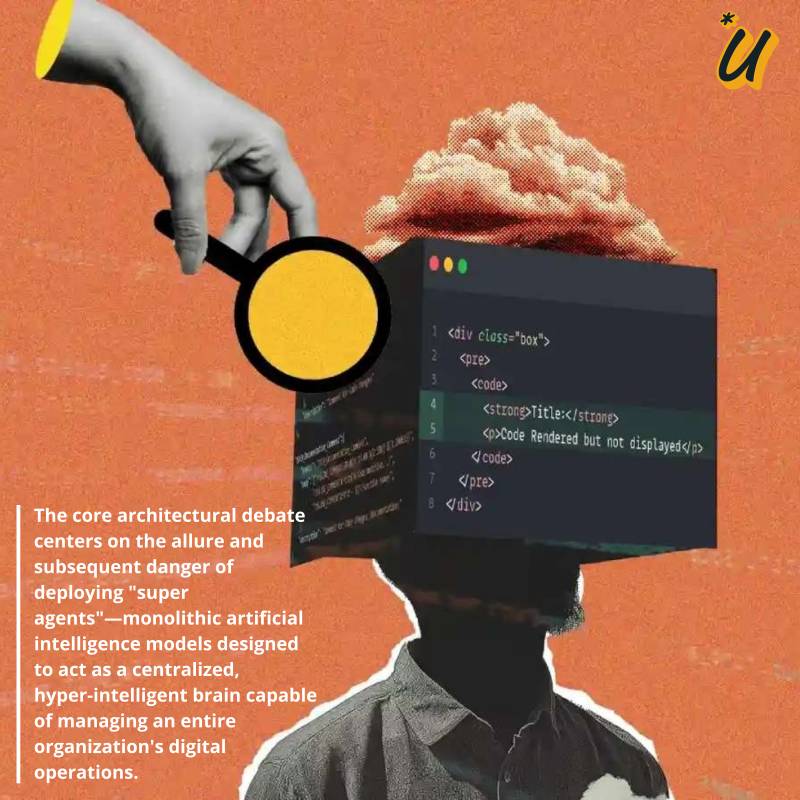
The core architectural debate centers on the allure and subsequent danger of deploying "super agents"—monolithic artificial intelligence models designed to act as a centralized, hyper-intelligent brain capable of managing an entire organization's digital operations. Proponents champion these systems for delivering a seamless, unified user experience and omni-directional operational oversight. However, behind this glossy veneer lies a terrifying security reality. Super agents introduce massive, systemic vulnerabilities, most notably the constant threat of privilege abuse, exponentially expanded attack surfaces, and a total lack of functional isolation. Through emotional precision, this security dilemma captures the creeping dread felt by Chief Information Security Officers who realize that building a single, all-knowing digital brain also means creating a single, catastrophic single point of failure that, if compromised, can grant malicious actors unrestricted keys to the entire corporate kingdom.
To mitigate these terrifying risks without sacrificing the undeniable power of automation, modern systems engineering is rapidly pivoting away from monoliths toward decentralized "agent swarms." In this sophisticated architectural model, a primary orchestrator agent manages and coordinates a fleet of highly specialized, narrow-focus sub-agents. Rather than granting total autonomy to one giant intelligence, the workload is distributed across compartmentalized digital workers. Through intelligent curation of enterprise design patterns, this swarm methodology transforms the chaotic battlefield of artificial intelligence security into a structured, defensible ecosystem where power is decentralized and risk is mathematically contained.

Related article - Uphorial Shopify
The safe implementation of these agent swarms relies upon four unshakeable, foundational design principles, the first of which is the doctrine of "least agency." Much like the time-tested cybersecurity principle of least privilege in human systems, least agency dictates that each specialized agent must be granted the absolute minimum level of system permissions required to execute its specific, narrow task—nothing more, nothing less. Through strategic storytelling, this restriction acts as a digital straitjacket, ensuring that an agent designed to summarize customer feedback cannot under any circumstances access payroll files or execute financial transactions.
Building directly upon least agency is the critical requirement of "tool isolation." This principle mandates the strict segmentation of agents so that each digital entity only interacts with the exact software tools and data resources strictly necessary for its distinct function. By building impenetrable walls between agents, organizations drastically limit the "blast radius" of any potential compromise. Through cultural understanding of the modern threat landscape—where sophisticated zero-day exploits and prompt injection attacks are a daily reality—tool isolation guarantees that if a bad actor successfully hijacks one peripheral agent, the infection remains entirely quarantined, preventing lateral movement across the broader corporate network.
Even with strict isolation in place, absolute security requires total transparency, bringing the third pillar into sharp focus: robust observability. Enterprise security teams must maintain exhaustive, tamper-proof logs for complete auditability, ensuring that every single action, decision, and tool invocation performed by an agent can be meticulously reviewed, analyzed, and traced back to its origin. Through emotional precision, observability replaces blind faith in algorithms with verifiable accountability, offering engineers a clear, forensic window into the mind of the machine.
Finally, the ultimate safeguard in this technological revolution is the permanent retention of human oversight. The architecture of modern artificial intelligence systems must never be entirely untethered from human judgment; whether operating "in the loop" to approve step-by-step decisions or "on the loop" to monitor and override autonomous workflows, human beings must remain the ultimate sovereigns of the digital domain. Through transformational framing, the integration of agent swarms is elevated from a mere software engineering update into a profound philosophy of technological coexistence—proving that the future of enterprise artificial intelligence does not belong to unchecked super agents operating in the dark, but to collaborative, transparent, and rigorously guarded digital ecosystems that honor the irreplaceable wisdom, caution, and ethics of humanity.