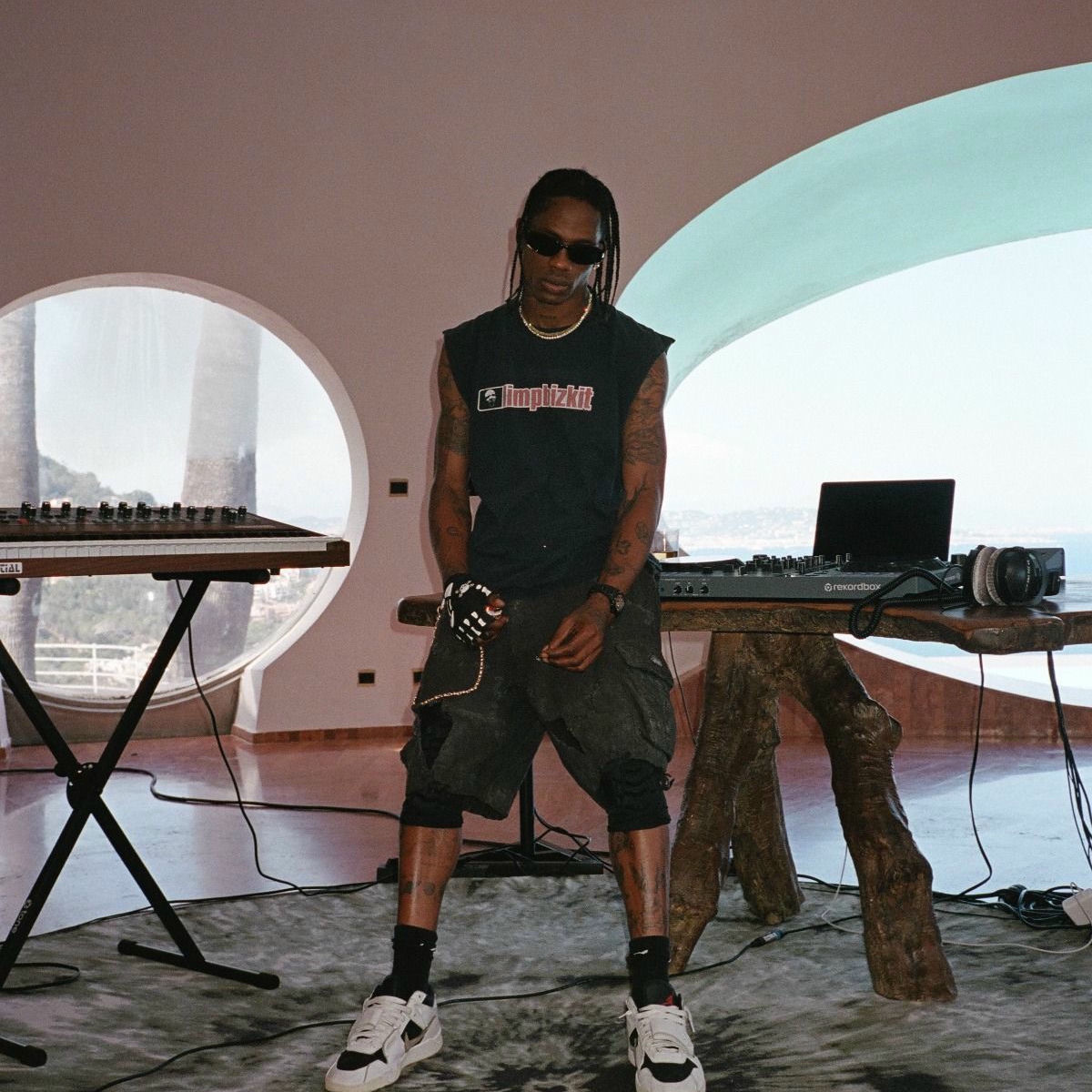
Travis Scott finds himself at home within the raw, unyielding bones of a $65 million brutalist mansion, a space that mirrors the solid titanium construction of the eyewear he now oversees as the Creative Visionary Officer for Oakley. During a featured tour for Rolling Stone, the February cover star articulated a profound desire to transcend the ephemeral nature of digital "renders" by eventually studying engineering and architecture at institutions like Harvard or Berkeley. This fascination with physical permanence is a driving force behind his creative output, as he seeks to build experiences that "make you come alive" rather than simply occupying space. His work on the global "Utopia" tour, which notably caused an actual earthquake during a performance in Italy, serves as a literal testament to the tectonic power he wields when music and structural design collide.
Related article - Uphorial Shopify

Travis Scott Tours a $65M Mansion

Refusing to be confined to a traditional "rap box," the Houston-born artist has spent the last two and a half years absorbing global influences—ranging from the intricate "chants and seances" of Africa to the high-intensity energy of South Korean crowds—and attempting to "put it on wax". This creative effort is marked by a deep reverence for the "pure energy" of physical media, leading him to mix and master his work on cassettes and vinyl to preserve a theatrical experience that streaming often dilutes. His commitment to independence extends to his business ventures as well; he has reclaimed his beverage brand, Cacti, to build it as a standalone entity through stadium lounges in cities like New York, Houston, and Los Angeles. Scott’s participation in the cultural landscape is rooted in a "big kid" curiosity, fueled by visits to Disney Imagineering with his son and a desire to provide his hometown with community creative spaces like Space Village.
Ultimately, the artist’s focus is on the "pure" and "specific touch" found in vintage craftsmanship, reflecting a mindset that prioritizes making history over chasing trends. He views his role as setting a point of reference for future generations, much like the nineties-era designs he frequently references. Whether debating the merits of Asian cinema or the necessity of preserving physical movie theaters, Scott remains dedicated to the "pure energy" of the moment and the enduring power of things built to last. By bridging the gap between his Mo City roots and global architecture, he continues to push the boundaries of where music and design can go, ensuring his legacy remains as solid and industrial as the concrete walls of a brutalist fortress.