Galapagos is not merely a destination; it is a "fantastical place" where life seems to exist without fear, having evolved largely without human influence, a reality vividly captured by Fernweh Chronicles on their channel. As Fernweh Chronicles notes, the archipelago's intense biological and geological singularity forces visitors to constantly question the reality of their surroundings.
The expedition began on Santa Cruz Island in the Highlands, a region renowned globally for its Giant Tortoises. As documented by Fernweh Chronicles, these massive reptiles, which can easily live for more than a hundred years, are not fenced in but move freely around the island on land that has always belonged to them. Visitors must carefully navigate the property, needing to distinguish a colossal rock from an actual giant tortoise. The volcanic origins of the Galapagos are dramatically explored beneath the surface, where scuba diving excursions lead into lava tubes—subterranean formations born directly from volcanoes.
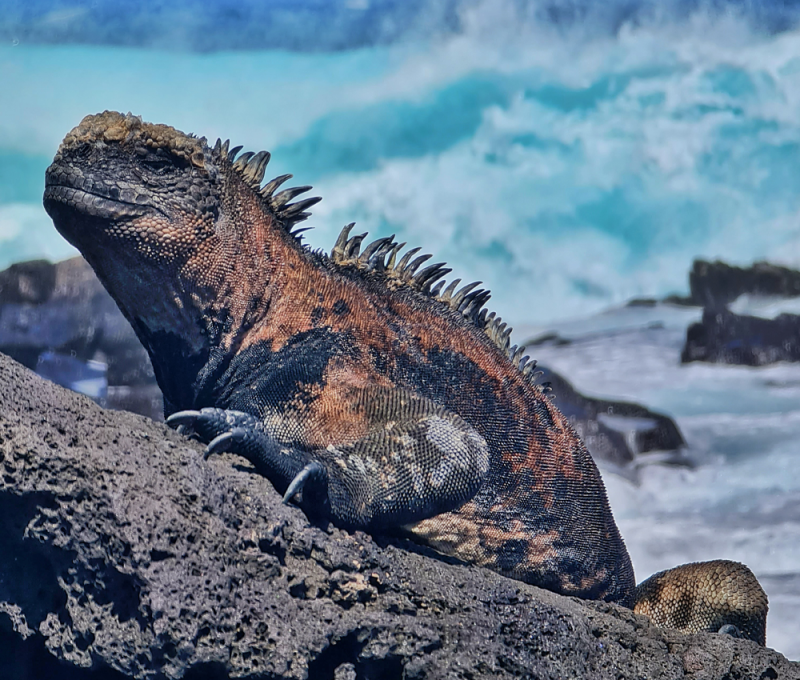
Even in the town of Santa Cruz, the wildness of nature is evident. Sea lions casually hang out near the fish market, making signs about their presence clearly not hypothetical. The coast is teeming with endemic species, most notably the Marine Iguanas. Fernweh Chronicles described finding so many along beaches like Tortuga Bay that they were literally climbing over one another, often initially mistaken for logs or rocks. Seeing these Marine Iguanas was a "huge bucket list item" for the travelers
Related article - Uphorial Shopify

The true depth of the archipelago’s significance became apparent upon setting sail to the farthest islands. The profound evolutionary importance of the islands was immediately reinforced by a first glimpse of the Darwin Finches, small birds whose adaptation in this faraway place changed our view of all life on the planet. Sailing through the night brought the crew to the northern shores of Isabella Island, revealing colossal landmasses that contradicted the expectation that Galapagos would be relatively flat.
On the day's agenda was finding the Galapagos Penguin, which, as Fernweh Chronicles discovered, is the world's most northern-living penguin of its kind. Ramiro, their guide, whom they nicknamed the "Dr. Dolittle of Galapagos," even taught them how to talk to penguins. Aquatic encounters were overwhelming; swimming meant sharing the water with hundreds of sea turtles, Marine Iguanas, flightless cormorants, and the "incredibly playful" penguins. One evening revealed a whole school of sharks off the back of the boat, emphasizing the wildness of the ecosystem even at night.
Fernandina Island, specifically Espinosa Point, was confirmed by Fernweh Chronicles as the most pristine island of the Galapagos. Here, sea lions were observed giving birth and nursing their four-month-old pups right in front of visitors. The guides explained that the sea lions often share these intimate moments because the animals have no fear of humans.
However, this lack of fear necessitates adherence to strict regulations. Fernweh Chronicles recounted a moment when the children had to be sternly reminded to get rid of everything they picked up from the ground, as taking anything is strictly forbidden and can lead to serious consequences. Beyond natural history, human history exists here too: on Floriana Island, whalers devised a centuries-old pickup and drop-off mail system that continues to operate today. Furthermore, visits to beaches filled with sea turtle nests demand extreme caution, as frigates and gray blue herons patrol, ready to snatch baby turtles as they hatch.
In a powerful finale, just when the impactful experiences seemed complete, a pod of bottle nose dolphins showed up "as if to say their goodbyes," confirming the sentiment shared by Fernweh Chronicles that the Galapagos is "sincerely one of the craziest places I've ever gotten to visit".