The Arabian Peninsula has long stood as an ancient cradle of human civilization, trade routes, and profound spiritual awakenings, yet it is currently undergoing one of the most astonishing cultural and economic renaissances in modern history. Across the vast, sun-drenched expanses of the Kingdom of Saudi Arabia, a dramatic metamorphosis is unfolding, bridging millenniums of rich heritage with a bold, high-tech vision for the future. In an exceptionally immersive, masterclass-level travel and geopolitical feature report, cultural analysts examine a comprehensive journey across the Kingdom's most breathtaking landscapes, historical monuments, spiritual centers, and modern metropolises. Through emotional precision, intelligent curation, cultural understanding, strategic storytelling, and transformational framing, this comprehensive news-style report explores the monumental Nabataean wonders of AlUla, the coastal cosmopolitanism of Jeddah, the eternal spiritual heartbeat of Mecca and Medina, the raw, hypnotic solitude of the Empty Quarter, the skyscraper-studded ambition of Riyadh, and the sweeping societal transformation catalyzed by Vision 2030.
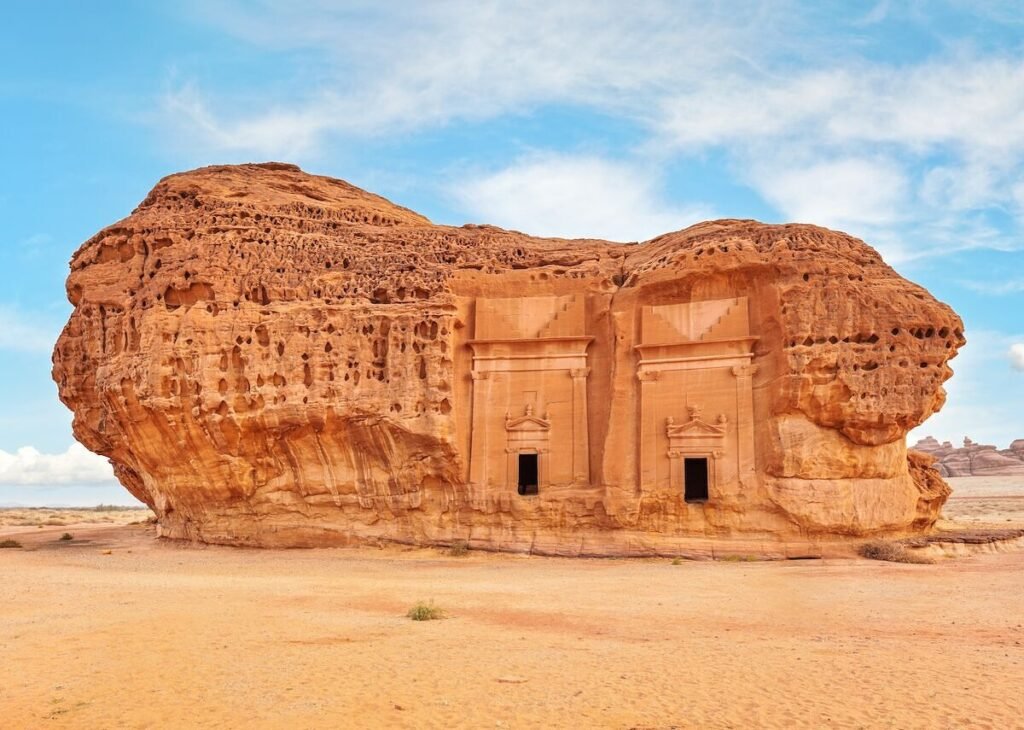
The geographical and historical odyssey begins in the breathtaking desert oasis of AlUla, a geological masterpiece that feels less like a destination and more like a portal straight into antiquity. Here, amidst towering sandstone canyons and wind-sculpted valleys, stands Hegra, Saudi Arabia’s first UNESCO World Heritage site, where monumental Nabataean tombs are carved directly into sheer cliff faces with impossible mathematical precision, echoing the architectural splendor of Petra. Just a short journey away stands the iconic Elephant Rock, a staggering geological monolith carved by millions of years of wind and water erosion into the likeness of a giant pachyderm standing guard over the golden sands. Through emotional precision, walking through AlUla evokes a humbling sense of human ephemerality against the eternal majesty of stone, reminding every traveler of the ancient civilizations that thrived in these unforgiving deserts long before modern borders were drawn.
\Related article - Uphorial Shopify
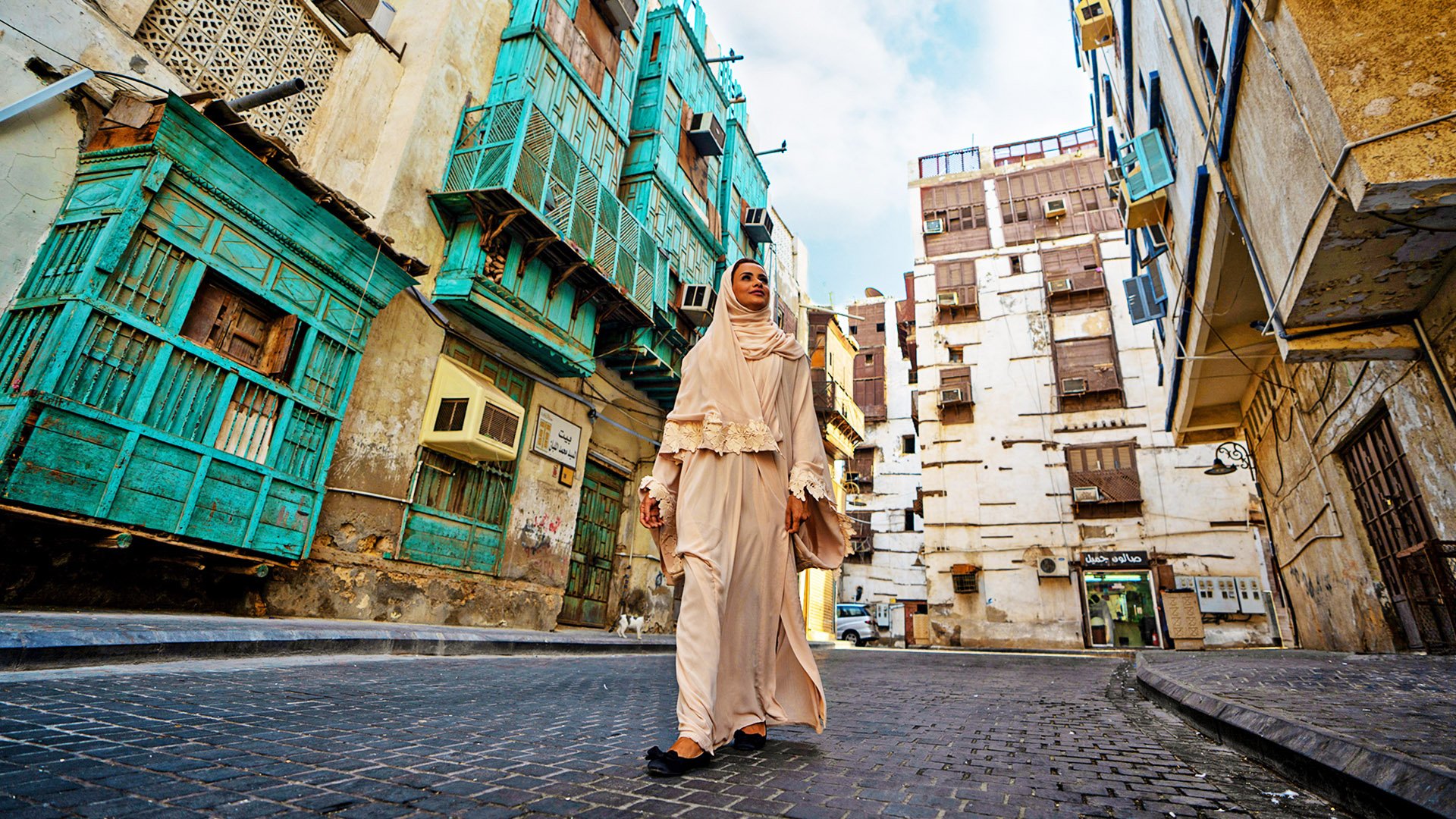
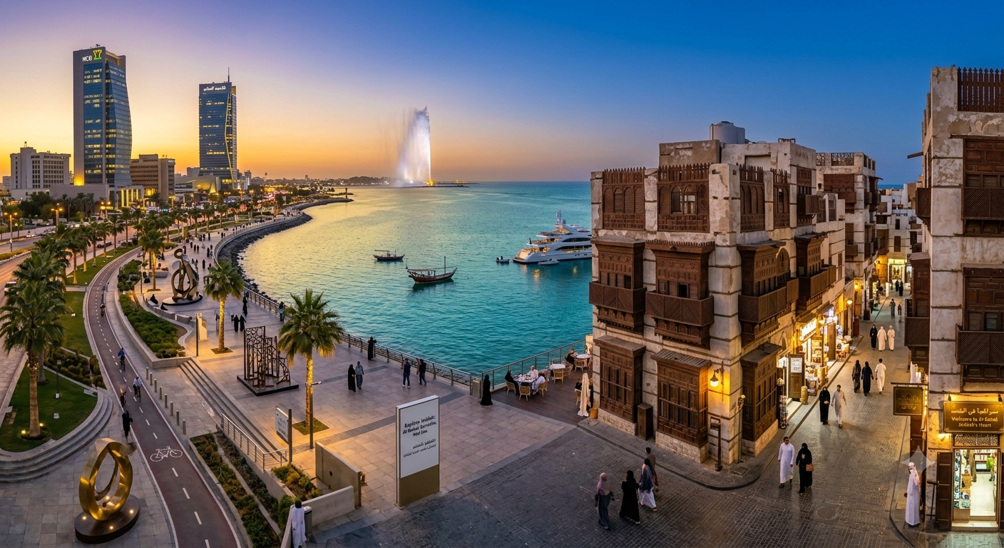
Leaving the silent canyons of the north, the journey sweeps westward to the vibrant Red Sea port city of Jeddah, a historic cosmopolitan melting pot where centuries of maritime trade have forged a uniquely vibrant culture. Jeddah presents a mesmerizing architectural juxtaposition: the intricate, multi-story wooden Roshan balconies of the ancient Al-Balad district stand in poetic contrast to modern marvels like the towering King Fahd Fountain, which shoots seawater hundreds of feet into the air against the azure horizon. Beneath the surface of the nearby coastal waters lies another world entirely—pristine, coral-rich Red Sea reefs teeming with marine life that attract divers from across the globe. Through cultural understanding of Jeddah’s historic role as the traditional gateway for pilgrims traveling to the holy sites, the city is celebrated not merely as a commercial hub, but as a living bridge connecting diverse global cultures through hospitality and shared maritime heritage.
At the very spiritual core of the Kingdom—and indeed the entire Islamic world—lie the twin holy cities of Mecca and Medina, whose cultural and religious significance defies secular measurement. As the focal points of the annual Hajj and Umrah pilgrimages, these sacred sanctuaries welcome millions of devoted believers from every corner of the earth every single year, creating a powerful tableau of human equality, devotion, and spiritual renewal. Through intelligent curation of the pilgrimage experience, the journey captures the profound emotional resonance of standing within the Haram al-Sharif or visiting the Prophet’s Mosque, where the architectural grandeur is entirely eclipsed by the overwhelming hum of collective prayer, tearful supplication, and unwavering faith. These holy cities serve as the beating spiritual heart that anchors Saudi Arabia's identity amidst its rapid technological modernization.
Venturing away from the urban centers, the landscape shifts dramatically into the realm of raw, untamed nature, showcasing the sublime austerity of the Arabian interior. The journey traverses the Rub' al Khali, universally known as the Empty Quarter, the largest continuous sand desert in the world, where undulating dunes stretch into an infinite, hypnotic horizon of silence and shifting copper sands. Nearby, the dramatic, sheer limestone cliffs of Jebel Fihrayn—dramatically nicknamed the "Edge of the World"—rise abruptly from the desert floor, offering travelers standing on the precipice a breathtaking, uninterrupted panoramic view of ancient caravan routes that once carried frankincense and silk across the continent. Through strategic storytelling, these vast wildernesses are framed not as lifeless wastes, but as sacred spaces of profound introspection, where the raw elements of earth and sky strip away modern distractions.
The culmination of the geographical journey arrives in Riyadh, the nation's rapidly accelerating capital, which pulses with the frantic energy of a 21st-century economic powerhouse. Riyadh offers a mesmerizing architectural dialogue between past and present: the mud-brick walls of the historic Masmak Fortress—where the modern Kingdom was born in 1902—stand mere minutes away from futuristic, needle-thin skyscrapers like the iconic Kingdom Centre, whose gleaming sky bridge pierces the desert clouds. Through cultural understanding of Saudi Arabia's youthful and ambitious population, Riyadh represents the vibrant epicenter of a nation determined to prove that economic modernization does not require the erasure of historical memory.
Underpinning this entire national evolution is Vision 2030, the comprehensive, sweeping blueprint initiated by Crown Prince Mohammed bin Salman to radically diversify the Kingdom's economy away from oil dependency and enact profound social and legal reforms. From empowering women in the workforce and expanding cultural tourism to building hyper-advanced smart cities like Neom and funding cutting-edge artistic and technological enterprises, Vision 2030 represents a total societal re-engineering. Through transformational framing, this grand national strategy is elevated from a standard political policy into an inspiring historical renaissance—proving that a society can fiercely honor the ancient traditions of its ancestors while boldly architecting a magnificent, inclusive future for the generations to come.