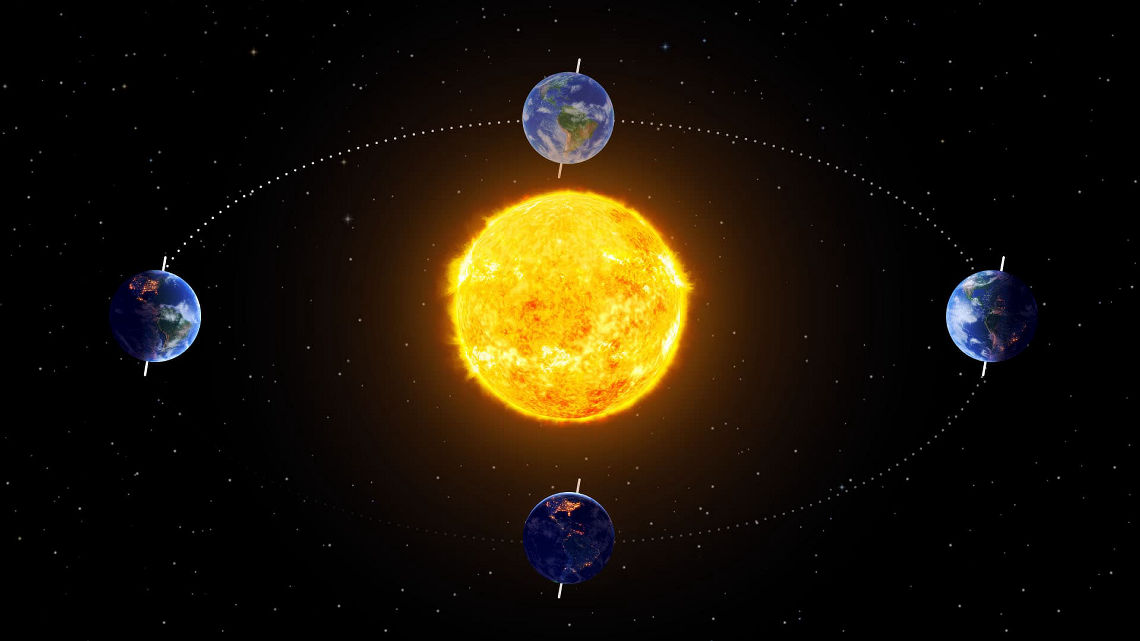
ANTARTICA – The rhythmic rotation of the planet dictates a relentless cycle of transformation, forcing every living organism into a high-stakes game of adaptation and survival. As explored in the comprehensive study of the natural world presented by the BBC series Earth's Great Seasons, the four distinct quarters of the year represent much more than a change in weather; they are the fundamental drivers of biological behavior, evolution, and the very endurance of life on Earth. From the frozen reaches of the Antarctic to the searing dunes of the Middle Eastern deserts, the arrival of each new season triggers a series of intricate biological "switches" that govern everything from epic migrations and violent battles for dominance to the tender nuances of courtship.
The cycle begins with Spring, a season characterized globally as a time of awakening and the frantic pursuit of the next generation. This period of renewal is perhaps nowhere more visually spectacular than in the highland forests of Mexico. As the spring sun begins to penetrate the canopy, it warms millions of monarch butterflies that have spent the winter in a state of semi-dormancy. This thermal trigger initiates one of the most remarkable feats of endurance in the animal kingdom—an epic migration toward North America. Driven by an ancient biological compass, these delicate insects travel thousands of miles in search of blooming milkweed, the only plant capable of sustaining their offspring.
While the monarchs navigate the skies, the lakes of Oregon witness a display of aquatic elegance. Clark’s grebes, engaged in a high-stakes courtship, perform an intricate water-running dance that defies gravity. By sprinting across the surface of the water in perfect synchronization, these birds test the physical fitness of their prospective partners and strengthen the pair bonds necessary to survive the grueling demands of the nesting season. Meanwhile, in the lush forests of South America, spring brings a more precarious start to life. Young coatis, emerging into a world of hidden predators, must quickly learn to navigate the complex forest floor. Under the vigilant protection of their mothers, these juveniles undergo a rapid education in survival, learning which sounds signal danger and which indicate the promise of a meal.
As the planet tilts further toward the sun, the relative ease of spring gives way to the brutal intensity of Summer. In the Middle East, the rising mercury transforms the landscape into a crucible of heat and survival. For the Nubian ibex, summer is not a time for retreat but for confrontation. Massive males engage in violent, horn-clashing competitions to establish a social hierarchy. These intense battles are a race against time, as the animals must secure breeding rights before the heat becomes so oppressive that physical exertion becomes life-threatening.

Related article - Uphorial Shopify

Survival in the desert often requires more than just physical strength; it requires specialized engineering. The Saharan silver ant has evolved a unique defense against the roasting sun: specialized, triangular hair structures that reflect visible and near-infrared light. This biological "spacesuit" allows them to scavenge on the desert surface at temperatures that would kill any other creature. In stark contrast, summer in the South Atlantic brings a different kind of heat crisis. In the sub-Antarctic islands, young penguin chicks, still covered in thick, heat-retaining down, find themselves overwhelmed by uncharacteristic spikes in temperature. To avoid heatstroke, these chicks are forced to seek refuge in muddy pools, utilizing the evaporating moisture to regulate their body temperatures in an environment that is increasingly unpredictable.
As the heat begins to wane, Autumn signals a global shift toward preparation and the exploitation of seasonal abundance. In the temperate forests of Canada, the chipmunk becomes a model of industriousness. Recognizing the shortening days, these small rodents work tirelessly to cache vast quantities of acorns. This frantic "hoarding" phase is a mechanical necessity; the success of their winter survival depends entirely on the volume of the subterranean pantry they build during these few weeks of plenty. In the wilderness of Alaska, a far larger predator follows a similar logic. Grizzly bears congregate along the rivers to capitalize on the annual salmon migration. This convergence is a feast of high-calorie intensity, where the bears must pack on massive amounts of essential fat to sustain their bodies through the long, dormant months of the coming winter.
Autumnal conflict is also found in the canopy of the southern hemisphere. In the forests of Chile and Argentina, the Darwin’s beetle enters a period of aggressive competition. Males, equipped with disproportionately large jaws, battle rivals high in the trees. These encounters are often literal "tug-of-war" matches, with the loser being tossed from the branches. The victor secures the right to mate, ensuring that his genetic line continues before the first frost of winter brings the forest’s activity to a halt.
The cycle culminates in Winter, the ultimate test of endurance and strategic survival. In the monochromatic landscape of Antarctica, Weddell seals face the constant threat of being trapped beneath the freezing sea ice. To maintain access to the oxygen above, these seals must use their teeth to constantly saw at the edges of their breathing holes, preventing the relentless ice from sealing them in. It is a grueling, lifelong labor that defines their existence in the world’s harshest climate.
On the frozen Canadian tundra, the caribou enter their own season of struggle. Massive bulls engage in thunderous battles for dominance, clashing antlers in the snow to ensure they can mate before the following spring. Finally, in the dense, snow-covered forests of Finland, the black grouse performs a "lekking" ritual that is as beautiful as it is high-stakes. The males engage in complex, high-energy display dances, fanning their tails and emitting a bubbling call to attract females. In this frozen arena, only the strongest and most resilient males will secure the chance to breed, a final act of biological defiance against the winter cold. These seasonal stories, from the butterfly to the seal, reveal a planet in constant motion, where the only constant is the need to adapt to the changing face of the world.