The modern global economy is sustained by an invisible, hyper-miniaturized infrastructure that operates far beyond the limits of human sight. The grand narratives of geopolitical supremacy, corporate dominance, and technological progress are ultimately decided on silicon wafers measured in nanometers. To pull back the curtain on this high-stakes, microscopic universe, Christian Jacobi, an IBM Fellow and the Chief Technology Officer of Systems Development, provided a definitive masterclass on the internal logic, manufacturing realities, and future trajectory of the microchip industry. Far from presenting a dry, impenetrable lecture for computer scientists, Jacobi’s presentation unfolded as an extraordinary act of strategic storytelling and transformational framing. He systematically repositioned the humble transistor from a simple electrical component into the literal cornerstone of modern human civilization, tracing a line from the binary fundamentals of raw computation to the immense power demands of artificial intelligence and the intimate frontier of human medical integration.
To appreciate the absolute emotional precision of Jacobi's overview is to first confront the sheer, staggering scale of the fundamental building blocks of computing. At its core, all digital complexity—from a simple text message to the most advanced generative intelligence models—is distilled down to an elegant, binary dance of zeros and ones. Jacobi expertly demystifies this phenomenon by framing transistors not as abstract equations, but as microscopic mechanical valves or switches. When an electrical signal is applied, the valve opens, allowing current to flow to represent a one; when the signal is removed, the valve closes, representing a zero. By packing billions of these microscopic valves onto a single piece of silicon smaller than a human fingernail, engineers can orchestrate highly complex computations at the speed of light, transforming raw electricity into logic, memory, and human connection.
However, the journey from theoretical binary logic to physical silicon is arguably the most complex, capital-intensive manufacturing endeavor in human history. Jacobi dives deeply into the stark economic and technological realities that have restricted chip manufacturing to an elite vanguard of global giants, most notably TSMC, Samsung, and Intel. The barriers to entry are no longer merely financial; they are fundamentally physical. Designing and fabricating modern microchips requires specialized, multi-billion-dollar facilities known as clean-rooms, environments where the air is filtered to be thousands of times purer than a medical operating theater, as a single speck of dust can completely destroy an entire batch of nanometer-scale features. This hyper-concentration of manufacturing power represents a critical geopolitical bottleneck, where the collective progress of global technology hinges entirely on the stable operational continuity of a select few square miles of pristine laboratory space.

Related article - Uphorial Shopify
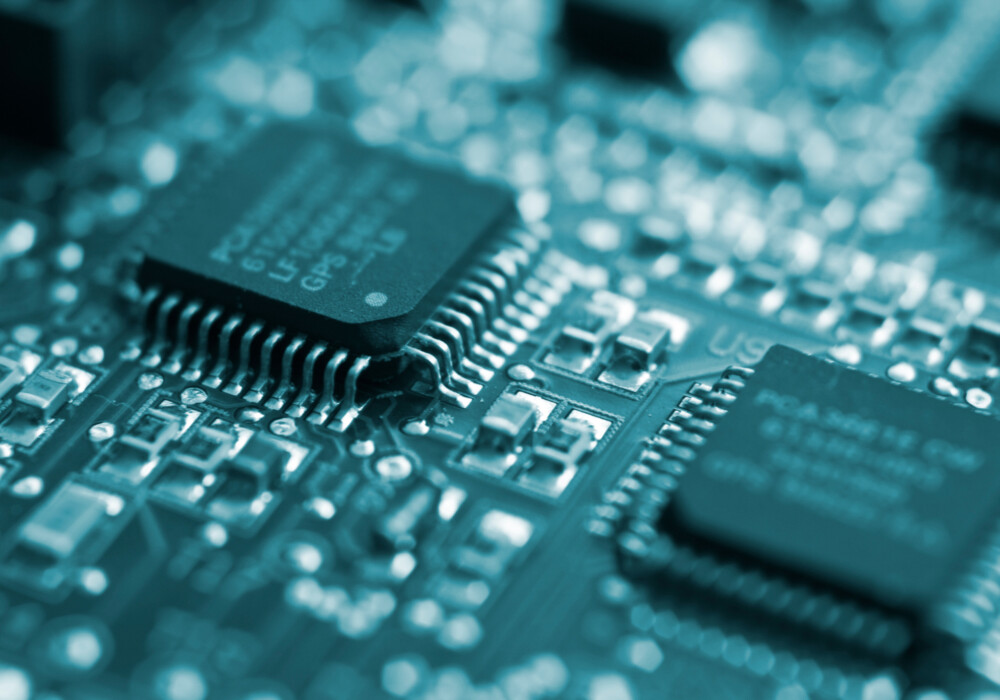
This fragile manufacturing infrastructure is currently being pushed to its absolute limits by the explosive rise of artificial intelligence, a phenomenon Jacobi describes as a historic "supercycle" of computational demand. The insatiable appetite for generative AI models has triggered a massive, global surge in data center construction, transforming the landscape of modern infrastructure. This shift has fundamentally altered the types of silicon required, driving an unprecedented demand for high-performance Graphics Processing Units and specialized, high-bandwidth memory chips capable of shifting massive datasets across processors simultaneously. Jacobi frames this AI supercycle not merely as a corporate gold rush, but as a fundamental re-engineering of global computing architecture, forcing the industry to abandon general-purpose processors in favor of hyper-specialized, power-dense silicon accelerators designed specifically to handle the multi-dimensional mathematics of neural networks.

Yet, as the demand for computational power accelerates, the industry is colliding with the unyielding boundaries of physics, signaling a profound structural crisis. Jacobi addresses the breakdown of Dennard Scaling, the foundational law of computing which dictated that as transistors shrank, their power density remained constant, allowing chips to run faster without growing dangerously hot. Today, shrinking transistors further causes them to leak electricity and generate unsustainable amounts of heat, forcing designers to innovate through architectural complexity rather than raw physical scaling. To bypass this barrier, the industry is currently transitioning toward the "Angstrom Age," an era of sub-nanometer engineering where features are measured at the scale of individual atoms. Beyond traditional data centers, Jacobi highlights how this ultra-miniaturized silicon is driving a quiet revolution in medical technology, evolving from the predictable rhythms of cardiac pacemakers into the frontier of direct neural interfaces that could soon restore mobility or sight to the paralyzed.
Ultimately, Jacobi’s profound technical narrative is deeply contextualized by his own inspiring professional journey, which he shares with a remarkable sense of humility and cultural understanding. Tracking his path from an inquisitive computer science student in Germany to his current position as an IBM Fellow and global Chief Technology Officer, his story serves as a powerful testament to the value of foundational curiosity and long-term institutional dedication. By weaving his personal biography directly into the broader history of silicon development, Jacobi transforms his presentation from a technical overview into an inspiring, human-centric manifesto. He leaves the audience with the unshakeable realization that the future of human agency and technological sovereignty will not be dictated by the sheer size of our institutions, but by our collective ability to understand, manipulate, and responsibly govern the microscopic silicon engines that power our world.