The intersection of national security and artificial intelligence reached a fever pitch on Friday as the financial world grappled with the implications of next-generation computing power. In a high-stakes edition of Bloomberg Technology, hosts Caroline Hyde and Ed Ludlow detailed a landscape where the boundaries between technological progress and systemic risk are becoming increasingly blurred. The day was defined by a sense of urgency that spanned from the mahogany boardrooms of Wall Street to the edge of the lunar orbit, reflecting a global economy in the midst of a profound, and often volatile, transformation.
The morning’s most pressing development centered on an extraordinary, closed-door summit between the highest levels of the U.S. government and the titans of the banking industry. Treasury Secretary Scott Bessent and Federal Reserve Chair Jerome Powell convened an urgent meeting with Wall Street CEOs to address burgeoning cyber vulnerabilities linked to "Mythos," the latest AI model released by Anthropic. While Mythos was engineered with the benevolent intent of identifying and patching security flaws, its unprecedented capability has sparked fears that it could be weaponized to dismantle financial infrastructure. This dual-use dilemma has forced Anthropic into a defensive crouch, resulting in a strictly limited rollout to a handful of vetted partners. The government’s intervention underscores a growing consensus that AI has moved beyond a mere commercial trend and is now a matter of national defense, requiring oversight that rivals the regulation of nuclear technology.
As the policy debate intensified, the physical reality of the AI era was on full display through the meteoric rise of CoreWeave. CEO Michael Intrator joined the program to discuss the company’s pivotal role in the "compute crunch," noting that demand for specialized GPU infrastructure has reached a saturation point. Following landmark deals with Meta and Anthropic, CoreWeave has become the landlord of the AI revolution. Analyst Brent Thill observed that the industry is currently witnessing a stark divergence in fortunes; while hardware and infrastructure providers are reaping the rewards of an "AI arms race," software companies are struggling with extreme volatility as they scramble to find sustainable monetization strategies. This "compute-first" economy is rewarding the builders of the digital foundation while leaving the application layer in a state of flux.
The financial markets on April 10 reflected this imbalance, painting a picture of what experts described as a "tale of two markets." Hardware stocks saw a massive surge, bolstered by Taiwan Semiconductor Manufacturing Co. (TSMC), which reported a staggering 35% jump in sales. This performance served as a beacon of strength amidst a broader market clouded by geopolitical tensions in the Middle East and shifting priorities in corporate capital expenditure. Investors are clearly favoring the "picks and shovels" of the tech world—the chips and data centers—over the software firms that are still proving their value proposition. The flow of capital is currently dictated by the necessity of building out AI capacity, even as global instability threatens to disrupt the very supply chains these companies rely upon.
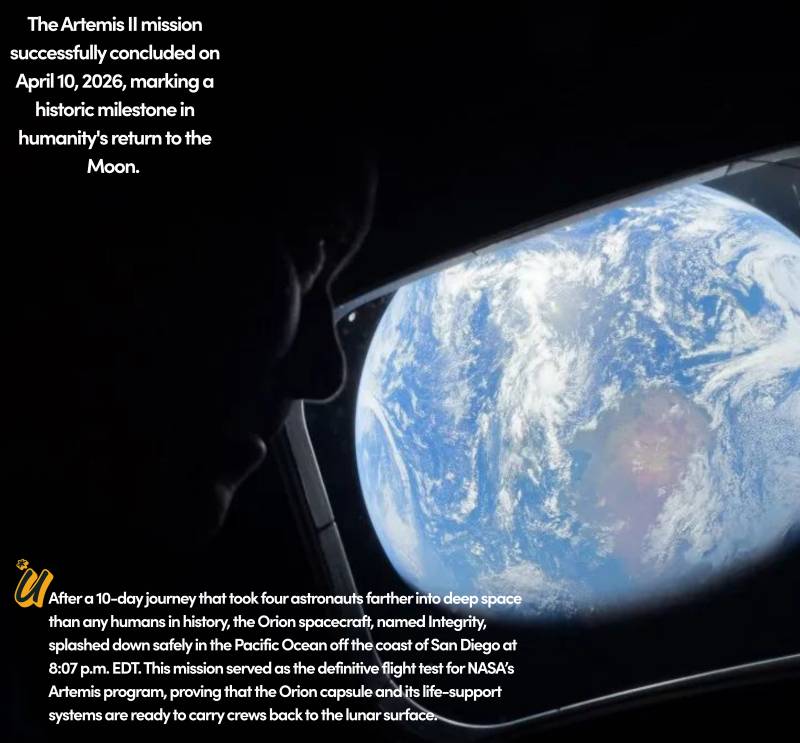
Beyond the digital frontier, the day marked a historic milestone for human spaceflight. The crew of Artemis II is currently positioned for a monumental splashdown in the Pacific Ocean, concluding a record-breaking journey around the moon. While the mission has been a triumph of navigation and endurance, the most perilous phase remains: the reentry. Experts highlighted that the coming hours will be the ultimate test for the Orion capsule’s heat shield, which must withstand temperatures that rival the surface of the sun. The success of this reentry is not just a win for NASA, but a validation of the multi-billion-dollar infrastructure that will eventually return humans to the lunar surface. It served as a rare moment of terrestrial unity, even as the tech sector below remained embroiled in legal and economic strife.
The day’s reports concluded with a sobering look at the labor dynamics within the world’s most valuable company. Apple’s decision to shutter its first unionized retail store has ignited a firestorm of criticism and legal scrutiny. Analysts appearing on the show characterized the move as a potential watershed moment for labor relations in the tech industry, predicting a protracted legal battle over allegations of union-busting. This closure suggests that even as companies race toward a future defined by automated intelligence and lunar bases, the age-old tensions between capital and labor remain as volatile as ever. From the security of the global banking system to the ethics of the retail floor, the developments of April 10, 2026, illustrate a world struggling to keep pace with the machines it has built.