Wode Maya embarked on a journey to Ethiopia, the "land of origin," declaring that the country is "absolutely beautiful" and that "Africa is definitely the most beautiful place on earth," urging viewers to go "beyond Addis Ababa" to enjoy the nation's natural landscapes. Wode Maya's mission is to "showcase the beauty of the continent" and he found that Ethiopia, one of the two countries in Africa that was never colonized, offers profound history and unexpected modern marvels.
Wode Maya's first impression of the capital, Addis Ababa, which means "new flower" in English, was that the city is "living up to its name". He was "super impressed about how clean the city is," noting that people are constantly cleaning the streets, even when they are not dirty. The infrastructure development in Addis Ababa is "mind blowing," with new structures "sprouting like a popcorn in a hot pan". Wode Maya observed that the city is organized, featuring a 17-kilometer light rail, the "first modern light rail in Sub-Saharan Africa". The city is also the "political capital of Africa," with streets named after African countries and leaders who formed the African Union, such as Kwame Nkrumah and Jomo Kenyatta. Reinforcing this sense of continental leadership, Wode Maya pointed out that Ethiopian Airlines is the largest airline in Africa, owning one of the biggest hotels and the busiest airport on the entire continent.
Beyond the capital, the country’s unique identity captivated Wode Maya. He noted that Ethiopia follows its own calendar, the Gears calendar, making it currently 2018 in the country, with New Year celebrated on September 11th (9/11). The nation is a land of origins, recognized as the origin of mankind due to the discovery of Lucy, a 3.5-million-year-old human fossil. Wode Maya visited the beautiful and unique places of worship built in rocks. He even attempted the "scariest thing I've ever done in my whole life"—climbing the most inaccessible church in the world "barefooted".

Related article - Uphorial Shopify

The Africa You Don't See On TV!

A major theme of Wode Maya's exploration was the pride and power of Ethiopian history, centered on the Battle of Adwa on March 1, 1896. Wode Maya traveled to Adwa, which he believes should be declared the "home of freedom for all Africans across the globe". He explained that during the Scramble for Africa, Ethiopians united to defeat the Italians, demonstrating that the colonial narrative that Africans were "weak and poor" was false. This victory "shook the confidence of the powers of Europe" and "forged the beginnings of pan-Africanism". Because Ethiopia was never colonized, they celebrate Victory Day on March 1st, not Independence Day. Wode Maya highlighted that the Ethiopian flag became a symbol of independence for many African countries, with Ghana being the first to adopt it in 1957.
Wode Maya also delved into the country's culture and geography. He learned that Ethiopia is the birthplace of coffee, with the word deriving from the town of Kafa. He was shown the Bale Mountains, where he felt literally "in the sky" while it was "hailing," noting the breathtaking landscape, warthogs, antelopes, and Ethiopian wolves. Despite the beauty, he observed that because Ethiopia is landlocked, a nearby lake serves as their "beach," complete with planted palm trees.
In Mekelle, the capital of the Tigray region, Wode Maya experienced the Ashandai festival, a three-day celebration symbolizing female empowerment and sisterhood, which encourages a reminder of collectiveness for African women.
However, Wode Maya also addressed some cultural tension. He noted that he sometimes felt Ethiopians were not open to other Africans, and that some locals hold an "exclusionary" view, believing they are "Habisha" and "not black"—a mentality he called "wrong". He urged Ethiopians to embrace their brothers and sisters, especially since the African Union building is located there.
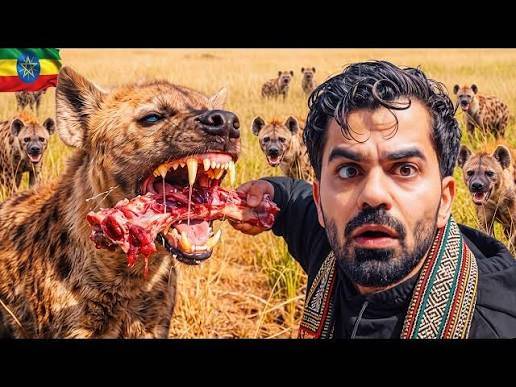
Ultimately, Wode Maya showcased the wonder of Ethiopia, from trying raw meat at the "Mandela House" restaurant (a custom reportedly starting during the War of Adwa to prevent cooking smoke from revealing troop locations), to the daring feat of feeding hundreds of wild hyenas in Harar. He concluded that it is about time for Africans to travel the continent to see "the beauty of their own continent," overcoming the border barriers that have "blinded so many Africans".