NEW YORK — The intersection of artificial intelligence, capital markets, and the burgeoning space economy took center stage on Friday, marking a pivotal moment in the trajectory of global technology. As the financial world grapples with intense market volatility and shifting macroeconomic indicators, the race to build, fund, and scale the physical infrastructure necessary for the next generation of computing has moved beyond Earth’s atmosphere. This shifting dynamic represents a profound evolution in how Wall Street and Silicon Valley view the future of innovation, signaling a transition from digital-first applications to capital-intensive, physical-world deployments.
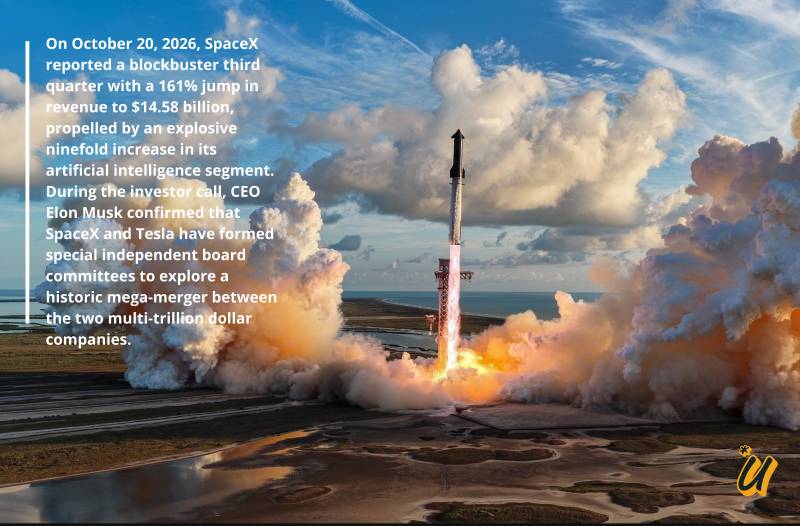
At the heart of this transition is Elon Musk’s ambitious vision for SpaceX, which recently dominated discussions among high-profile investors at an exclusive JP Morgan headquarters event. Brushing aside persistent, specific questions regarding a highly anticipated initial public offering, Musk instead leveraged the platform to lay out a massive new growth phase for his aerospace company. Wall Street's appetite for the venture remains insatiable, with the upcoming IPO round reported to be heavily oversubscribed as it aims to raise an unprecedented $75 billion. Rather than focusing purely on traditional launch metrics, the broader financial conversation has rapidly pivoted toward the critical hardware and infrastructure side of the global AI race, with space increasingly viewed as the ultimate frontier for orbital data centers and advanced satellite technology.
Operating computing networks in orbit presents a radical departure from terrestrial constraints, yet industry leaders view it as a necessary step to bypass earthbound bottlenecks. The concept of orbital computing is no longer a theoretical exercise but an imminent infrastructure challenge, particularly when it comes to deploying artificial intelligence inference nodes directly into space. According to Philip Johnston, Chief Executive Officer of StarCloud, the logistical hurdles of managing data centers in orbit are immense, requiring novel approaches to thermal management, radiation shielding, and high-speed data transmission. Concurrently, the physical constraints of building the spacecraft to house these advanced systems have created a critical bottleneck across the aerospace sector. Ian Cinnamon, Chief Executive Officer of Apex, notes that satellite manufacturing must scale dramatically to meet this surging commercial demand, prompting companies to rethink traditional assembly lines and implement standardized, mass-production strategies for satellite buses.
While the long-term vision for aerospace and AI infrastructure continues to expand, terrestrial markets are feeling the acute pressure of immediate economic realities. A notable downturn across major technology indices highlighted the underlying fragility and high stakes of the modern tech trade. Chip stocks and semiconductor manufacturers bore the brunt of the day's market pressure, suffering a sharp correction following a highly scrutinized earnings outlook from Broadcom. The tempered forward guidance from the semiconductor giant sent ripples through the trading floor, reminding investors that even the most aggressive AI-driven bull markets are subject to traditional demand cycles and supply chain realities.
Compounding the anxiety on Wall Street was the release of a unexpectedly "hot" May jobs report, which threw another layer of complexity into macroeconomic forecasting. Analyzing the data, Martha Gimbel of the Yale Budget Lab pointed out that the resilient labor market presents a double-edged sword for technology valuations. While strong employment figures reflect a robust underlying economy, they heavily complicate the Federal Reserve’s anticipated interest rate policy. The stubborn strength in job growth suggests that inflation risks remain sticky, potentially forcing central bankers to keep interest rates higher for longer—a macroeconomic environment that traditionally suppresses high-growth tech multiples and increases the cost of capital for capital-intensive AI ventures.
This rising cost of capital is forcing top-tier AI laboratories to rethink their corporate structures and financing strategies. As the industry advances toward frontier models, the financial requirements to secure massive, state-of-the-art compute resources have skyrocketed beyond the reach of traditional venture funding. Shirin Ghaffary highlighted a growing consensus within Anthropic regarding the inevitability of public market capital. For leading artificial intelligence research firms to stay competitive, accessing the deep pools of liquidity available only on public exchanges is becoming a structural necessity rather than a distant milestone, signaling a fast-approaching wave of massive AI public offerings.
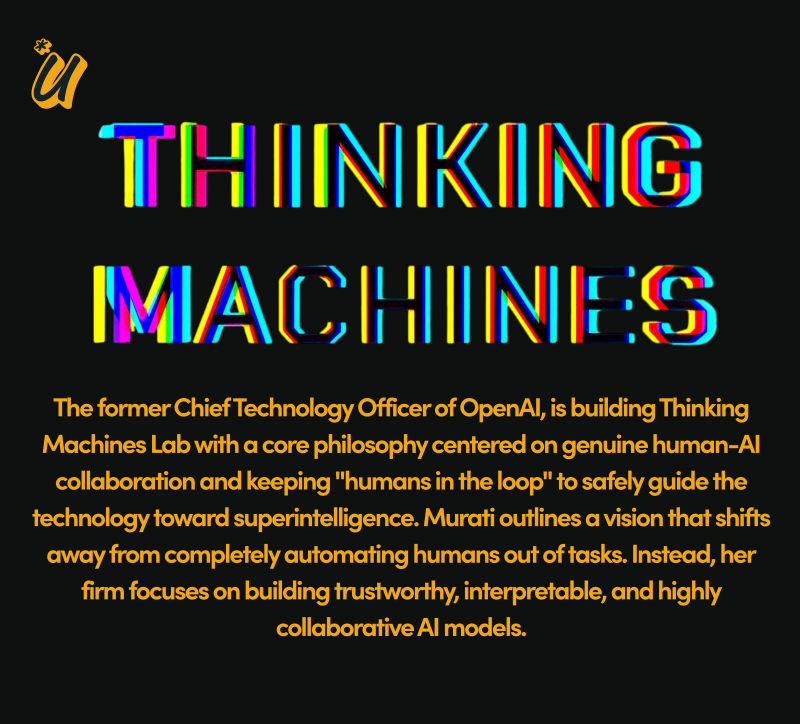
Despite the intense financial pressure, ideological and architectural evolution within the AI sector shows no signs of slowing down. The philosophical debate over how these systems should interact with society continues to shape new enterprise formations, evidenced by the arrival of Thinking Machines Lab. Led by Mira Murati, the former OpenAI Chief Technology Officer who now serves as the startup's Chief Executive Officer, the firm is pioneering a distinct approach focused on developing advanced artificial intelligence systems that intentionally keep humans in the loop. This methodology rejects the concept of entirely autonomous, detached software, arguing instead that the safest and most effective path to artificial general intelligence relies on deeply integrated human-machine collaboration.
At the same time, the venture capital landscape is tracking a profound shift from digital knowledge work into tangible, physical applications. Nina Achadjian of Index Ventures emphasizes that the initial wave of generative AI, which largely focused on writing text, generating images, and coding software, is giving way to "Physical AI." This next investment frontier is defined by the integration of large intelligence models into heavy industry, advanced robotics, and complex automated manufacturing systems. By translating digital intelligence into physical manipulation, these technologies are poised to reshape warehouse logistics, agricultural supply chains, and industrial manufacturing floors, demanding massive capital deployments but promising unprecedented productivity gains.
Amidst this landscape of market volatility, high-stakes technology scaling, and shifting global dynamics, the demand for sophisticated financial literacy has never been higher for individual investors. Previewing a new programming initiative, veteran broadcaster Tom Keene introduced the upcoming launch of Bloomberg Money, a dedicated program designed to bridge the gap between macroeconomic trends and personal finance. In an economic environment defined by sticky inflation, unpredictable central bank policies, and highly volatile technology cycles, the show aims to provide viewers with actionable investment strategies. By translating complex institutional market shifts into practical personal wealth management, the initiative reflects a broader societal need to navigate an economy increasingly dictated by the orbital infrastructure of SpaceX, the computational breakthroughs of elite AI labs, and the unrelenting rhythm of Wall Street.