The global technology sector faced a volatile week of structural realignments, supply-chain bottlenecks, and shifting corporate timelines, forcing investors and consumers alike to recalibrate their expectations for the near-term economic landscape. Across major indices, a confluence of macroeconomic pressures and component shortages dominated trading floors, throwing cold water on some of the industry’s most anticipated financial events while simultaneously threatening to drive up consumer hardware costs to historic highs. At the heart of the week's market anxiety is a deepening global memory crunch, a persistent bottleneck that is now reshaping product pricing strategies for trillion-dollar tech giants and triggering sell-offs across major Asian semiconductor manufacturing hubs.
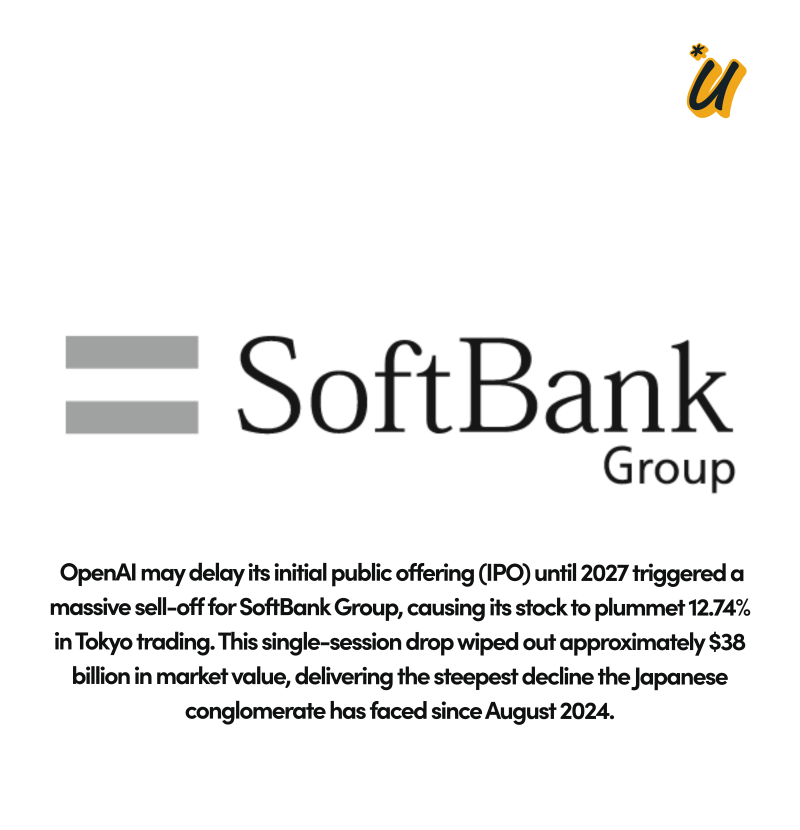
The shifting timeline of artificial intelligence leader OpenAI provided the first major shock to market sentiment. Reports emerged indicating that the generative AI pioneer plans to delay its highly anticipated initial public offering until at least 2027. The decision to defer entering the public markets sent ripples far beyond the startup ecosystem, immediately impacting major institutional players who had been positioning themselves to capitalize on the windfall. Shares of SoftBank, a massive backer of AI enterprises, experienced notable pressure following the revelation. Similarly, Wall Street heavyweights including Goldman Sachs and Morgan Stanley saw their near-term investment banking outlooks adjusted, as the postponement deprives the market of what was expected to be one of the largest tech listings of the decade. This delay underscores a growing caution among top-tier AI firms regarding public market scrutiny, regulatory hurdles, and the immense operational costs associated with scaling compute infrastructure before achieving stable, long-term profitability.
Compounding the anxiety surrounding AI timelines, the physical constraints of the hardware supply chain hit home for consumer electronics. Apple took the aggressive step of raising prices across nearly its entire hardware lineup, excluding the iPhone. The tech giant attributed the price hikes directly to the escalating global memory crunch, which has driven up the cost of vital components like high-bandwidth memory and solid-state storage. While the iPhone was spared in this initial round of adjustments, industry analysts from the International Data Corporation suggest that an intervention is likely inevitable. Expert projections indicate that to maintain its industry-standard profit margins, Apple may have to raise the price of its upcoming flagship iPhone Pro Max models by as much as $200. This potential hike signals a broader shift in the consumer tech market, where the cost of component scarcities is increasingly being passed directly down to the end consumer.
This memory sector volatility presents a complex, dual-sided challenge for the broader semiconductor market. On one hand, US-based Micron Technology recently experienced a notable stock surge, driven by the intense supply tightness that has allowed the company to command premium pricing for its memory chips. On the other hand, the broader financial markets have grown deeply concerned that these surging component costs will ultimately backfire by dampening global consumer demand for PCs, laptops, and smartphones. This underlying fear sparked a sharp reversal for international chipmakers, leading to prominent sell-offs for Asian semiconductor giants like Samsung Electronics and SK Hynix. Investors are increasingly worried that if memory remains too expensive for too long, hardware manufacturers will scale back production, leaving chipmakers vulnerable to a sudden drop in order volumes despite current shortages.
Meanwhile, in the high-stakes world of private corporate debt, SpaceX’s latest massive financial venture encountered unexpected turbulence. The aerospace company’s massive $25 billion bond offering got off to a rocky start in the credit markets. As traders scrambled to adjust their portfolios and assess the long-term yields of Elon Musk’s satellite and rocket enterprise, the initial friction resulted in approximately $35 million in paper losses for early market makers. While a paper loss of this scale is manageable for an operation of SpaceX's size, the hesitant reception among bond traders reflects a broader institutional wariness toward highly leveraged, capital-intensive tech and aerospace ventures in a high-interest-rate environment.
Beyond the balance sheets, the intense economic pressure is visibly altering the internal culture of Silicon Valley itself. A new report exploring the rise of "founder mode"—a management style characterized by intense, hands-on executive oversight—highlights a swelling tide of anxiety and workaholism across the tech sector. Founders and executives are facing immense pressure from venture capitalists and public markets alike to convert expensive AI investments into rapid, tangible revenue growth. This frantic push has led to an over-reliance on AI agents to automate workflows, creating an ultra-lean, high-stress workplace environment where human employees are expected to match the relentless output of automated systems, leading to widespread burnout across the industry.
In the robotics space, tech giant NVIDIA offered a sobering reality check on the timeline for automation, drawing a sharp line between physical manufacturing and software intelligence. Company representatives highlighted that while the physical hardware, actuators, and structural engineering required for humanoid robots are essentially ready for deployment, the industry has hit a wall on the software front. The sector is still searching for a definitive breakthrough in creating generalized "AI brains"—the complex, adaptable neural networks capable of giving these physical robots general-purpose functionality outside of strictly controlled factory settings. Without this cognitive breakthrough, the humanoid robotics market remains tethered to specific, repetitive tasks rather than the flexible, human-like automation long promised by tech evangelists.
Bringing these macroeconomic factors into perspective, corporate leaders gathered at the Aspen Ideas Festival to discuss how these technological and supply-chain pressures intersect with everyday economic realities. A panel featuring top executives from Lyft and Whole Foods shed light on the structural challenges of navigating a starkly divided, "K-shaped" economy. In this environment, affluent consumers continue to spend on premium goods and high-end technology, while lower-income households are heavily impacted by persistent inflation. The executives detailed the immense difficulty of managing rising labor costs and operational inflation without alienating a price-sensitive consumer base. Their insights underscored a broader theme defining the final week of June: whether dealing with advanced AI chips, satellite networks, or basic consumer services, the modern corporate landscape is caught in a delicate balancing act between high-tech ambition and the harsh realities of global economic affordability.