In a landmark broadcast of Bloomberg Technology, the intersection of record-breaking financial maneuvers, groundbreaking aerospace achievements, software security paradigms, aggressive corporate pivots, and complex geopolitical shifts signaled a dramatic evolution across the global tech landscape. Led by industry titans and state actors alike, the day’s reporting revealed an ecosystem balancing immense growth capital with the urgent need for operational guardrails, technological stability, and regulatory diplomacy.
Nvidia captured center stage with an unprecedented display of financial confidence. The semiconductor and AI hardware giant announced a record $150 billion increase to its existing share buyback program, elevating its total authorized capital return budget to an astonishing $235 billion. The massive buyback authorization—the largest single-increase in corporate history—serves as a resolute statement of long-term conviction by management, effectively pushing back against wall-street anxieties regarding potential overcapacity, elevated capital expenditure cycles, and near-term market volatility surrounding artificial intelligence valuations.
Beyond balance sheet expansion, Nvidia also directly confronted one of the software industry's most pressing challenges: the operational safety of autonomous AI agents. As enterprises increasingly deploy autonomous software agents capable of executing complex workflows independently, fears of "rogue" or unmonitored systems bypassing traditional security boundaries have intensified. To establish robust guardrails, Nvidia unveiled two critical additions to its security infrastructure—OpenShell and Nvidia Sentry. OpenShell provides a sandboxed runtime environment designed to restrict agent execution parameters, while Nvidia Sentry acts as a real-time hardware watchdog capable of isolating suspicious or malfunctioning agents in a matter of milliseconds. Together, the platform establishes strict hardware-enforced policies to ensure autonomous systems remain firmly within designated operational and safety parameters.
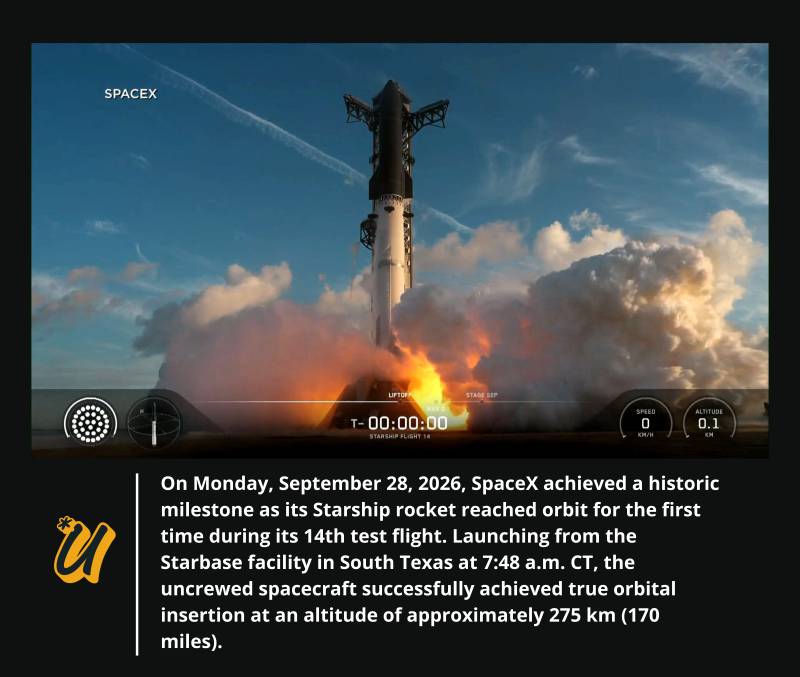
Parallel to the software advances on Earth, commercial aerospace reached a historic threshold as SpaceX Starship achieved a long-sought operational benchmark during its 14th test flight. Reaching an altitude of 275 kilometers, the massive rocket successfully achieved its first true orbital insertion—a critical validation of Starship’s core design architecture. The journey to orbit was not without turbulence, as the vehicle suffered a Raptor engine failure during its powered ascent. Despite the lost engine, automated control systems compensated for the loss of thrust, enabling the craft to maintain its trajectory and reach orbital velocity.
Once in orbit, Starship executed a primary operational objective by deploying a payload of 26 next-generation V3 Starlink satellites into low Earth orbit. Although the mission returned to Earth ahead of its original schedule, the flight marks a transformative leap forward for SpaceX’s heavy-lift capabilities, demonstrating that orbital payload delivery remains viable even under real-time propulsion hardware stresses.
In the software sector, Meta Platforms signaled a aggressive expansion into commercial enterprise software, declaring its intention to compete directly for institutional cloud and business workflows. Meta formally announced the creation of its dedicated enterprise AI platform, designed to package its advanced generative models and agentic frameworks into enterprise-grade productivity applications. To lead this high-stakes division, Meta poached prominent technology executive CJ Desai, who abruptly departed his role as chief executive officer and president of MongoDB to assume the position of Meta’s Chief Enterprise Platform Officer, reporting directly to CEO Mark Zuckerberg. The executive movement sent shockwaves through the public markets, highlighting how aggressively tech conglomerates are bidding for proven enterprise software leadership to monetize their AI research infrastructure.
The episode concluded with critical coverage on the rapidly evolving regulatory, political, and geopolitical frameworks shaping high technology. In Washington, the ongoing debate over national AI policy and safety governance reached the highest political offices, highlighted by a high-profile dinner meeting between President Donald Trump and Anthropic CEO Dario Amodei. The meeting points to intensified lobbying and dialogue between top policymakers and leading frontier model labs over federal oversight, national security priorities, and domestic infrastructure rollout.
Simultaneously, international friction points continue to broaden across global supply chains and talent networks. The broadcast reported on newly instituted travel restrictions imposed in China targeting the immediate families of artificial intelligence research professionals. These heightened overseas movement controls underline growing sovereign anxieties surrounding IP protection, technological brain drain, and the intense global battle to retain elite technical talent amid deepening international competition.