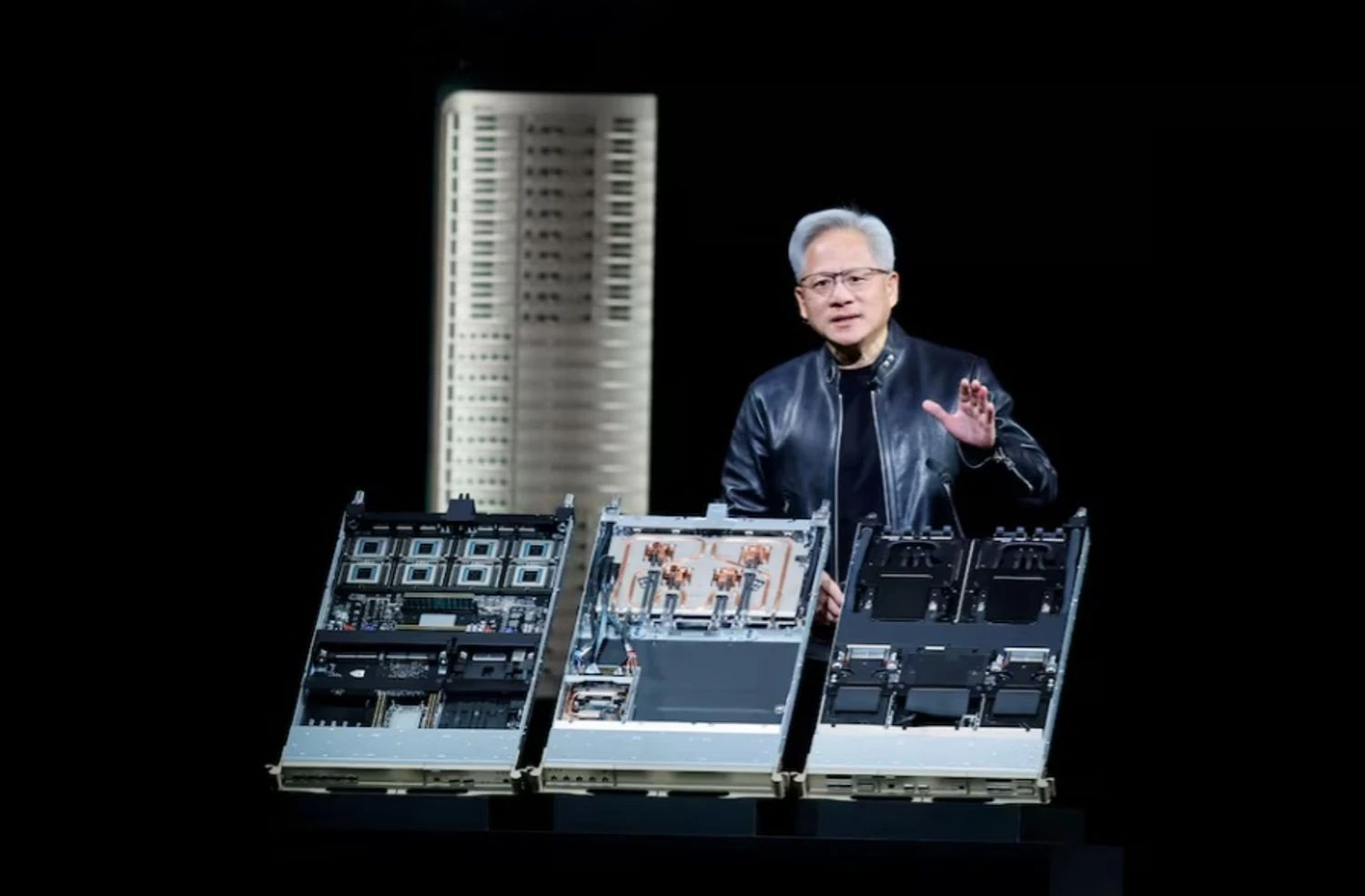
New York - Nvidia has set its sights on a historic financial milestone, forecasting a surge to $1 trillion in annual revenue by 2027. This ambitious target, anchored by the rapid scaling of global artificial intelligence infrastructure, took center stage on the latest edition of Bloomberg Technology. Reporting from San Francisco, Ed Ludlow tracked the immediate market response to the projection, while Caroline Hyde anchored from New York to contextualize Nvidia’s trajectory within the broader, shifting tech landscape.
The trillion-dollar forecast has sparked a divide among market observers. Bloomberg’s Ryan Vlastelica noted that while the target is massive, analyst reactions remain mixed. Despite Nvidia’s consistently strong earnings reports, the stock has recently maintained a tight trading range, suggesting that investors are weighing the company's long-term guidance against current valuation levels. However, the fundamental demand for the hardware powering this growth appears unwavering. Daniel Pilling of Sans Capital described the appetite for Nvidia’s GPUs and CPUs as "insatiable," drawing a direct parallel between the current AI revolution and the transformative impact of the iPhone’s launch in 2007.
Nvidia’s influence is also expanding deep into the transportation and enterprise sectors. Natalie Lung reported on an accelerated partnership between Uber and Nvidia, which now aims to deploy AI-driven autonomous vehicles across 28 cities by 2028. Simultaneously, IBM CEO Arvind Krishna highlighted a growing collaborative ecosystem, discussing IBM’s work with Nvidia on open-source AI projects. Krishna also noted a shifting tide in the corporate world, suggesting that the regulatory environment for mergers and acquisitions is becoming increasingly favorable.
The reach of AI and digital assets is further influencing defense and global finance. Isabelle Lee examined the resilience of Bitcoin, noting its emergence as a "safe haven" asset during recent geopolitical tensions, specifically regarding conflicts in Iran. Meanwhile, the practical application of AI-powered hardware is moving into the theater of national security. Gecko Robotics CEO Jake Lucerarian detailed a $71 million contract with the U.S. Navy, where specialized AI robots are being deployed to inspect and assess the structural readiness of American warships.
As Nvidia pushes toward its 2027 revenue goal, the intersection of specialized robotics, autonomous transport, and sovereign AI infrastructure suggests a market that is no longer just speculating on the future of artificial intelligence but actively building it.